I received an R-SYS SLR from a customer for service.

Since it's not the original owner, the detailed service history is unknown,
but it's certain the bearings have been replaced with non-original ones.
Both front and rear hub bearings showed no signs of wear.


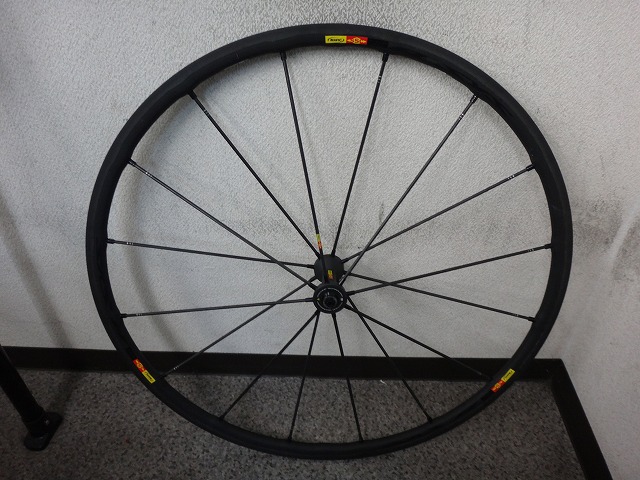
The front wheel had no center offset, just slight runout.
The image above is after work, but there was no offset before work either.

Next, the rear wheel.


Following the usual pattern, the amount of offset is somewhat more manageable.


I trued out the runout by tightening in the proper direction and centered it up.
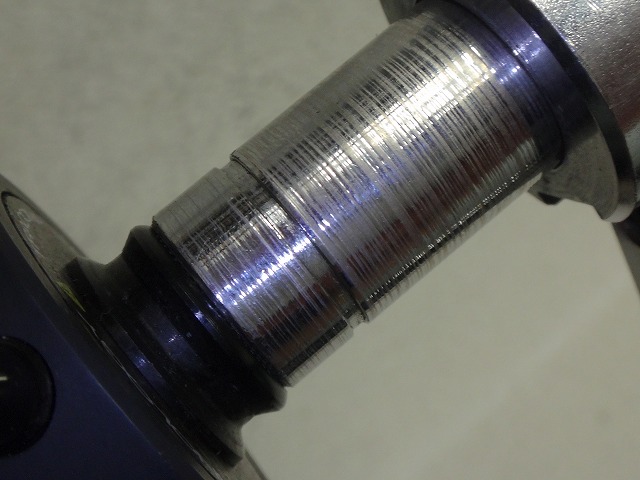
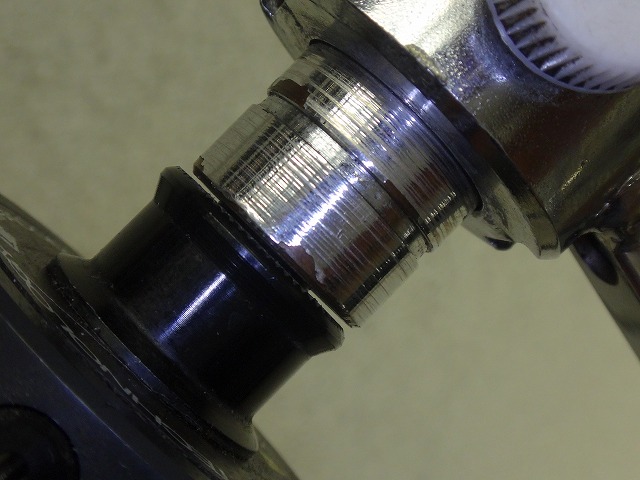
This R-SYS SLR uses what's called a simple snap-fit dropout design without bearing preload adjustment—specifically the QRM SL,

↑Front hub

↑Rear hub
The grooves on the dropout for both are just one, meaning there's essentially no room for adjustment left (→see here).
Based on the fact that the brake zone wear is minimal,
the previous owner's usage was probably under a few thousand kilometers,
but it seems unlikely they deliberately swapped out this dropout.
(It's also hard to imagine they tried different dropouts with four grooves down to one groove during bearing replacement.)
The real issue is that very few users or shops are even aware of
the bearing preload adjustment system on these dropouts in the first place—
which is not infinitely adjustable but rather offers only four steps in 0.1mm increments.
Should a four-groove dropout ever be installed in the future for any reason,
the left dropout would extend by 0.3mm,
which would create a measurable amount of center offset detectable with a center gauge.
Since it's not the original owner, the detailed service history is unknown,
but it's certain the bearings have been replaced with non-original ones.
Both front and rear hub bearings showed no signs of wear.

The front wheel had no center offset, just slight runout.
The image above is after work, but there was no offset before work either.
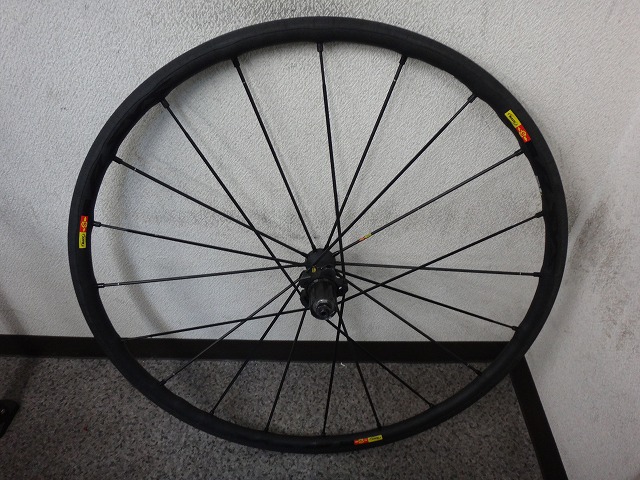
Next, the rear wheel.

Following the usual pattern, the amount of offset is somewhat more manageable.


I trued out the runout by tightening in the proper direction and centered it up.
This R-SYS SLR uses what's called a simple snap-fit dropout design without bearing preload adjustment—specifically the QRM SL,
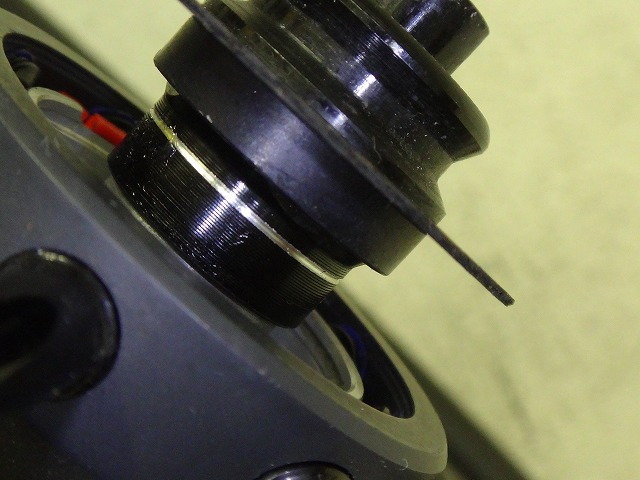
↑Front hub
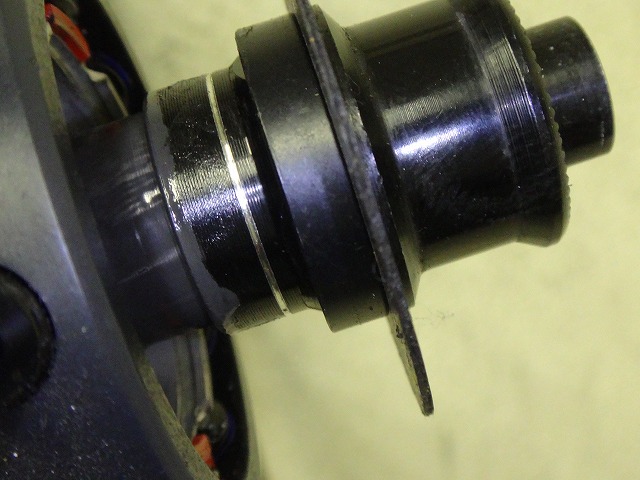
↑Rear hub
The grooves on the dropout for both are just one, meaning there's essentially no room for adjustment left (→see here).
Based on the fact that the brake zone wear is minimal,
the previous owner's usage was probably under a few thousand kilometers,
but it seems unlikely they deliberately swapped out this dropout.
(It's also hard to imagine they tried different dropouts with four grooves down to one groove during bearing replacement.)
The real issue is that very few users or shops are even aware of
the bearing preload adjustment system on these dropouts in the first place—
which is not infinitely adjustable but rather offers only four steps in 0.1mm increments.
Should a four-groove dropout ever be installed in the future for any reason,
the left dropout would extend by 0.3mm,
which would create a measurable amount of center offset detectable with a center gauge.