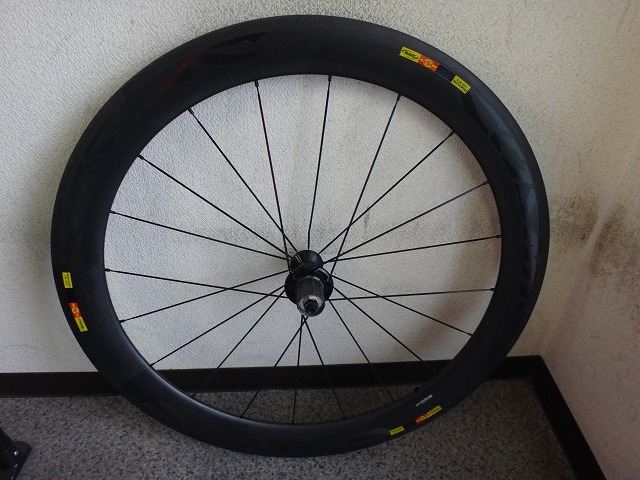
A customer brought in a Cosmic CXR60 for service.

The spokes are bent, so they need replacement.
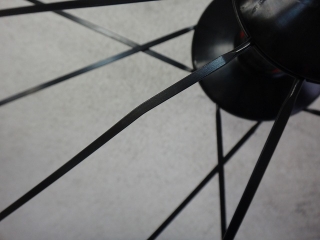
↑Here it is.
The customer provided the spokes,
but naturally they had to buy a 10-spoke set for one side.
Following up on the last part of the previous post.
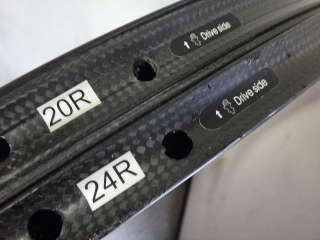
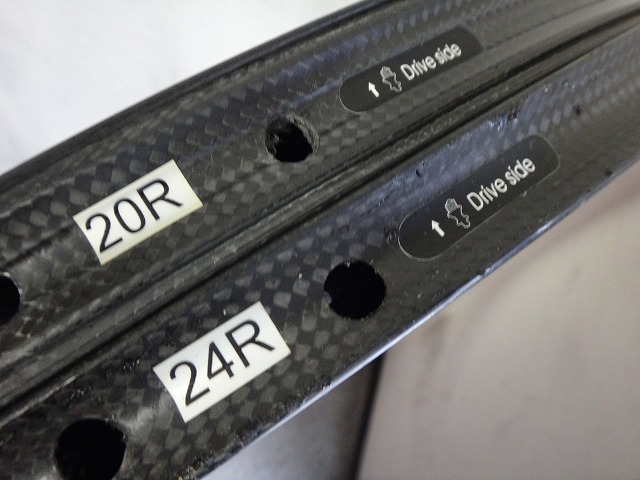
This rim is made by Equinox,
and the image above is the rim from the Nomu Lab Wheel Old No. 2, also made by Equinox.
Since both are rear rims, they have stickers indicating the freewheel body direction,
and the format of the hole count marking is exactly the same on both.
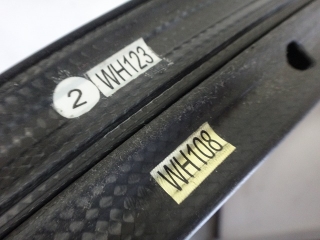
The CXR60 rim part number is WH123, and the Old No. 2 rim part number is WH108.
Nowadays, when I write something like this,
the readers of this blog don't seem fazed at all,
but back in the day, something like this would cause quite a stir.
(→here)and(→here)resulted in(→here)
My sense of shock has definitely dulled.
The grooves on both ends of the WH123 wide rim are for mounting
a part called the "CX01 Blade" that fills the gap between the rim and tire after installation.
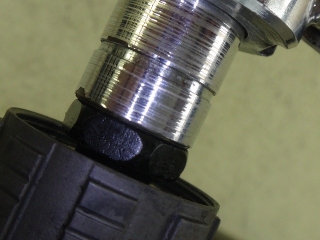
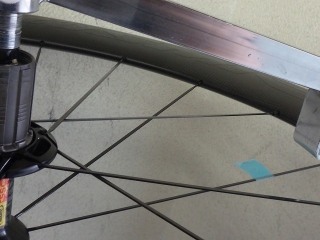
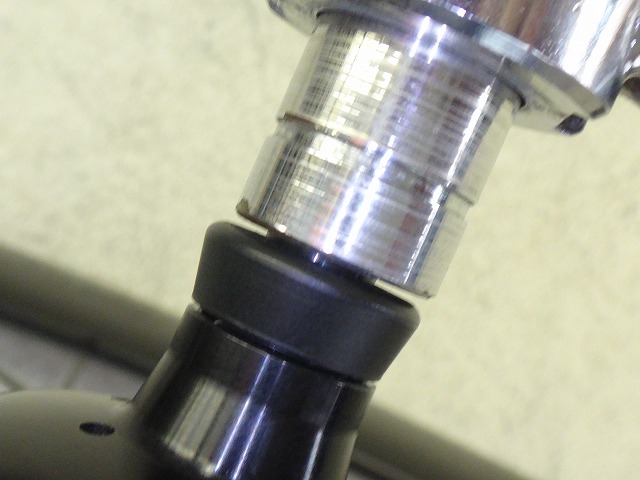
I measured the freewheel side dropout
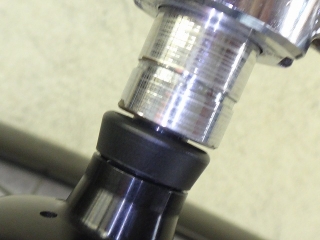
and held it against the non-freewheel side dropout, revealing this much gap.
At this point, I've already replaced the spoke and
completed most of the lateral truing just by adjusting the nipple
directly below the replaced spoke.
I made only slight adjustments to the nipples at a couple of spots,
and didn't touch them enough to shift the wheel center.
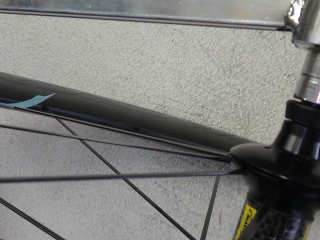
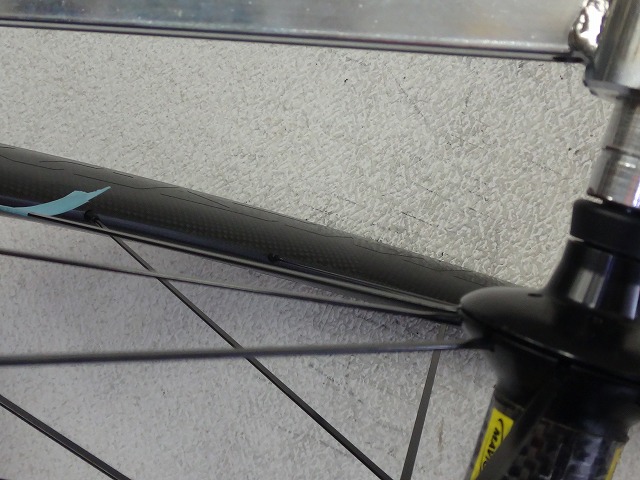
I marked the replaced spokes with blue tape,
and as you can see in the image above, I'm applying the centering gauge
on both sides at the same phase.
As a Mavic tendency(→here),
the rim is offset toward the non-freewheel side, and the amount of deviation is quite large.
It's true that if I inflate the tire tube to a fairly high pressure,
the rim will shift very slightly toward the freewheel side,
but even at 15 psi, this gap won't become zero.
I've written about this before,
but while most Mavic rear wheels do have the rim offset toward the non-freewheel side,
the amount of offset varies so much from one unit to another
(sometimes they're even centered)that if there were intentional design behind it,
it wouldn't be so inconsistent. And more than anything, the front wheels without a dished rim
show rim offset at a decent frequency,
which leads me to the conclusion that
"they simply aren't centering the wheels during assembly".
I still can't explain why rear wheels almost universally lean toward the non-freewheel side though.


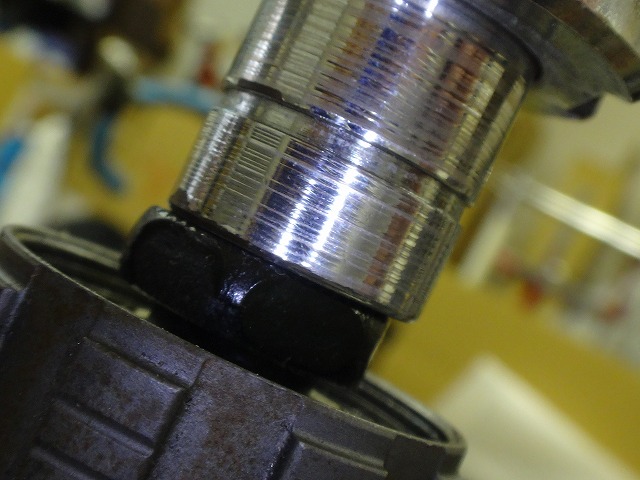
I'd like to center the wheel by tightening only the freewheel side,
but the freewheel side tension was already quite high, and that was the limit.
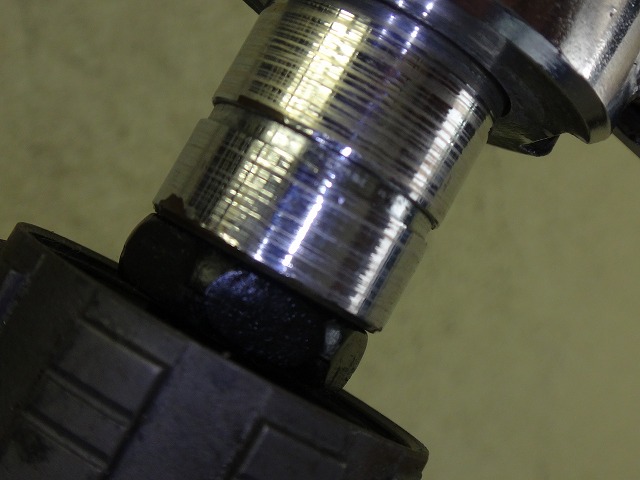
So I loosened the non-freewheel side just a tiny bit.
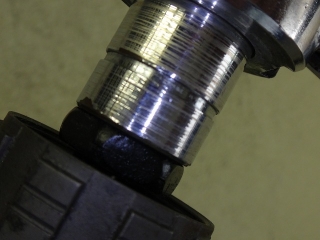

The center came out.
The overall spoke tension after the work is about the same as the original state,
or perhaps very slightly increased.
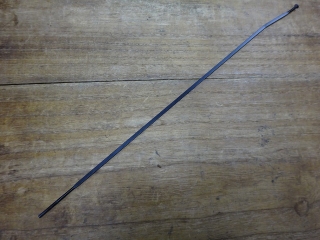
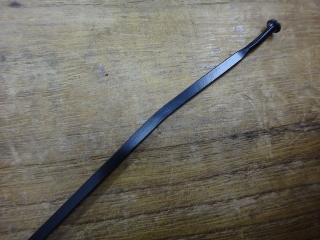
↑Replaced spokes
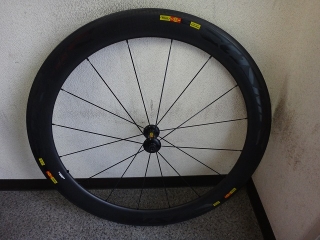
Next, the front wheel.
This one was just an inspection.
Both hubs rotated smoothly without any grinding,
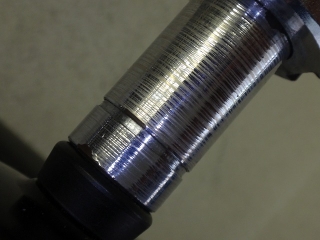
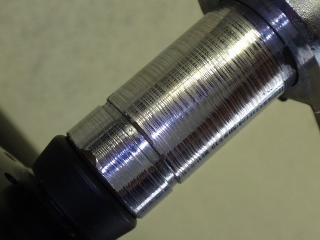
but the front hub had some play in the ball bearing adjustment.
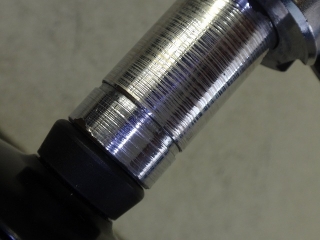
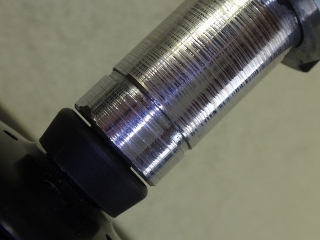
↑Temporary center after removing play.
There's slight lateral runout, but depending on where you place the gauge,
this gap disappears, so the amount of runout isn't significant enough
to warrant major adjustment. Overall, the rim is offset by about this much.
I did the truing and centering with a tightening approach.
The spokes are bent, so they need replacement.
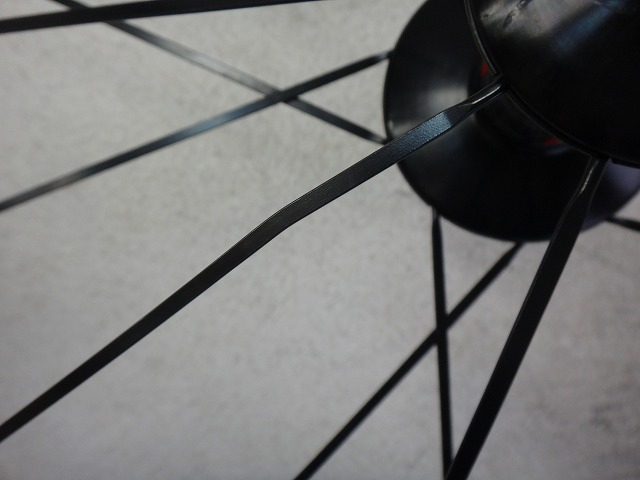
↑Here it is.
The customer provided the spokes,
but naturally they had to buy a 10-spoke set for one side.
Following up on the last part of the previous post.
This rim is made by Equinox,
and the image above is the rim from the Nomu Lab Wheel Old No. 2, also made by Equinox.
Since both are rear rims, they have stickers indicating the freewheel body direction,
and the format of the hole count marking is exactly the same on both.
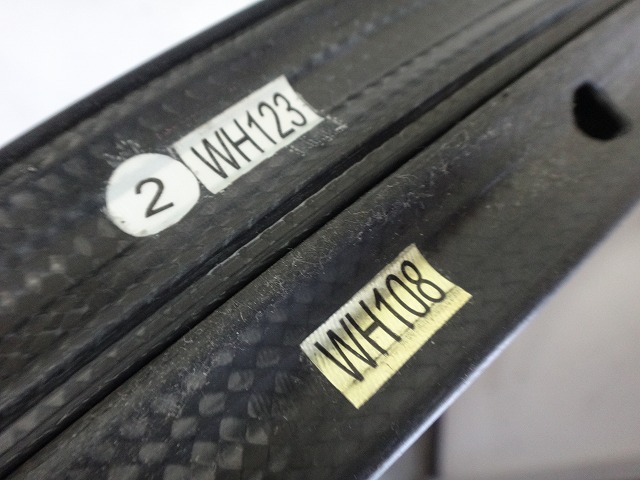
The CXR60 rim part number is WH123, and the Old No. 2 rim part number is WH108.
Nowadays, when I write something like this,
the readers of this blog don't seem fazed at all,
but back in the day, something like this would cause quite a stir.
(→here)and(→here)resulted in(→here)
My sense of shock has definitely dulled.
The grooves on both ends of the WH123 wide rim are for mounting
a part called the "CX01 Blade" that fills the gap between the rim and tire after installation.
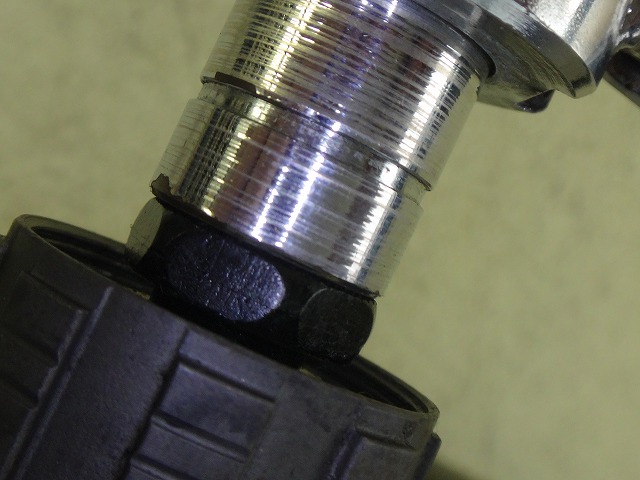

I measured the freewheel side dropout
and held it against the non-freewheel side dropout, revealing this much gap.
At this point, I've already replaced the spoke and
completed most of the lateral truing just by adjusting the nipple
directly below the replaced spoke.
I made only slight adjustments to the nipples at a couple of spots,
and didn't touch them enough to shift the wheel center.
I marked the replaced spokes with blue tape,
and as you can see in the image above, I'm applying the centering gauge
on both sides at the same phase.
As a Mavic tendency(→here),
the rim is offset toward the non-freewheel side, and the amount of deviation is quite large.
It's true that if I inflate the tire tube to a fairly high pressure,
the rim will shift very slightly toward the freewheel side,
but even at 15 psi, this gap won't become zero.
I've written about this before,
but while most Mavic rear wheels do have the rim offset toward the non-freewheel side,
the amount of offset varies so much from one unit to another
(sometimes they're even centered)that if there were intentional design behind it,
it wouldn't be so inconsistent. And more than anything, the front wheels without a dished rim
show rim offset at a decent frequency,
which leads me to the conclusion that
"they simply aren't centering the wheels during assembly".
I still can't explain why rear wheels almost universally lean toward the non-freewheel side though.

I'd like to center the wheel by tightening only the freewheel side,
but the freewheel side tension was already quite high, and that was the limit.
So I loosened the non-freewheel side just a tiny bit.

The center came out.
The overall spoke tension after the work is about the same as the original state,
or perhaps very slightly increased.
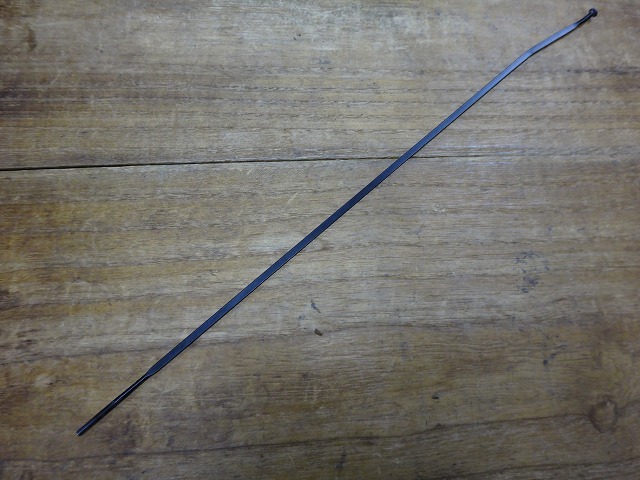
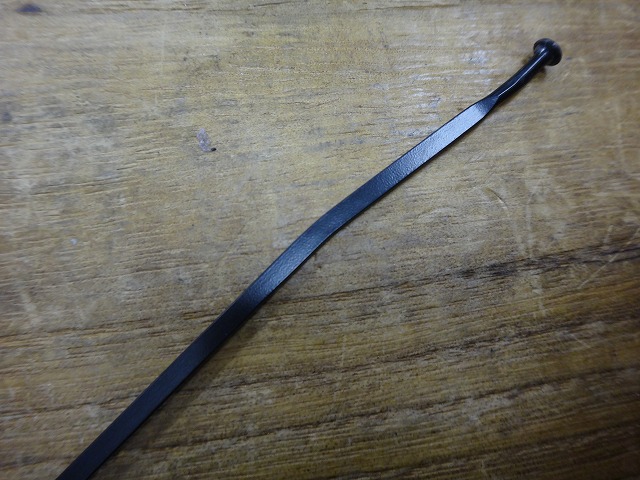
↑Replaced spokes
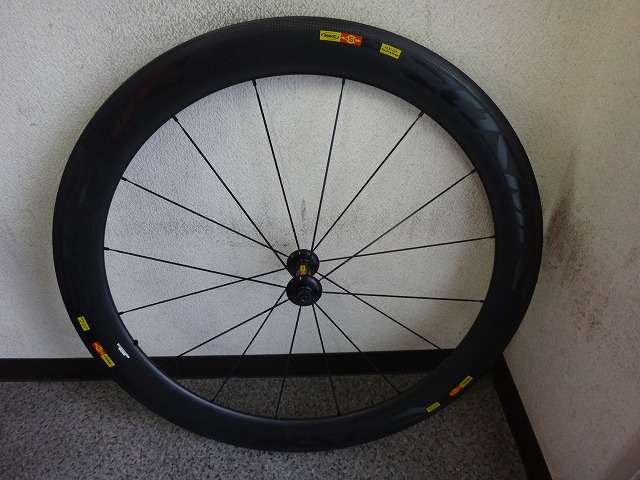
Next, the front wheel.
This one was just an inspection.
Both hubs rotated smoothly without any grinding,
but the front hub had some play in the ball bearing adjustment.
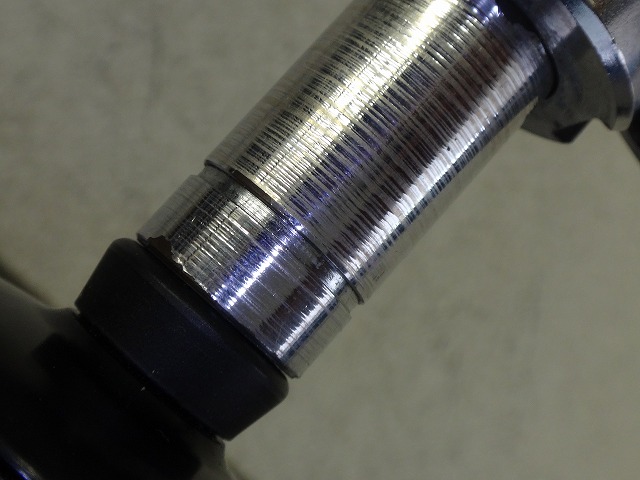
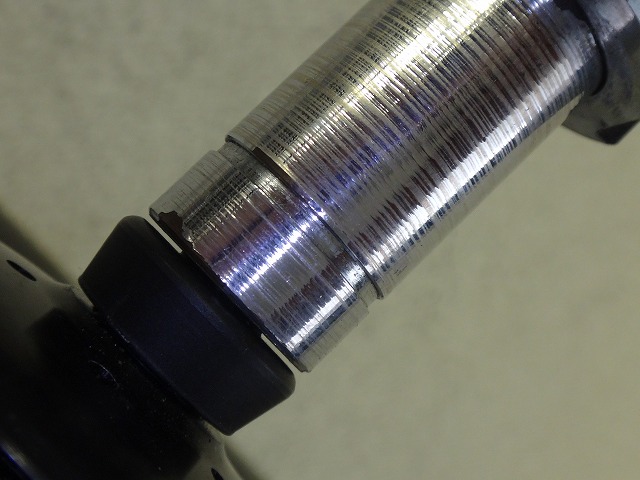
↑Temporary center after removing play.
There's slight lateral runout, but depending on where you place the gauge,
this gap disappears, so the amount of runout isn't significant enough
to warrant major adjustment. Overall, the rim is offset by about this much.
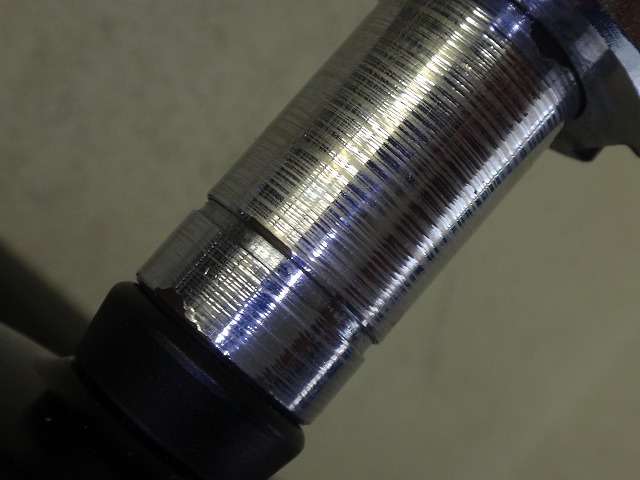
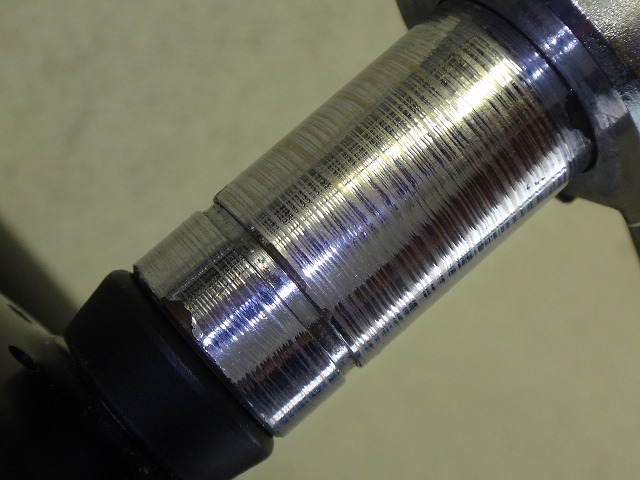
I did the truing and centering with a tightening approach.