Let me be clear before I start writing...
This is going to be a long discussion.
Also, one more thing. In what follows, when I refer to the right side of a rear wheel, I mean the side with the freeBody, and the left side means the opposite side.
About spoke tension left-right differences in wheels—when viewing the wheel from front-to-back versus from the side, there are different things to discuss for each direction.
Today I'll talk about viewing from the front-to-back direction.
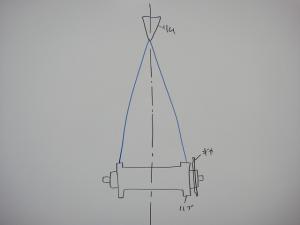
If you build a wheel on a hub where the left and right flange widths and heights are identical, and the assembly method is the same on both sides, theoretically the spoke tension should be the same on both sides.
For a front or rear wheel without the need to mount a disc brake rotor or multiple gears, it's possible to make the left and right spoke tensions equal.
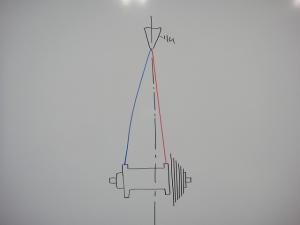
However, in the case of a road bike rear wheel, you need to mount many sprockets on the right side in the direction of travel, so the hub flange gets pushed inward.
When this happens, the spokes on the right side become more upright in angle compared to the left.
This condition is called "Ochoko" (not my original term).
It's called that because when viewed sideways it looks like an ochoko (a small sake cup).
In English-speaking regions, they apparently call it "dish" by comparing it to a plate.
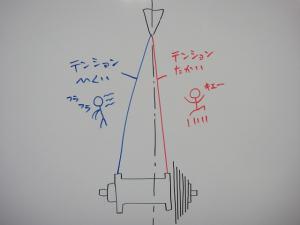
The more vertically the spoke is pulled, the less tension loss there is, so the spoke tension is higher on the side where the spokes have a more upright angle (right side, freeBody side).
Having a large left-right difference in spoke tension is actually quite a problem.
Say a rim specifies a maximum spoke tension limit of 110kg.
If you tension the right side right to the limit, depending on the assembly method and hub dimensions, the left side might end up at 80kg or might be as low as 60kg.
When the left spoke tension differs too much from the right, your rear wheel becomes one that will shoe-touch on the left side when you're sprinting hard.
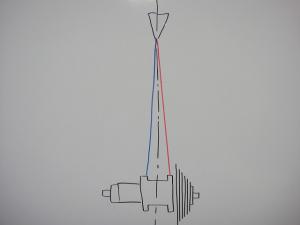
So what about a rear wheel like this?
This would have no left-right spoke tension difference.
But this is NG.
Narrowing the flange width dramatically reduces lateral stiffness.
In terms of theory, you're matching the weaker side.
Hub flange dimensions are extremely important to rear wheel spoke tension, and it's not an exaggeration to say that a change of just a few millimeters affects the left-right spoke tension difference.

↑I'll explain this in detail later, but this is a rear wheel with freeBody on both sides.
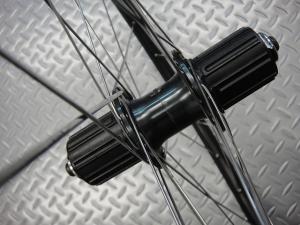
The flange width is abnormally narrow, so it can't produce lateral stiffness.
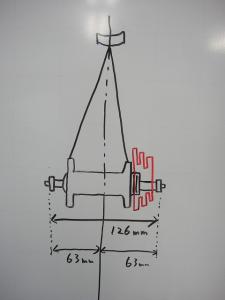
Even without being that extreme, there are cases like this.
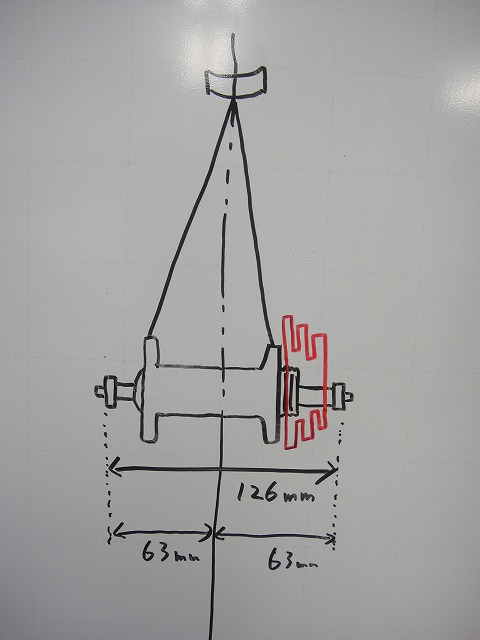
The hub I use on my Cinelli Supercorsa (→here) that I introduced the other day is a Record from that era (boss freewheel), but the over-locknut dimension (rear end width) is 126mm.
Naturally, the rim center is 63mm away from the end on each side.
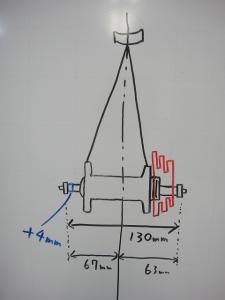
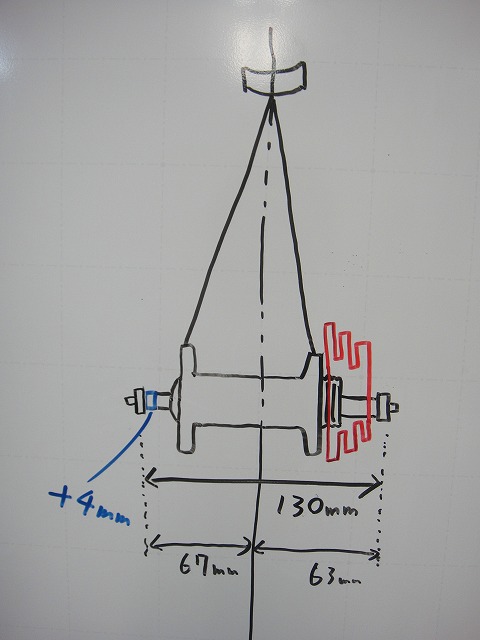
If I want to use this wheel on a 130mm frame, obviously I need to lengthen the over-locknut dimension by 4mm.
But if I adjust the right side, shift problems crop up.
I could re-adjust for that, but not only the rear shifting but also front shifting needs adjustment (because the inner-low chain position changes).
And even if I swap it for a wheel with the same boss freewheel on a rear hub that's already 130mm wide, I can't use it as-is because the gear position is different.
So to avoid those problems, I add 4mm worth of spacer to the left side of the hub shaft.
But doing this, as shown in the diagram above, the rim center becomes misaligned.
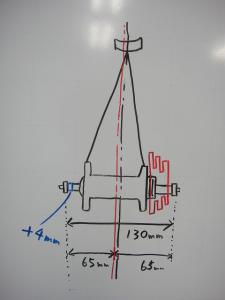
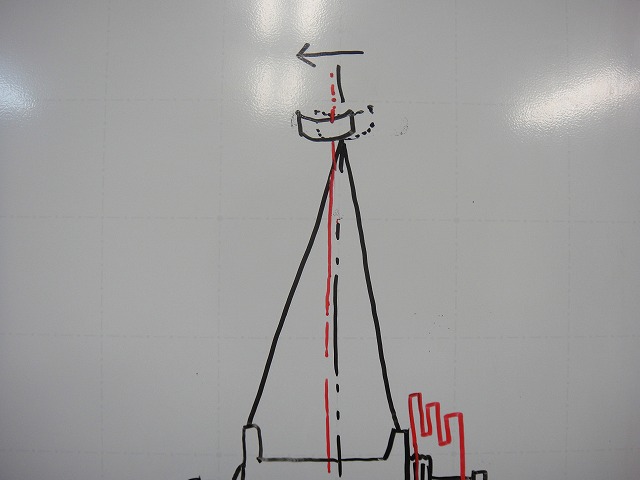
So you move the rim to the new center position, but (at this level you can do it without replacing the spokes themselves)
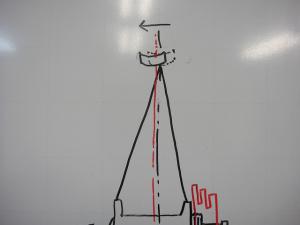
The amount you re-center is half the amount of spacer you added on the left.
In this case it's half of 4mm, so 2mm.
By doing this, the right spokes which had an upright angle become slightly more relaxed, and the left spokes which had a relaxed angle become slightly more upright.
But with just this much change, you can see that the left-right spoke tension difference decreases.
It's not just theory—you can feel it in practice.
This relates to the offset rim concept I'll discuss later.
To secure lateral stiffness on the left side,
the left flange width should never be narrowed,
even if the balance of left-right spoke tension
becomes worse.
This appears to be the basic policy of most complete wheel manufacturers.
In other words, they want to keep the "severe ochoko" as-is and somehow bring the left-right tension balance closer to equal.
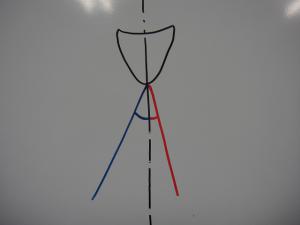
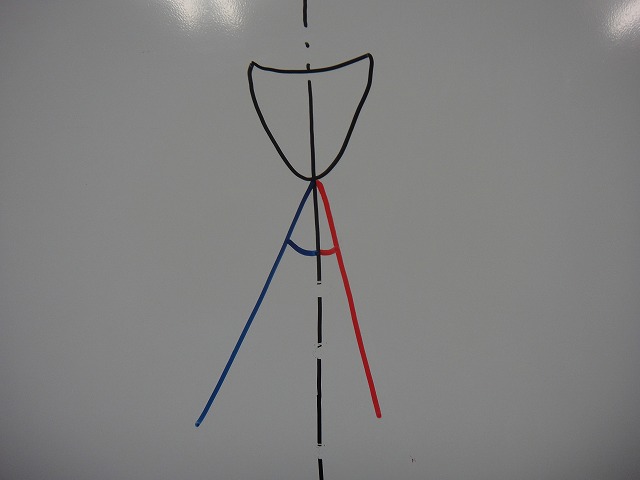
So let me think about ways to make the spoke approach angle to the rim (the angle in the diagram above) approximately equal on both sides.
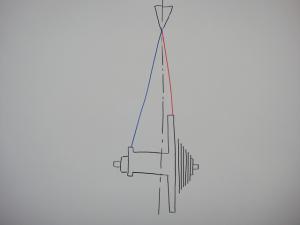
One method is the high-low flange.
In the diagram above, I've increased only the height of the right flange.
In reality there's no high-low flange this extreme, but you can imagine how the spoke angles become more equal.
Even if the spoke angles become equal on both sides, the lengths are different, so this doesn't completely eliminate the left-right spoke tension difference, but it still helps considerably.

The effectiveness of high-low flanges has been understood for a long time, and
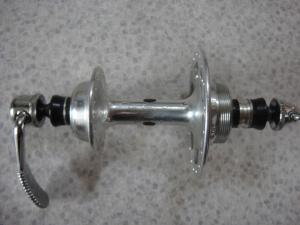
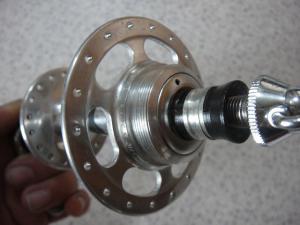
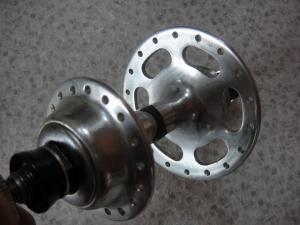
↑Campagnolo made hubs like this too.
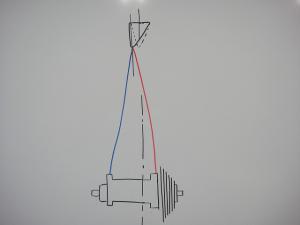
Another method is the offset rim.
By offsetting the spoke holes toward the left on the rim, you relax the right spokes a bit and make the left spokes a bit more upright, trying to bring the spoke approach angles closer to equal.
Since it's possible to use this together with the high-low flange mentioned earlier, in reality many complete rear wheels are designed with both offset rims and high-low flanges. As the rim gets deeper, perhaps because the left spoke nipple's swing angle becomes extreme, you rarely see "deep rim with offset rim."
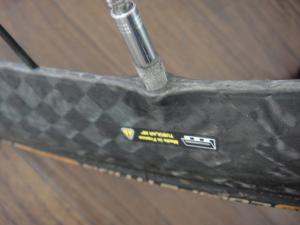
↑This is the Mavic Cosmic Carbon Ultimate, and the front rim naturally has no offset.

↑But the rear rim is an offset rim.
You can see it clearly by looking at the shape around the valve hole.
This is actually pretty remarkable.
It's possible because the rim doesn't have the concept of a nipple.

In Shimano's 7900 series complete wheels, the 24mm rim depth model uses an offset rim.

The C35 and C50 are deep rims so they're not offset rims, but there's a different problem. For some reason as the rim gets higher they narrow the left flange width.
As I wrote in big letters twice before, you can't narrow the left flange.
Especially with the C50, I actually hear quite often the complaint that "it flexes to the left when you sprint hard."
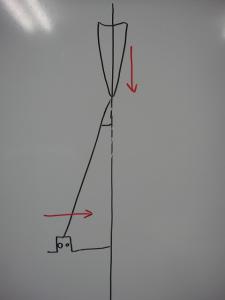
↑Maybe they thought "the flange narrows while the rim gets higher, so the spoke angles end up about the same anyway, so it's fine."

↑In actual photos, this is the C24 rear hub and
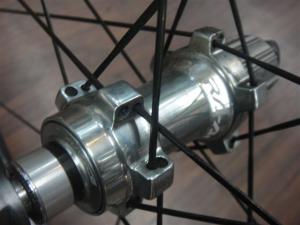
↑this is the C50 rear hub.
Looking at the positional relationship between the left dust cap and left flange makes it clearer. Squeezing the flange in that much destroys lateral stiffness.
It becomes theoretically quite close to the structural characteristics of my dual-freeBody rear hub.
But that's not what you want.
What I think here is "Can't you build the C50 rim on a C24 hub?"
Since they're deliberately changing the hub dimensions, combined with the left nipple angle problem, Shimano's conclusion seems to be "no."
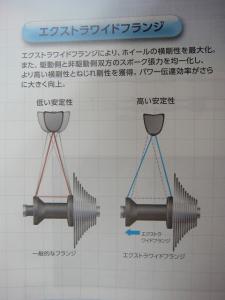
In the WH-9000,
not just C24 but C35, C50,
and even C75
are all built with hubs that have
wide left flanges.
Hey! I thought it was supposed to be impossible!
Reading this, the WH-7900 C35 and C50 are "low stability".
↑I'm not saying this.
I actually pressed Shimano about the WH-7900 rear hub dimensions at one of their technical seminars, and at the time they said something like "this is our company's optimal solution"...
I don't think it changed because I said something.
This is obvious stuff anyway.
As I'll write later, you can also change the left-right spoke tension difference by changing the ratio of spoke counts on left and right.
The WH-9000 series adopted this too, so they apparently judged that they could keep the left flange wide even with deep rims.
Which makes me think, "Wow, the Campagnolo Bora G3 was a wheel that was 10 years ahead."
This is going to be a long discussion.
Also, one more thing. In what follows, when I refer to the right side of a rear wheel, I mean the side with the freeBody, and the left side means the opposite side.
About spoke tension left-right differences in wheels—when viewing the wheel from front-to-back versus from the side, there are different things to discuss for each direction.
Today I'll talk about viewing from the front-to-back direction.
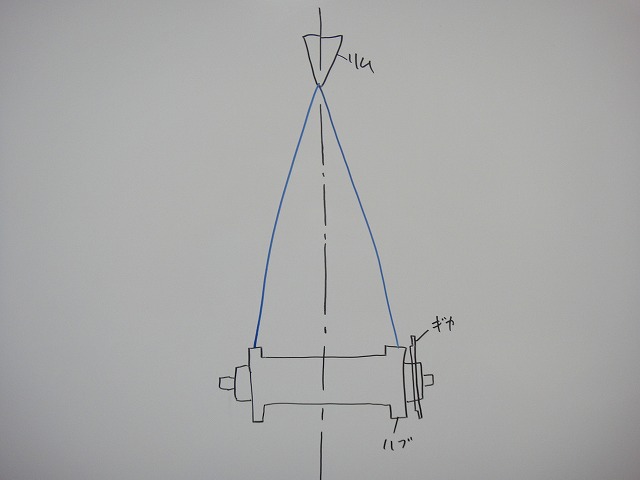
If you build a wheel on a hub where the left and right flange widths and heights are identical, and the assembly method is the same on both sides, theoretically the spoke tension should be the same on both sides.
For a front or rear wheel without the need to mount a disc brake rotor or multiple gears, it's possible to make the left and right spoke tensions equal.

However, in the case of a road bike rear wheel, you need to mount many sprockets on the right side in the direction of travel, so the hub flange gets pushed inward.
When this happens, the spokes on the right side become more upright in angle compared to the left.
This condition is called "Ochoko" (not my original term).
It's called that because when viewed sideways it looks like an ochoko (a small sake cup).
In English-speaking regions, they apparently call it "dish" by comparing it to a plate.
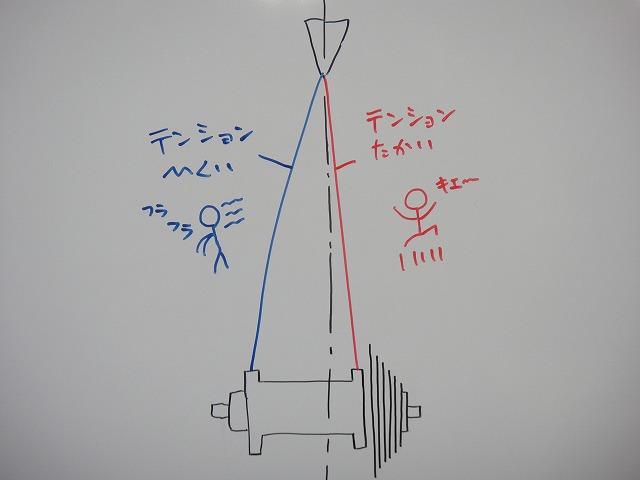
The more vertically the spoke is pulled, the less tension loss there is, so the spoke tension is higher on the side where the spokes have a more upright angle (right side, freeBody side).
Having a large left-right difference in spoke tension is actually quite a problem.
Say a rim specifies a maximum spoke tension limit of 110kg.
If you tension the right side right to the limit, depending on the assembly method and hub dimensions, the left side might end up at 80kg or might be as low as 60kg.
When the left spoke tension differs too much from the right, your rear wheel becomes one that will shoe-touch on the left side when you're sprinting hard.
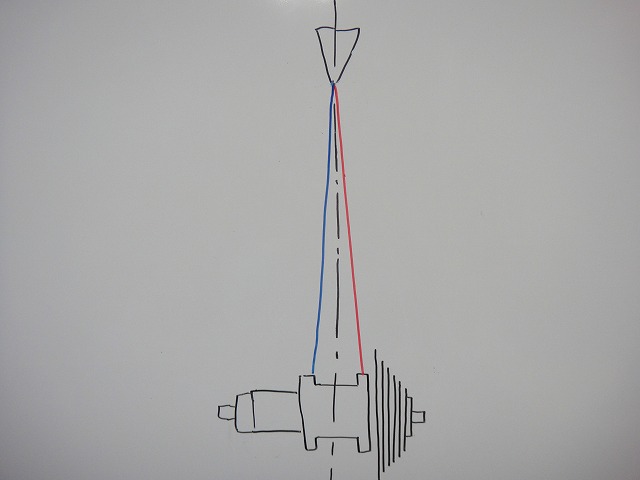
So what about a rear wheel like this?
This would have no left-right spoke tension difference.
But this is NG.
Narrowing the flange width dramatically reduces lateral stiffness.
In terms of theory, you're matching the weaker side.
Hub flange dimensions are extremely important to rear wheel spoke tension, and it's not an exaggeration to say that a change of just a few millimeters affects the left-right spoke tension difference.
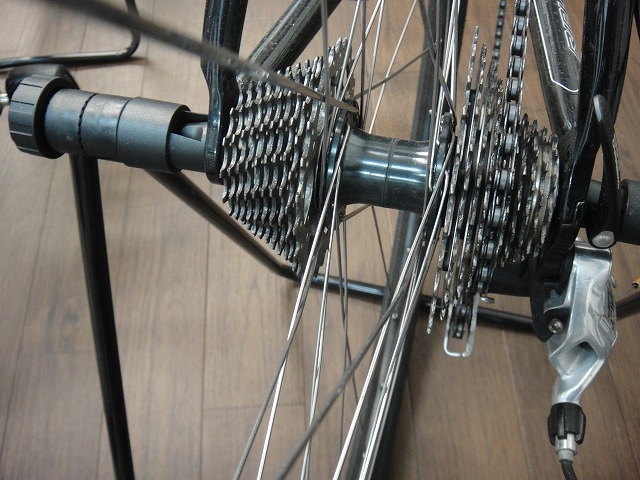
↑I'll explain this in detail later, but this is a rear wheel with freeBody on both sides.
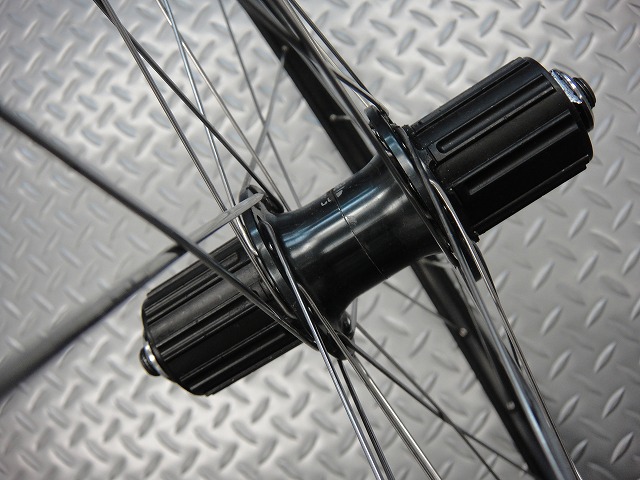
The flange width is abnormally narrow, so it can't produce lateral stiffness.
Even without being that extreme, there are cases like this.
The hub I use on my Cinelli Supercorsa (→here) that I introduced the other day is a Record from that era (boss freewheel), but the over-locknut dimension (rear end width) is 126mm.
Naturally, the rim center is 63mm away from the end on each side.
If I want to use this wheel on a 130mm frame, obviously I need to lengthen the over-locknut dimension by 4mm.
But if I adjust the right side, shift problems crop up.
I could re-adjust for that, but not only the rear shifting but also front shifting needs adjustment (because the inner-low chain position changes).
And even if I swap it for a wheel with the same boss freewheel on a rear hub that's already 130mm wide, I can't use it as-is because the gear position is different.
So to avoid those problems, I add 4mm worth of spacer to the left side of the hub shaft.
But doing this, as shown in the diagram above, the rim center becomes misaligned.

So you move the rim to the new center position, but (at this level you can do it without replacing the spokes themselves)
The amount you re-center is half the amount of spacer you added on the left.
In this case it's half of 4mm, so 2mm.
By doing this, the right spokes which had an upright angle become slightly more relaxed, and the left spokes which had a relaxed angle become slightly more upright.
But with just this much change, you can see that the left-right spoke tension difference decreases.
It's not just theory—you can feel it in practice.
This relates to the offset rim concept I'll discuss later.
To secure lateral stiffness on the left side,
the left flange width should never be narrowed,
even if the balance of left-right spoke tension
becomes worse.
This appears to be the basic policy of most complete wheel manufacturers.
In other words, they want to keep the "severe ochoko" as-is and somehow bring the left-right tension balance closer to equal.
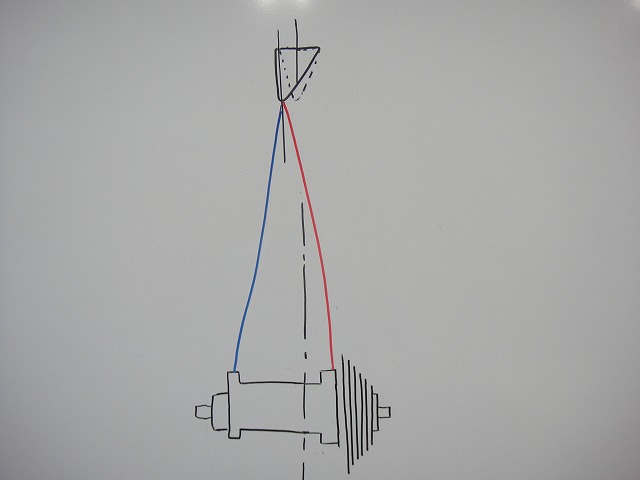
So let me think about ways to make the spoke approach angle to the rim (the angle in the diagram above) approximately equal on both sides.

One method is the high-low flange.
In the diagram above, I've increased only the height of the right flange.
In reality there's no high-low flange this extreme, but you can imagine how the spoke angles become more equal.
Even if the spoke angles become equal on both sides, the lengths are different, so this doesn't completely eliminate the left-right spoke tension difference, but it still helps considerably.

The effectiveness of high-low flanges has been understood for a long time, and
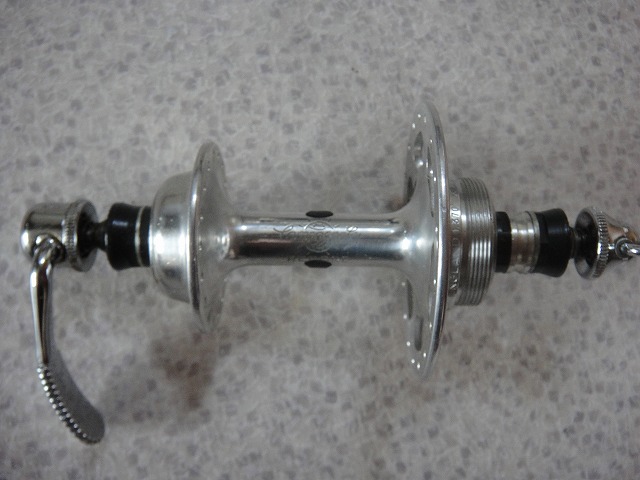
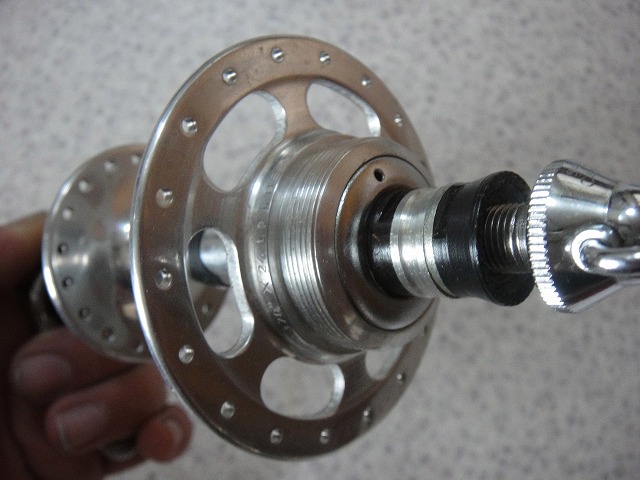
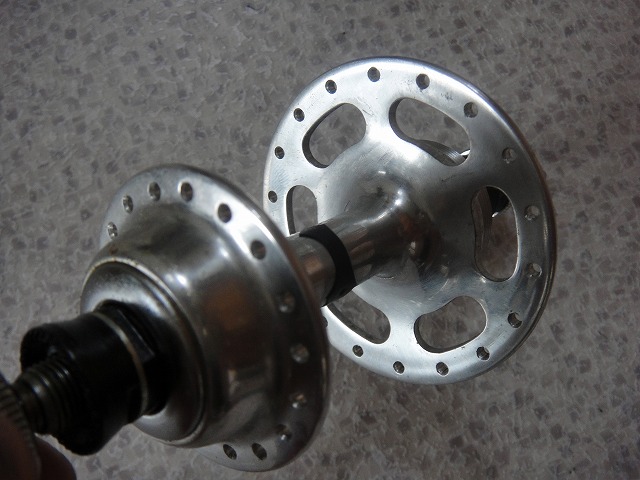
↑Campagnolo made hubs like this too.
Another method is the offset rim.
By offsetting the spoke holes toward the left on the rim, you relax the right spokes a bit and make the left spokes a bit more upright, trying to bring the spoke approach angles closer to equal.
Since it's possible to use this together with the high-low flange mentioned earlier, in reality many complete rear wheels are designed with both offset rims and high-low flanges. As the rim gets deeper, perhaps because the left spoke nipple's swing angle becomes extreme, you rarely see "deep rim with offset rim."
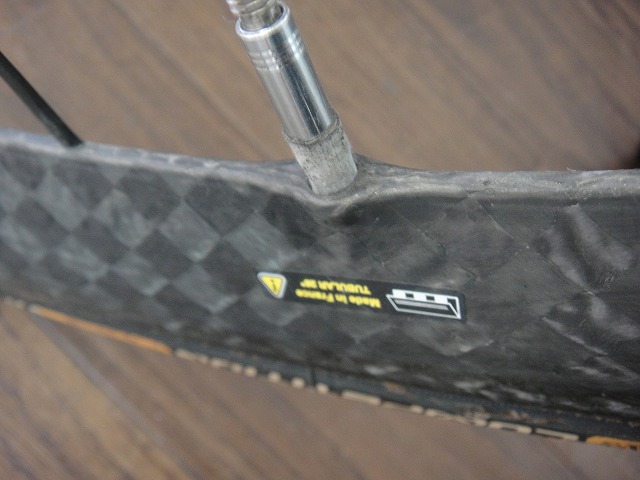
↑This is the Mavic Cosmic Carbon Ultimate, and the front rim naturally has no offset.
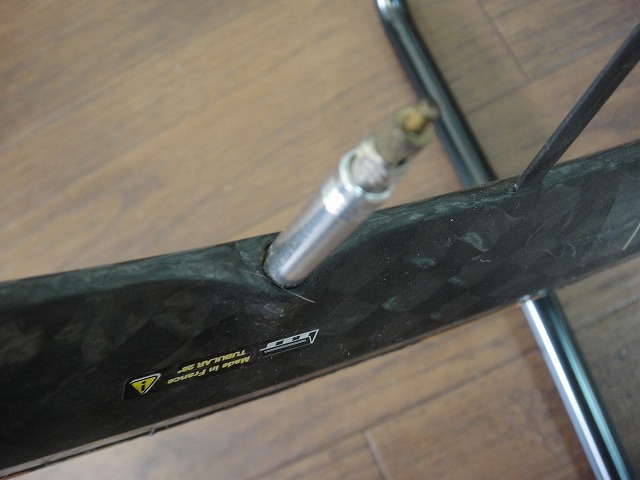
↑But the rear rim is an offset rim.
You can see it clearly by looking at the shape around the valve hole.
This is actually pretty remarkable.
It's possible because the rim doesn't have the concept of a nipple.
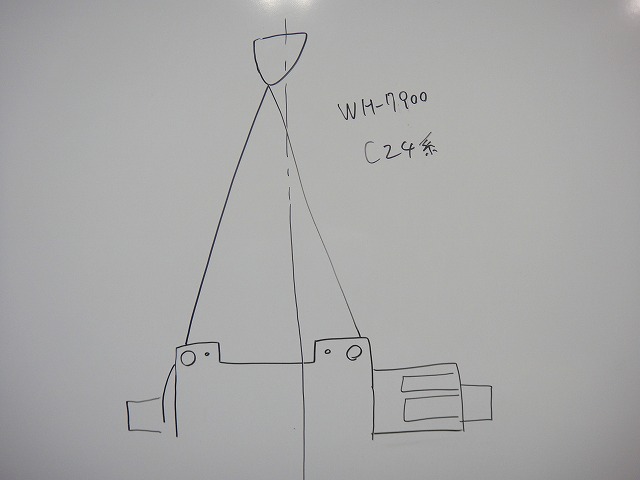
In Shimano's 7900 series complete wheels, the 24mm rim depth model uses an offset rim.
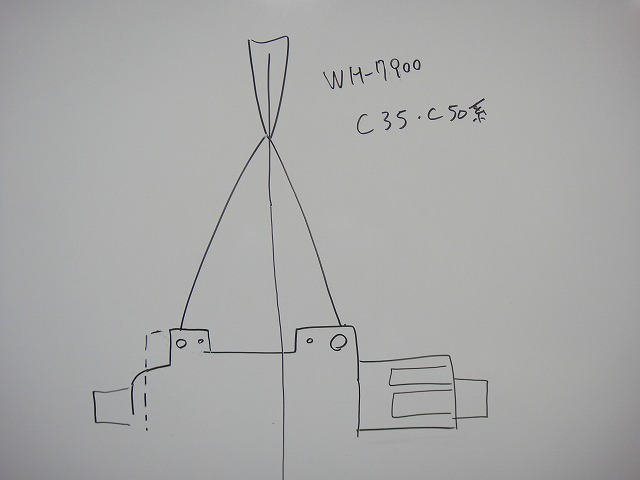
The C35 and C50 are deep rims so they're not offset rims, but there's a different problem. For some reason as the rim gets higher they narrow the left flange width.
As I wrote in big letters twice before, you can't narrow the left flange.
Especially with the C50, I actually hear quite often the complaint that "it flexes to the left when you sprint hard."
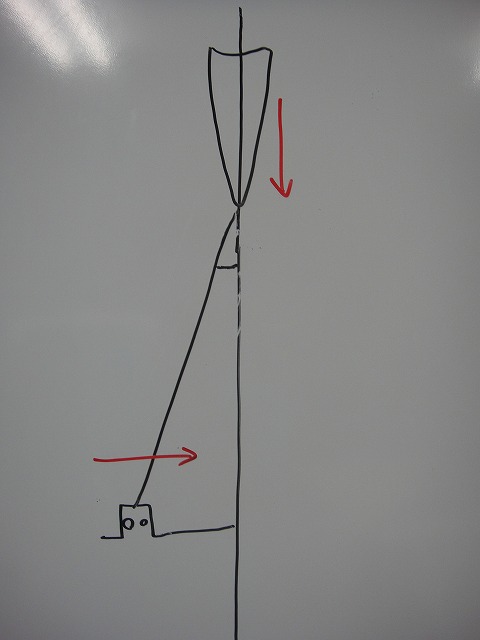
↑Maybe they thought "the flange narrows while the rim gets higher, so the spoke angles end up about the same anyway, so it's fine."
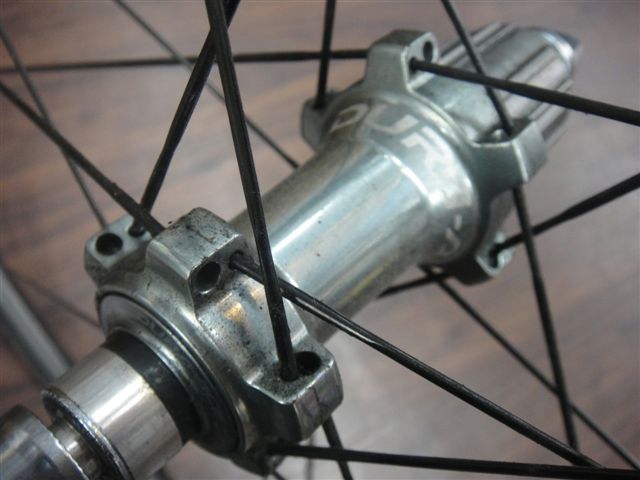
↑In actual photos, this is the C24 rear hub and
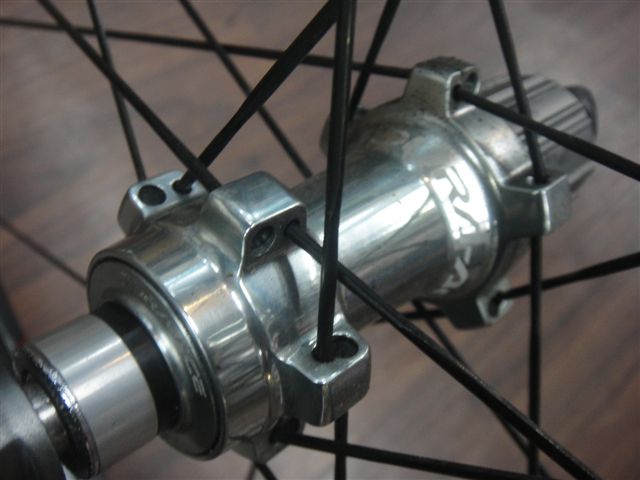
↑this is the C50 rear hub.
Looking at the positional relationship between the left dust cap and left flange makes it clearer. Squeezing the flange in that much destroys lateral stiffness.
It becomes theoretically quite close to the structural characteristics of my dual-freeBody rear hub.
But that's not what you want.
What I think here is "Can't you build the C50 rim on a C24 hub?"
Since they're deliberately changing the hub dimensions, combined with the left nipple angle problem, Shimano's conclusion seems to be "no."
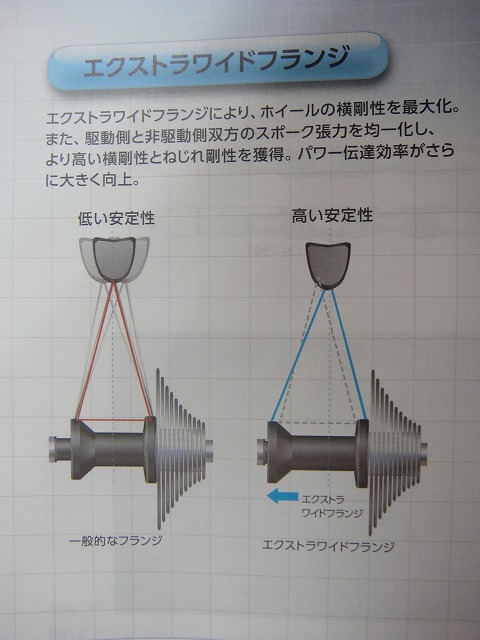
In the WH-9000,
not just C24 but C35, C50,
and even C75
are all built with hubs that have
wide left flanges.
Hey! I thought it was supposed to be impossible!
Reading this, the WH-7900 C35 and C50 are "low stability".
↑I'm not saying this.
I actually pressed Shimano about the WH-7900 rear hub dimensions at one of their technical seminars, and at the time they said something like "this is our company's optimal solution"...
I don't think it changed because I said something.
This is obvious stuff anyway.
As I'll write later, you can also change the left-right spoke tension difference by changing the ratio of spoke counts on left and right.
The WH-9000 series adopted this too, so they apparently judged that they could keep the left flange wide even with deep rims.
Which makes me think, "Wow, the Campagnolo Bora G3 was a wheel that was 10 years ahead."