A customer dropped off a rear wheel built with a rim called MSN乙0乙 (Otsu Zero Otsu).

Looking at the part number, I wondered if it had some connection to Zeong or Hyaku Shiki, but it didn't.
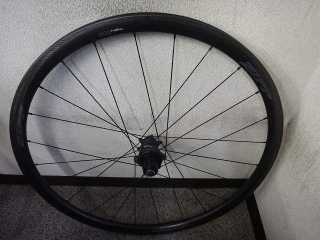
It's a ZIPP low-profile rim rear wheel.
According to the customer, the tire was touching the frame, but it wasn't in normal condition—the spoke tension on the non-freewheel side had dropped significantly.
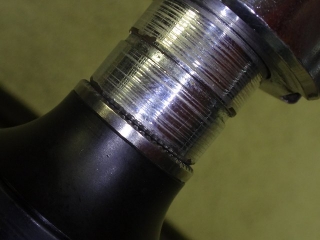

The rim was also quite shifted toward the freewheel side.
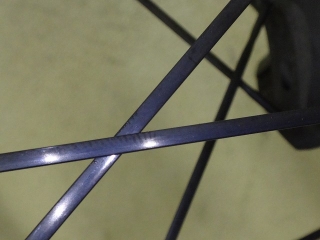
↑This is a view of the final crossing on the non-freewheel side from the outside (left side).
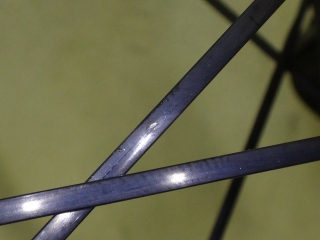
When you squeeze the final crossing, you can see the paint has chipped off where the spokes contact each other.
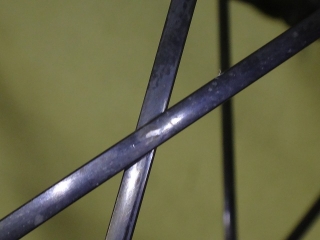
At a different final crossing, the worn paint is facing outward.
This means the spoke has flipped.
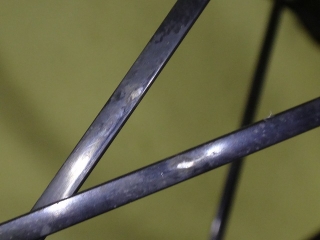
When you squeeze it like this, there are two paint chips visible.
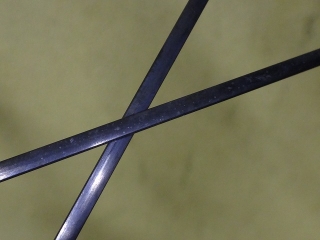
Looking at this final crossing from the inside (right side), there's no paint damage.
So the spoke flip must have happened recently.
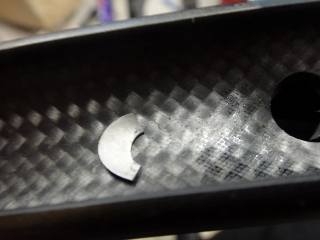
A broken fragment of Sapim's new B washer came out.
The customer confirmed that the other piece fell off the rim.
Since this sits between the nipple and rim, when it comes out after the wheel is built, spoke tension naturally drops dramatically.
Though only one spot had this breakage, the spoke tension on the non-freewheel side is generally slack with some variance.
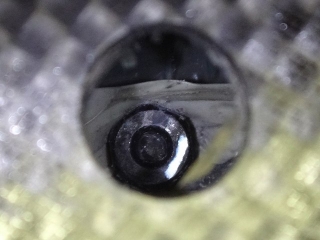
I found where the washer had cracked.
What caught my attention was that the washer was pinching a balloon between itself and the rim.
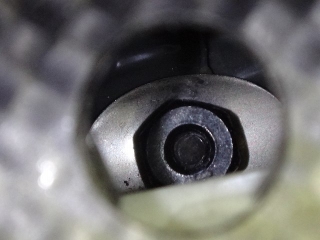
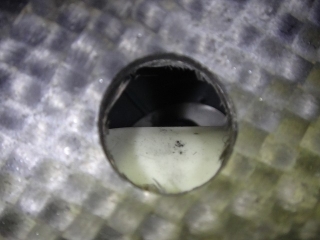
↑These are spots in normal condition, and they're not pinching the balloon.
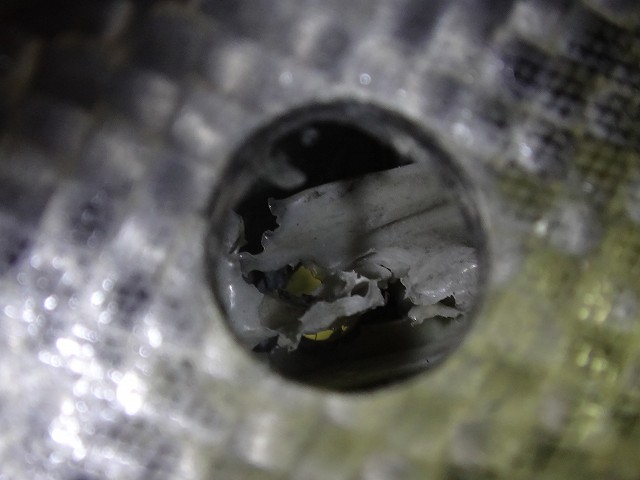
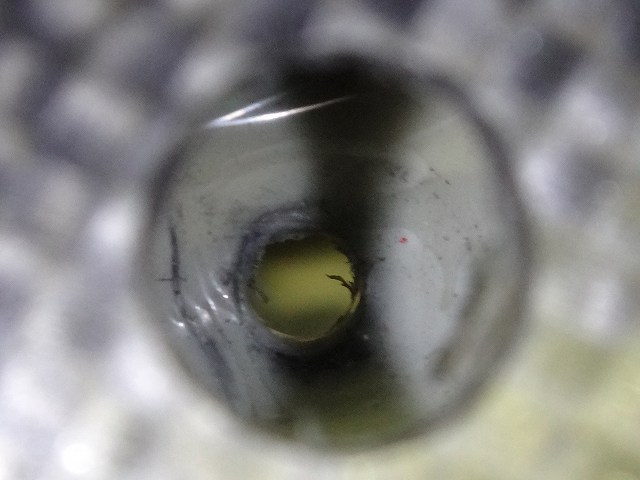
However, some balloon material does remain obstructing the rim hole.
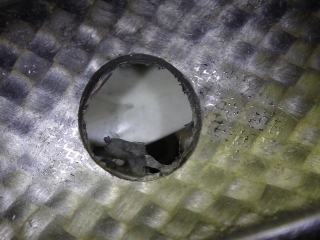
↑In some places, the nipple isn't even visible.
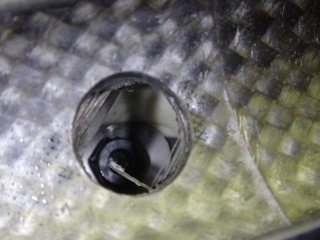
From the spot where the washer was pinching the balloon
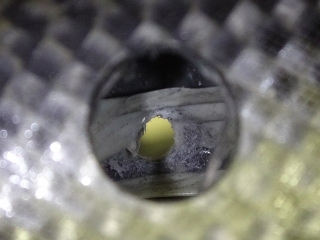
I removed the washer and nipple.
Earlier I noted that there was variance in the non-freewheel side tension, and the areas with particularly low tension almost perfectly coincide with where the balloon was pinched.
My simple thinking would be that rim holes with balloon thickness would have higher tension, but if the material isn't hard, maybe it doesn't work that way.
Whether having balloon sitting under the washer makes the nipple more prone to loosening is unclear, but if we're judging from just this one case, there's that possibility.
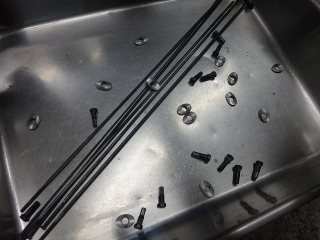
Since I wanted to remove the balloon, I temporarily removed the washer, nipple, and spoke from the position where it was pinched.
The spokes in the image are only from the non-freewheel side.
The freewheel side spokes are a different length, so I've separated them for distinction.
The washers were new B washers (see here and its further links), so they didn't stick well to a magnet, making recovery tedious.
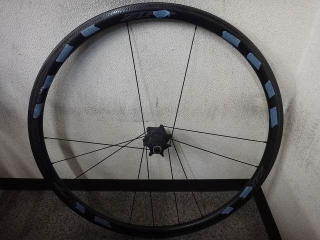
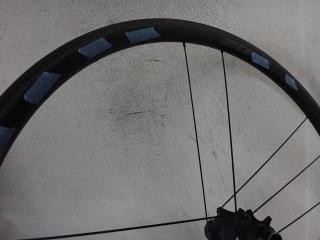
I marked the rim holes with tape after removing the parts.
This turned out to be more tedious than building a wheel from scratch.
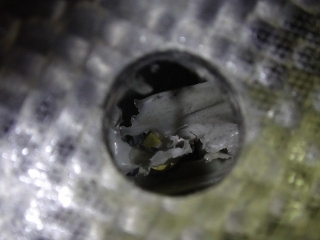
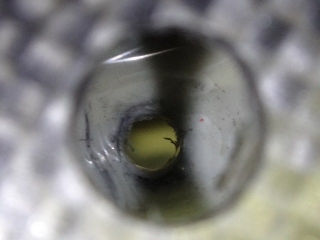
↑Rim holes with parts removed
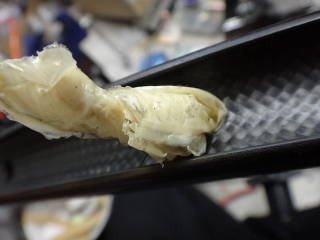
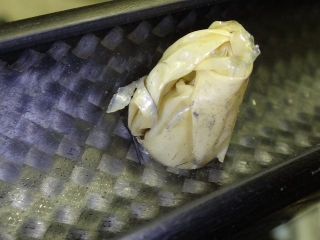
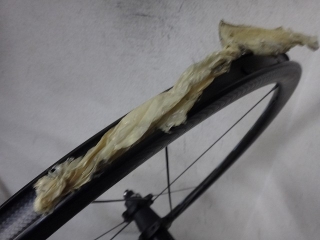
The way to remove the balloon is premium content here. It might not look simple, but I'm confident there's no more efficient method—it's a refined technique.
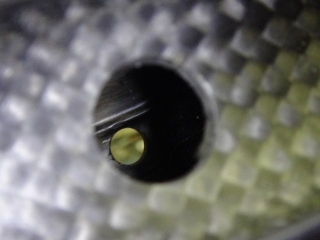
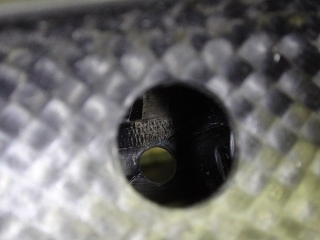
↑Rim hole after balloon removal
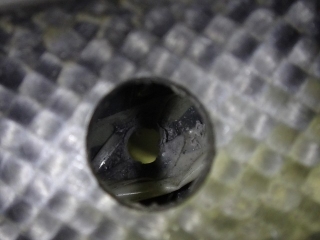
During the work, I found another rim hole where the balloon was pinched, so I removed those parts too.
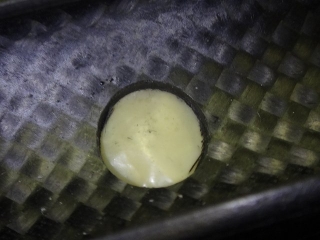
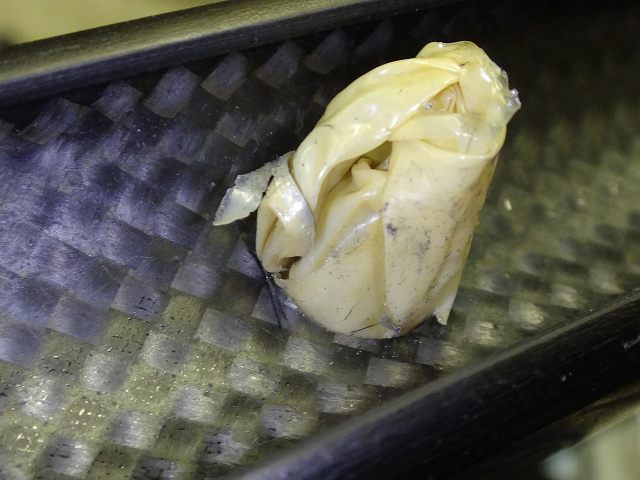
Same rim hole as the previous image. Here I'm pulling out a chunk of balloon material. I extracted it from the neighboring hole.
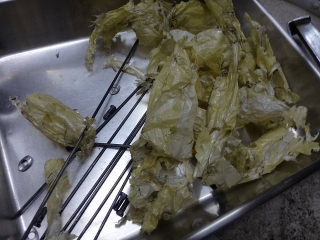
I removed almost all the balloon from inside the rim.
What's shown in the image is just the larger pieces; I've discarded the fine bits.
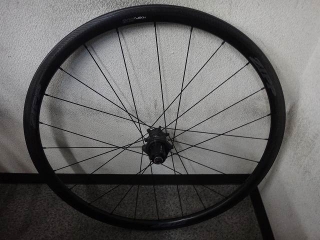
I refilled the parts and reassembled.
The image above is the freewheel side, but
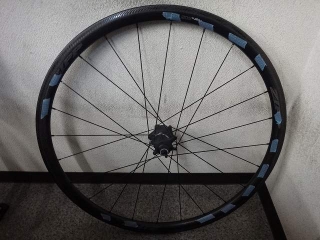
The marking tape is on the non-freewheel side.
Since I added one during the process, there's one more piece of tape.
When I disassembled it, I found that on both sides the nipple ends were installed with about 8 turns from where they just covered the spoke threads, so I started the nipples at the marked rim holes with 6 turns each from that point and gradually tightened from there.
I kept the freewheel side as taut as possible and higher than the average hang test, but since I didn't change the spokes, the non-freewheel side is looser than my typical rear wheel builds.
Still, the rear tire shouldn't touch the frame. If it did, then a stock wheel of the same type would be rubbing even worse. Tire-to-brake rubbing might occur though.
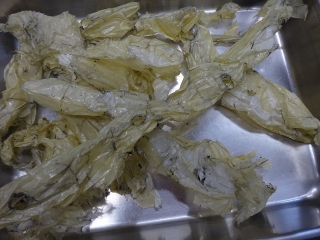
As for the extracted balloon, the evenly-spaced large holes with black edges correspond to
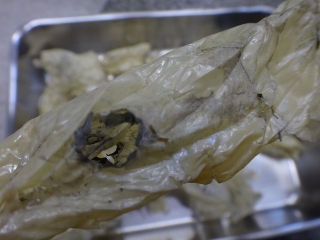
the holes on the outer perimeter of the rim.

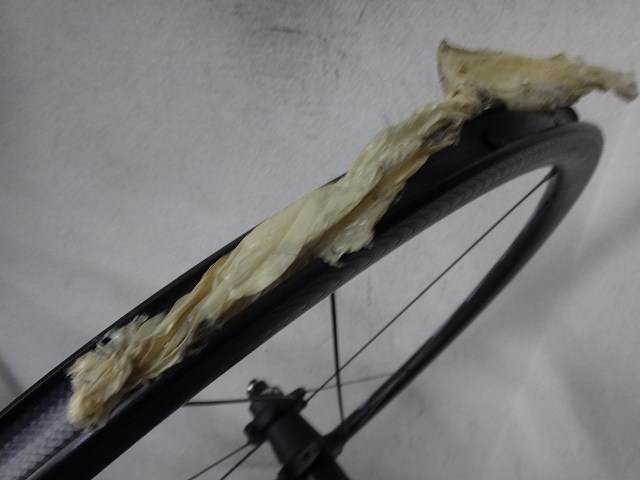
↑This was the biggest haul from this job, stretching 4 rim holes in length, but
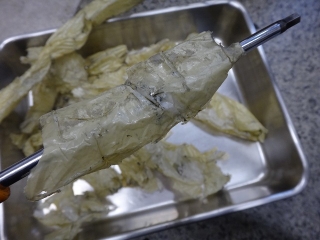
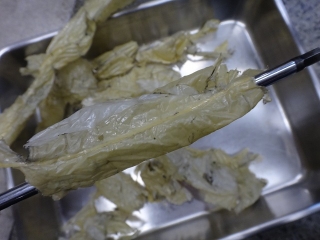
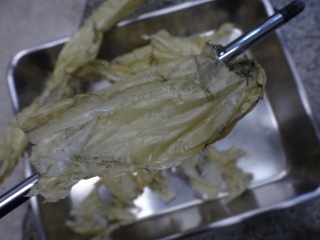
Typical pieces come out about this size at a time.
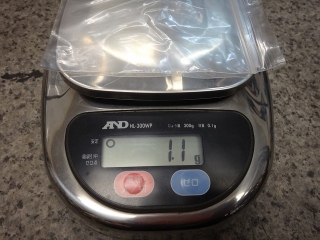
I weighed the balloon to see how much it came to.
A vinyl bag on a 0.1g resolution scale weighed 1.1g,
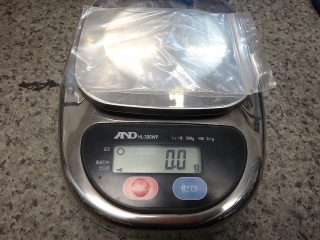
zeroing it out showed 0g,

and removing the bag read minus 1.1g.
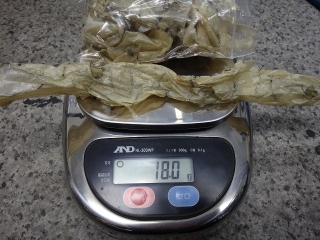
I put the balloon in the bag along with the big piece and weighed everything.
Since I discarded the fine bits, if I'd collected those too it would be around 19g.
On a low-profile rim where weight matters, a 20g difference is significant.
The difference between a 500g rim losing 20g versus a 350g rim becoming 330g is more impactful. A 500g rim like this would likely be an aero rim with taller profile, usually ridden in speed ranges where being somewhat heavier is actually advantageous.
Also, as rim height increases, the balloon's surface area increases, so the weight reduction from complete removal would be even greater.
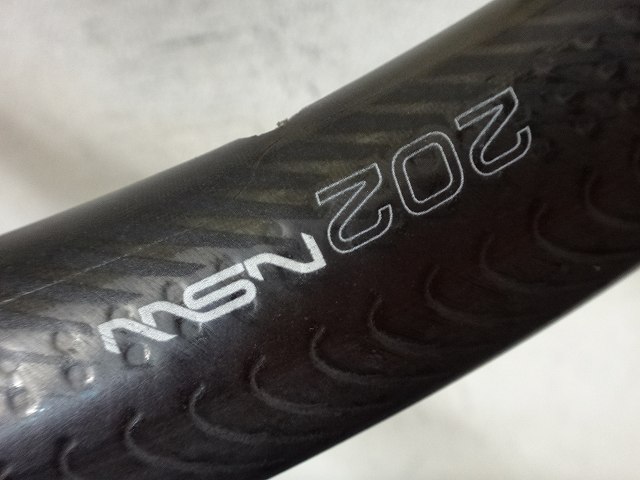
Looking at the part number, I wondered if it had some connection to Zeong or Hyaku Shiki, but it didn't.
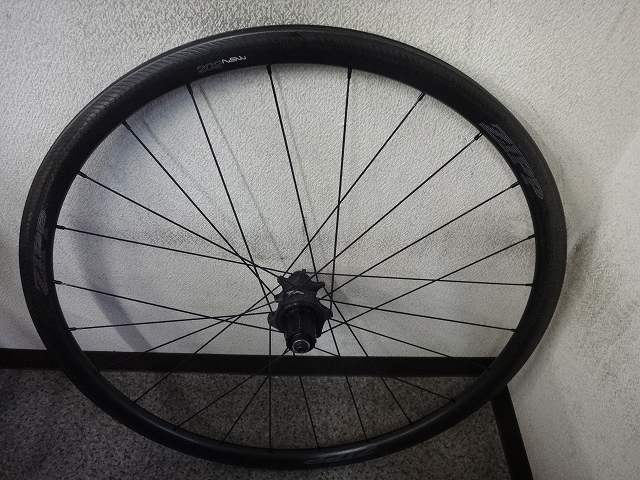
It's a ZIPP low-profile rim rear wheel.
According to the customer, the tire was touching the frame, but it wasn't in normal condition—the spoke tension on the non-freewheel side had dropped significantly.

The rim was also quite shifted toward the freewheel side.
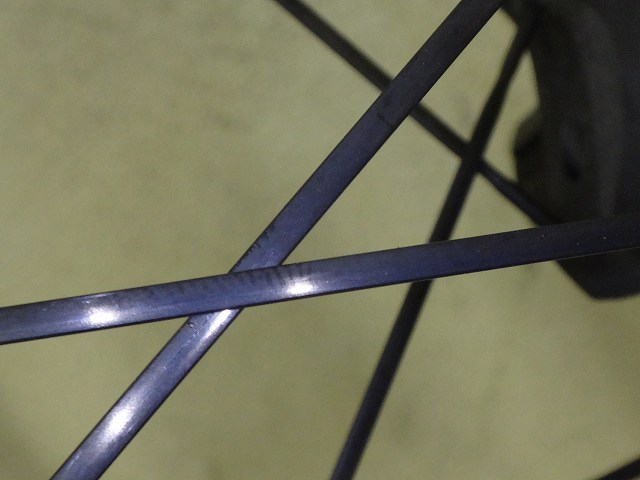
↑This is a view of the final crossing on the non-freewheel side from the outside (left side).
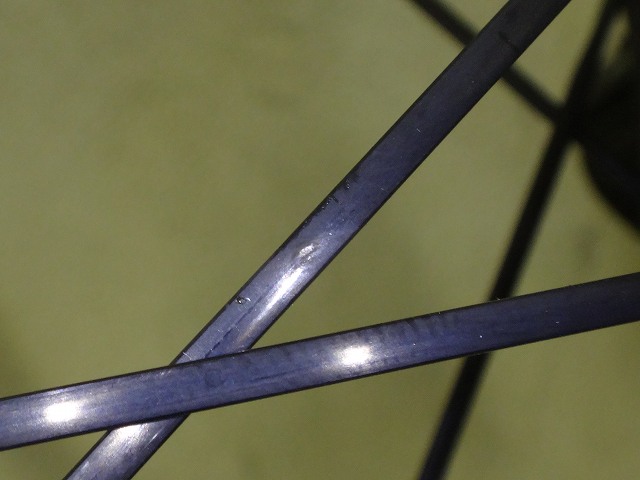
When you squeeze the final crossing, you can see the paint has chipped off where the spokes contact each other.

At a different final crossing, the worn paint is facing outward.
This means the spoke has flipped.
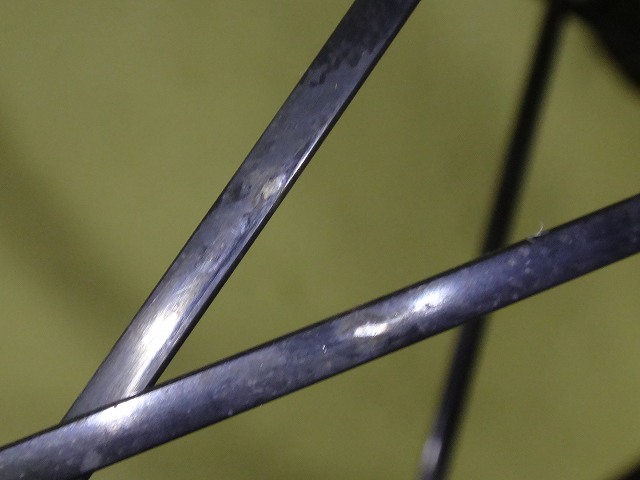
When you squeeze it like this, there are two paint chips visible.
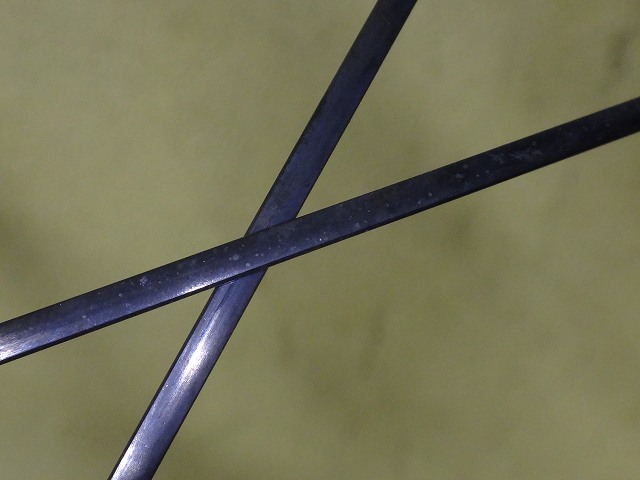
Looking at this final crossing from the inside (right side), there's no paint damage.
So the spoke flip must have happened recently.
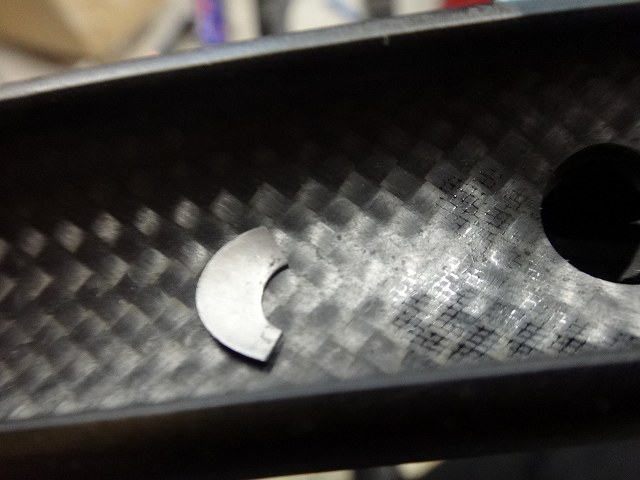
A broken fragment of Sapim's new B washer came out.
The customer confirmed that the other piece fell off the rim.
Since this sits between the nipple and rim, when it comes out after the wheel is built, spoke tension naturally drops dramatically.
Though only one spot had this breakage, the spoke tension on the non-freewheel side is generally slack with some variance.
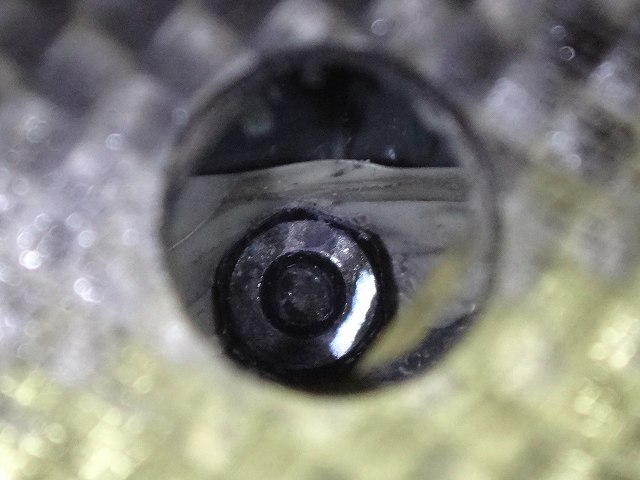
I found where the washer had cracked.
What caught my attention was that the washer was pinching a balloon between itself and the rim.
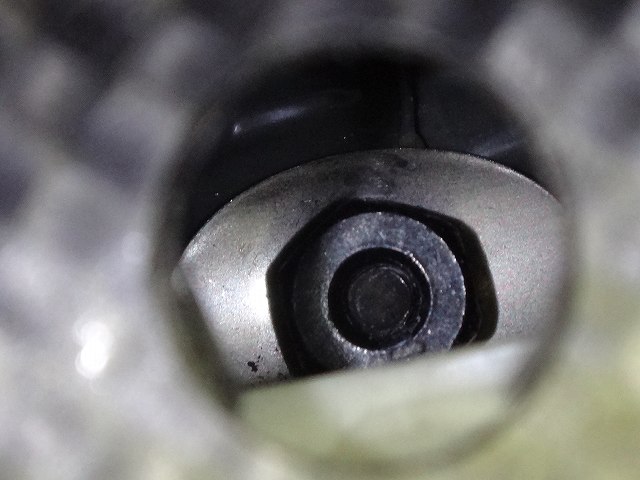
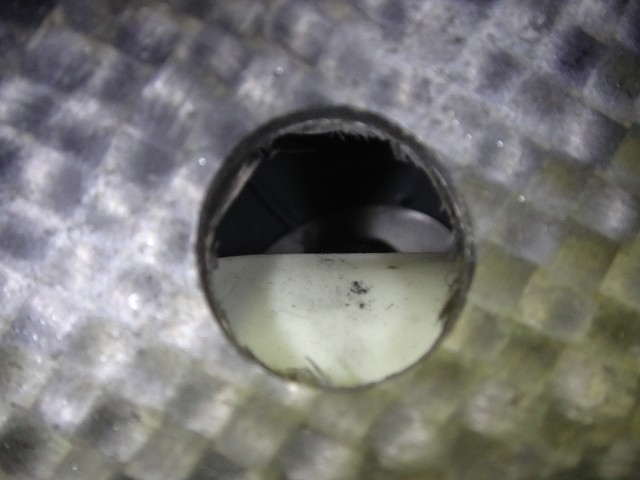
↑These are spots in normal condition, and they're not pinching the balloon.
However, some balloon material does remain obstructing the rim hole.

↑In some places, the nipple isn't even visible.
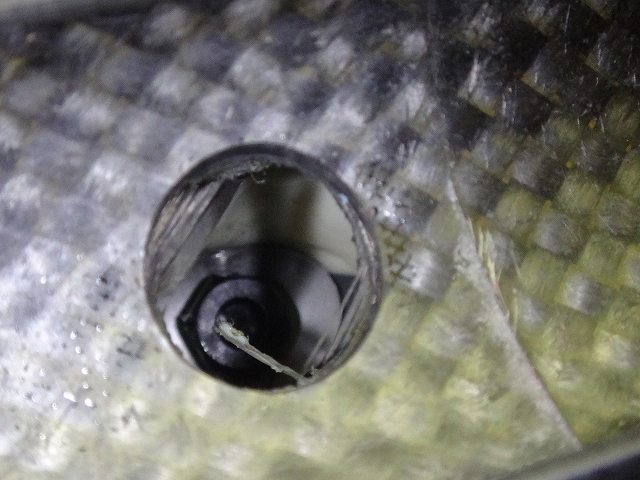
From the spot where the washer was pinching the balloon

I removed the washer and nipple.
Earlier I noted that there was variance in the non-freewheel side tension, and the areas with particularly low tension almost perfectly coincide with where the balloon was pinched.
My simple thinking would be that rim holes with balloon thickness would have higher tension, but if the material isn't hard, maybe it doesn't work that way.
Whether having balloon sitting under the washer makes the nipple more prone to loosening is unclear, but if we're judging from just this one case, there's that possibility.
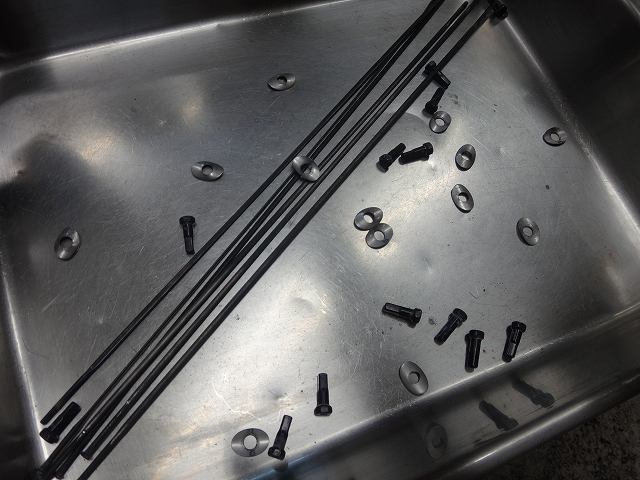
Since I wanted to remove the balloon, I temporarily removed the washer, nipple, and spoke from the position where it was pinched.
The spokes in the image are only from the non-freewheel side.
The freewheel side spokes are a different length, so I've separated them for distinction.
The washers were new B washers (see here and its further links), so they didn't stick well to a magnet, making recovery tedious.
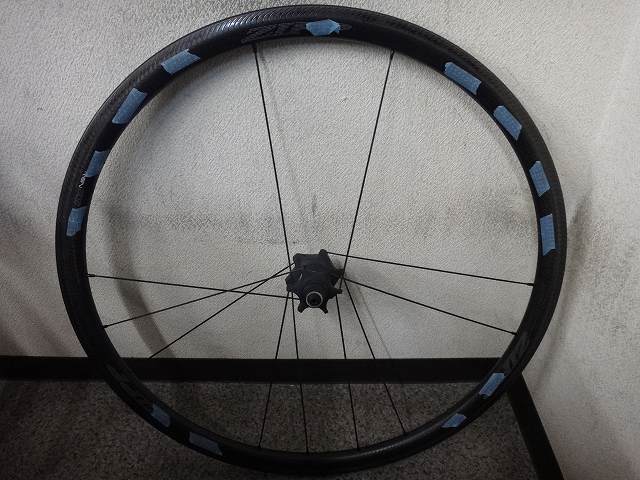
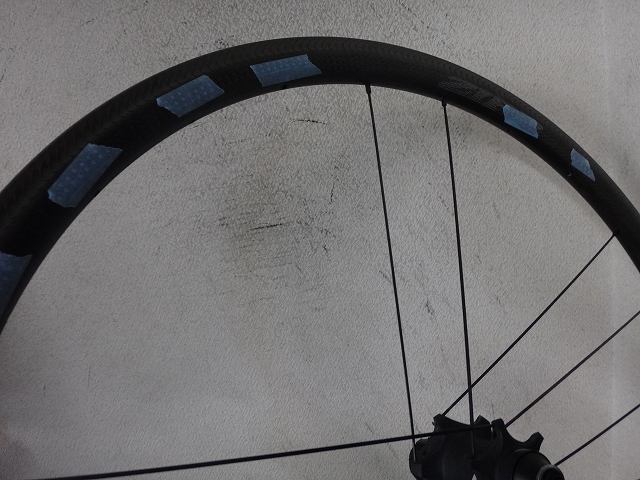
I marked the rim holes with tape after removing the parts.
This turned out to be more tedious than building a wheel from scratch.
↑Rim holes with parts removed

The way to remove the balloon is premium content here. It might not look simple, but I'm confident there's no more efficient method—it's a refined technique.

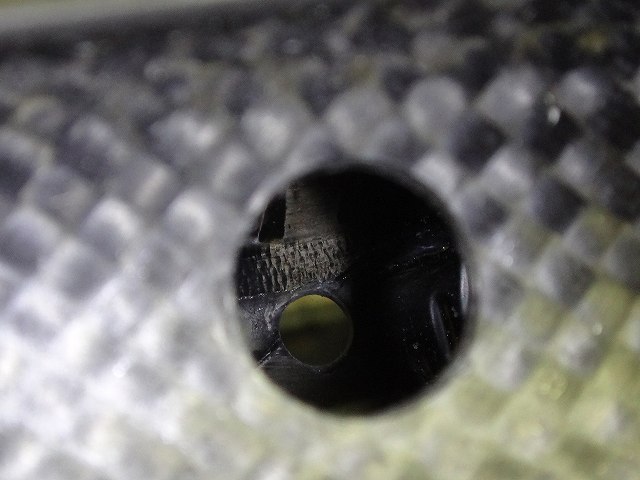
↑Rim hole after balloon removal
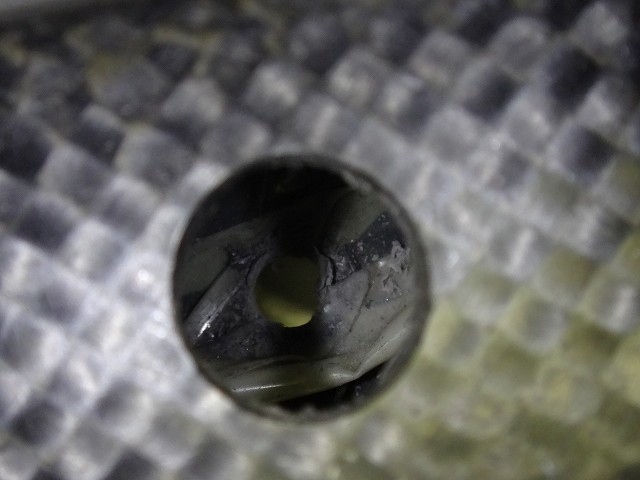
During the work, I found another rim hole where the balloon was pinched, so I removed those parts too.

Same rim hole as the previous image. Here I'm pulling out a chunk of balloon material. I extracted it from the neighboring hole.
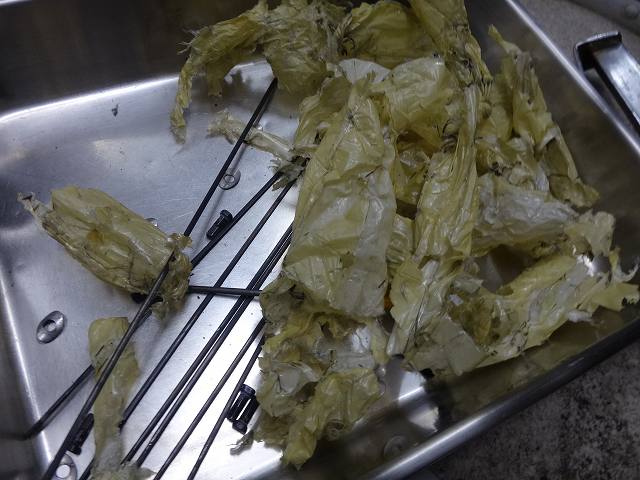
I removed almost all the balloon from inside the rim.
What's shown in the image is just the larger pieces; I've discarded the fine bits.
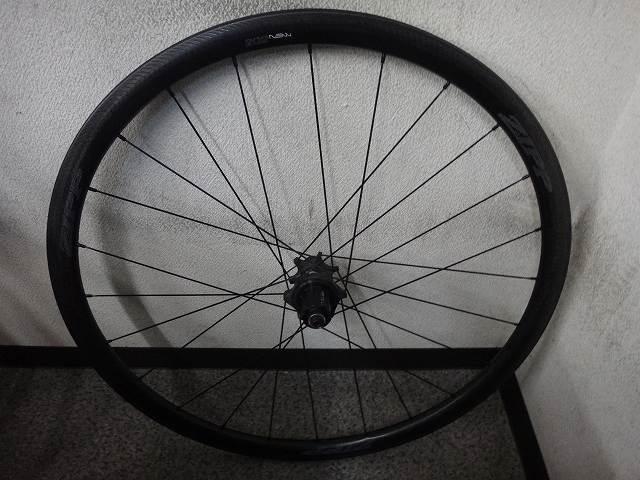
I refilled the parts and reassembled.
The image above is the freewheel side, but

The marking tape is on the non-freewheel side.
Since I added one during the process, there's one more piece of tape.
When I disassembled it, I found that on both sides the nipple ends were installed with about 8 turns from where they just covered the spoke threads, so I started the nipples at the marked rim holes with 6 turns each from that point and gradually tightened from there.
I kept the freewheel side as taut as possible and higher than the average hang test, but since I didn't change the spokes, the non-freewheel side is looser than my typical rear wheel builds.
Still, the rear tire shouldn't touch the frame. If it did, then a stock wheel of the same type would be rubbing even worse. Tire-to-brake rubbing might occur though.
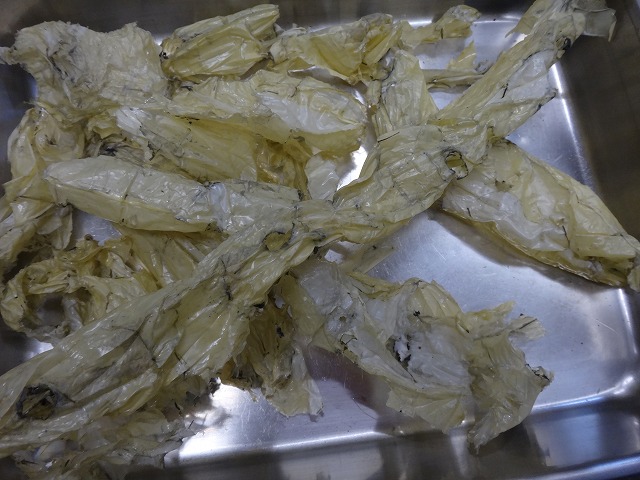
As for the extracted balloon, the evenly-spaced large holes with black edges correspond to

the holes on the outer perimeter of the rim.
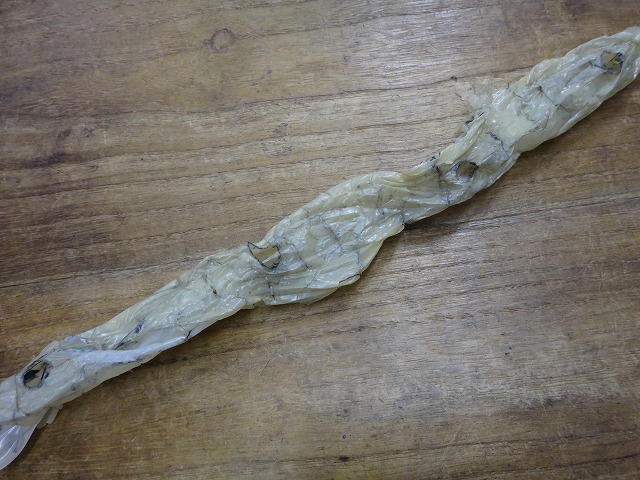
↑This was the biggest haul from this job, stretching 4 rim holes in length, but
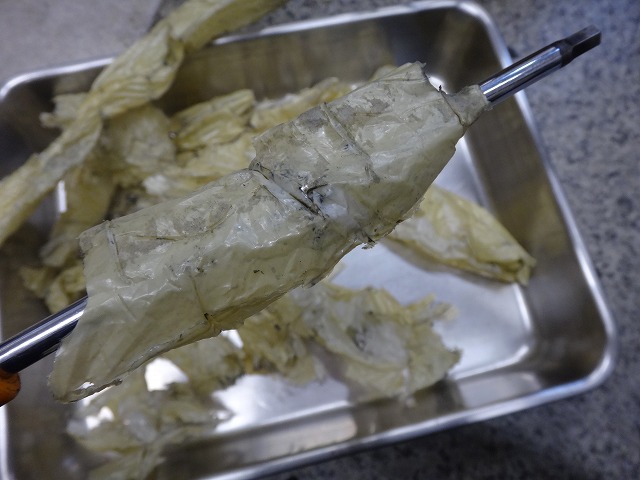
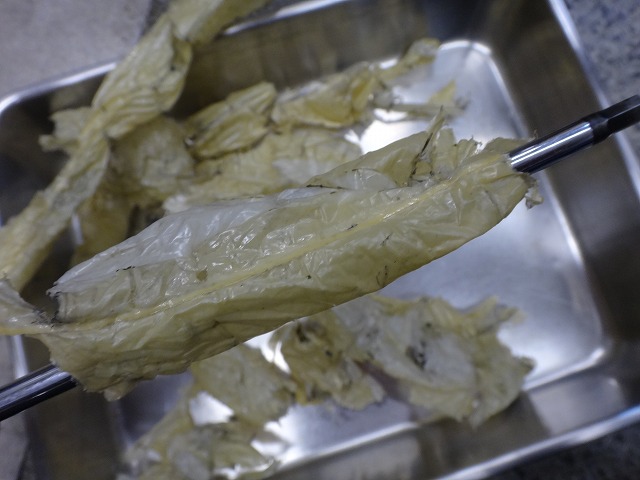
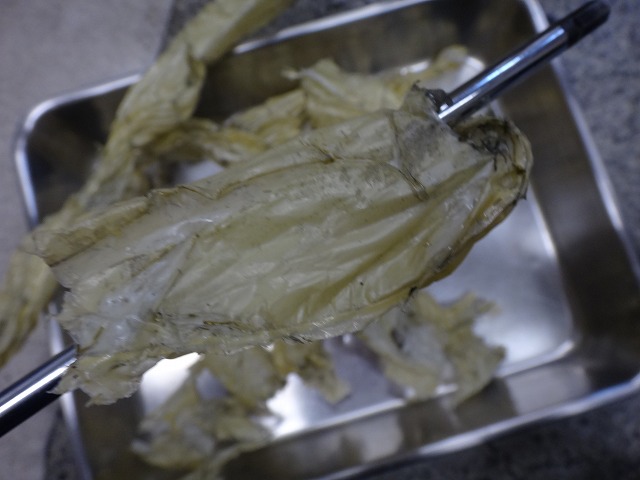
Typical pieces come out about this size at a time.
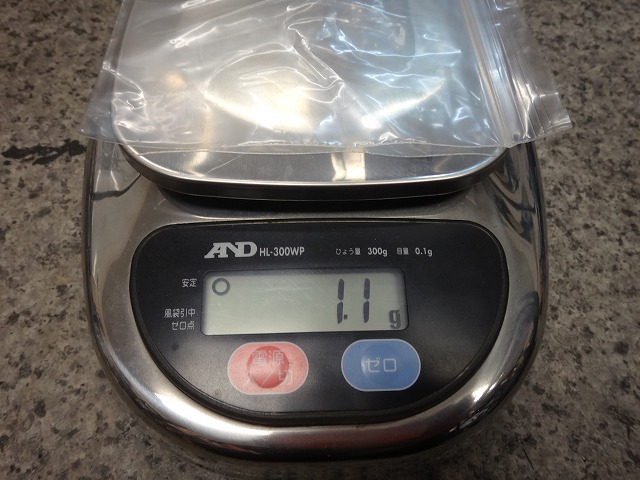
I weighed the balloon to see how much it came to.
A vinyl bag on a 0.1g resolution scale weighed 1.1g,
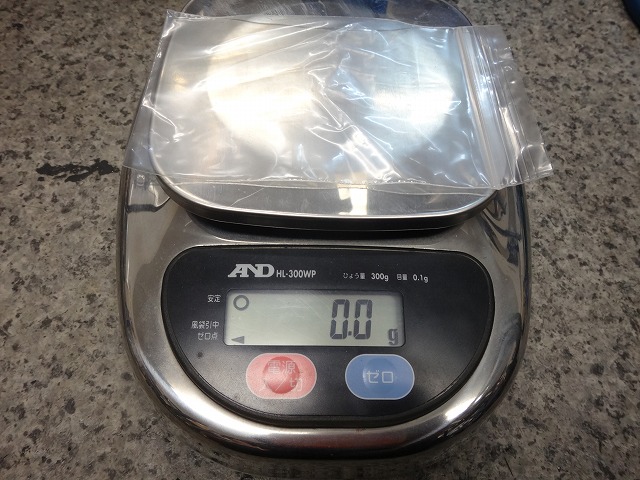
zeroing it out showed 0g,
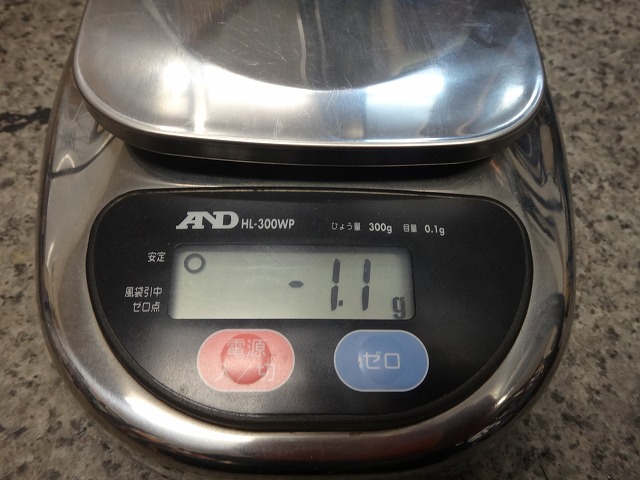
and removing the bag read minus 1.1g.
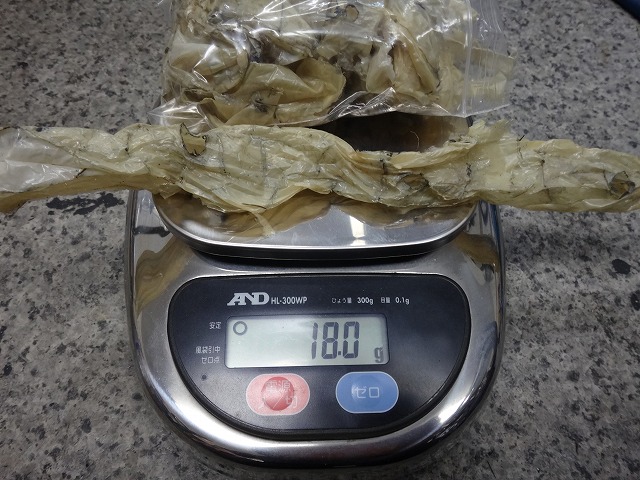
I put the balloon in the bag along with the big piece and weighed everything.
Since I discarded the fine bits, if I'd collected those too it would be around 19g.
On a low-profile rim where weight matters, a 20g difference is significant.
The difference between a 500g rim losing 20g versus a 350g rim becoming 330g is more impactful. A 500g rim like this would likely be an aero rim with taller profile, usually ridden in speed ranges where being somewhat heavier is actually advantageous.
Also, as rim height increases, the balloon's surface area increases, so the weight reduction from complete removal would be even greater.