Another day with wheels (and so on).
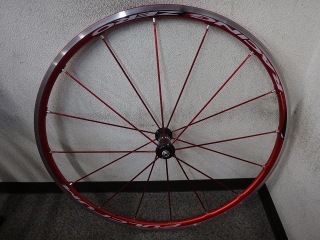
A customer left me with a Racing Zero front wheel.
The current owner isn't the first owner,
and the previous owner might not have been the first owner either.
First of all, the hub and rim generations don't match.
The rim is from the original-generation red Racing Zero
that was built with tie spokes.
The hub has a carbon shell with USB-specification bearings,
making it a later specification compared to the rim.
The backstory (※) is that after someone ruined both rims,
a person who obtained the front and rear hubs from that owner
bought a rim and spokes to try building the wheel themselves,
which resulted in something like "scrap material"—and then
the current owner bought this at auction.
※ I converted the kanji for "keii" (経緯). The same characters also come up for "ikisatsu".
The previous owner actually only bought a front rim,
and only tried to build the front wheel,
but with tension somewhat decent
and only making an effort to correct lateral wobble,
it was hardly something you could call a wheel.
I try not to be too harsh on amateurs,
but facts are facts.
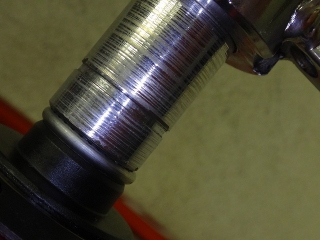
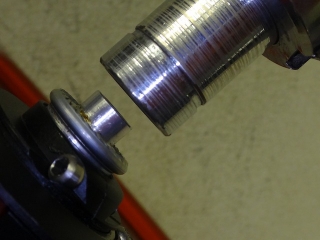
The centering is off by this much.
What's surprising isn't that fact itself, but rather
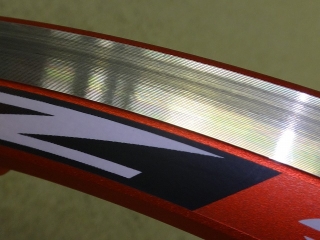
↑that it's actually been used in this condition.
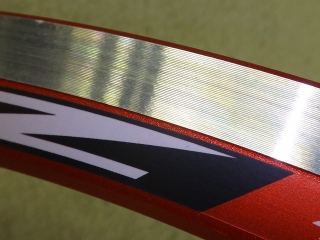
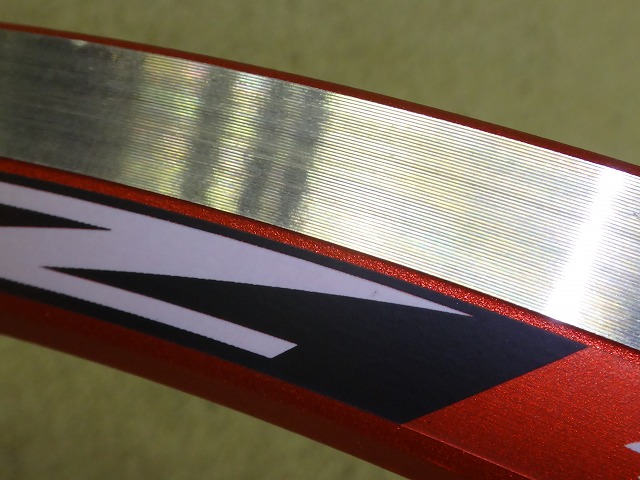
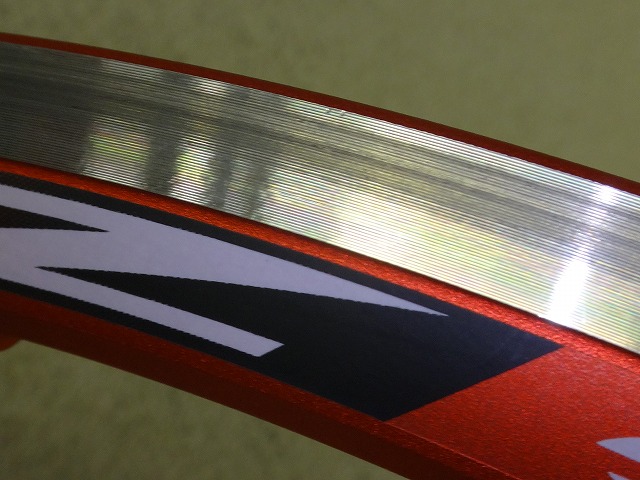
In the top image, I shot it at the phase where the ZERO logos on both sides line up.
On the side shown in the bottom image, there's a distinctive band of wear marks.
Also, while it's pretty difficult to apply the rim sticker cleanly,
this generation of Racing Zero rims have
the Racing 1 with brass nipple specifications,
where the rim hole size is slightly smaller
and doesn't share specs with Racing Zero,
becoming a "unique specification not found on other models"—
rims like that are provided with stickers pre-applied from the start.
So the buyer of this rim didn't apply the sticker themselves.
With later models, for example the difference between Shamal Ultra and Eurus
is only in the hub shell material and bearing specifications,
with the rim itself being identical,
and those shared rims are provided without stickers.
Just fixing this properly wouldn't be a wheel rebuild, but
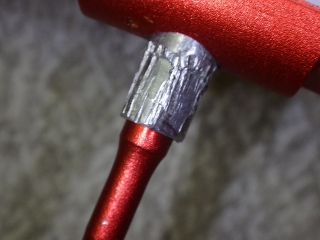
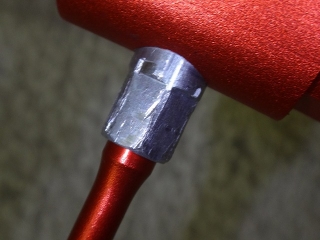

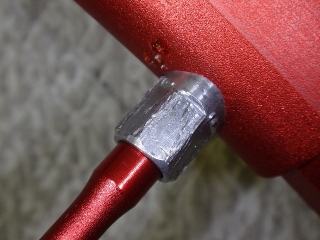
almost all the nipples have their corners worn away and need replacing,
so this becomes a wheel rebuild (the moment when rim and hub separate).
By the way, the top two images show the side where the rim is offset outward,
and the bottom two are the opposite side's spokes,
so you can see the length of the rounded portion sticking out from the nipple is quite different.
As for the nipples, they were apparently turned with pliers or a water pump plier.
Because of that,
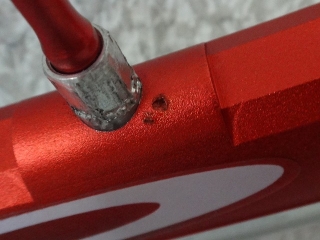
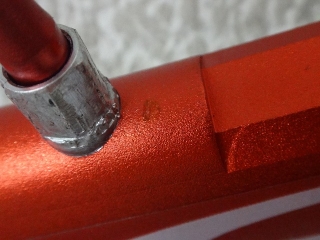

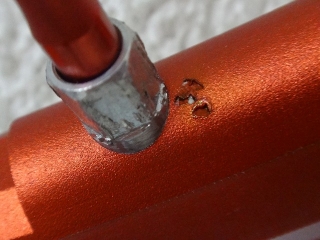
aside from the nipples, around the rim holes there were
marks where the tool's gripping edges had bitten into the metal—
you could see this to varying degrees all around.

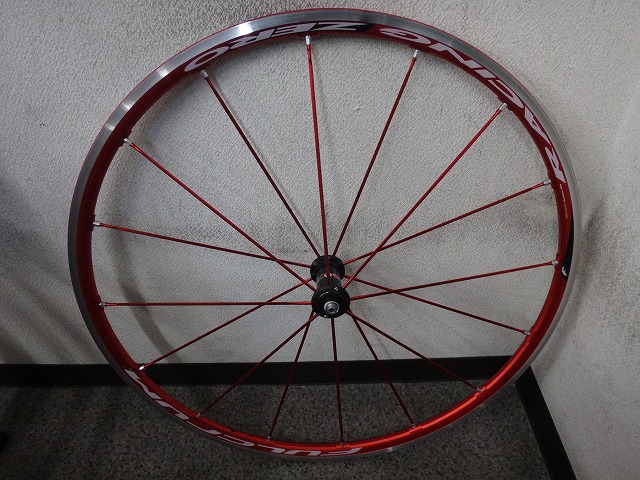
It's built.
It looks almost the same as the image at the beginning,
so I'm wondering if there's any point in showing it.

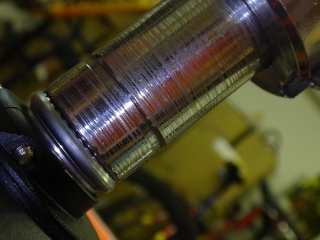
The centering is spot-on.
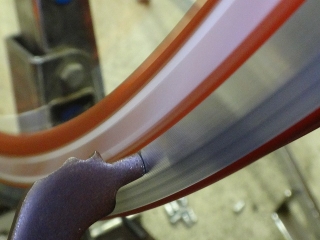
And I've dialed in the lateral run-out (just to note, the wheel in the image is spinning).
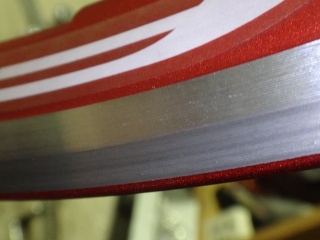
The brake zone on the side with the prominent wear marks
has wear marks all around the outer edge in this phase,
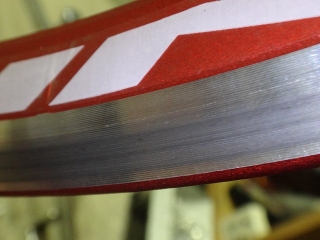
but at the phase where the vertical position was offset outward,
the shoe isn't touching the outermost edge.
At one point, this wear mark was perfectly circular.
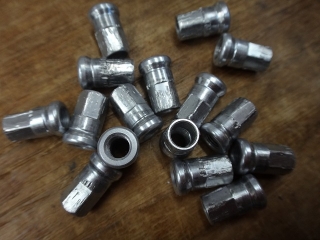
↑The original nipples (there are properly 16 of them)
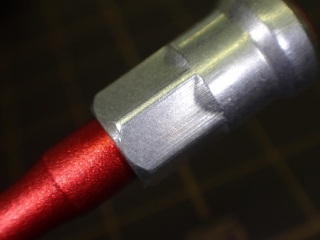
These red spokes have markings with four vertical strokes "IIII",
and are for a front hub with
a new retainer with two fewer bearing balls
and a new shaft where the right end and hub axle are separate parts,
with a smaller flange diameter—
and aside from color, they share the same length as Shamal Ultra and Racing Zero.
So they have a thread length that matches
the new nipples which have a nylon insert embedded on the outer end
to prevent loosening,
and when I screwed the spoke in by hand as far as it would go,
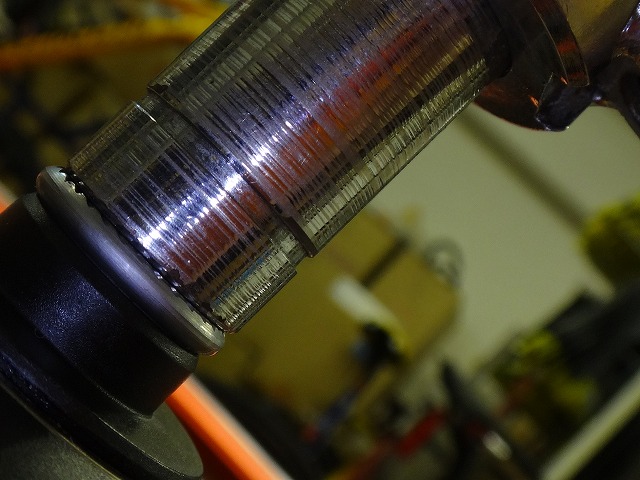
the point where it just barely caught the nylon nut is shown in the image above.
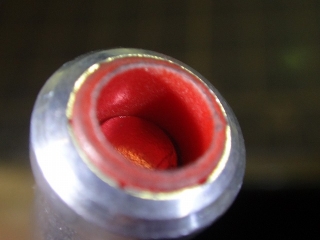
↑Like this.
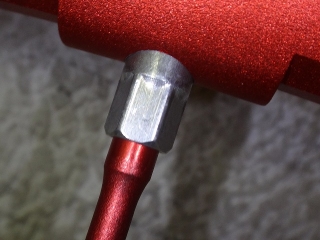
This is the state when building is complete, and while the spokes have
some slight variation in the length of the rounded portion sticking out,
from the feel, I'm certain that all the spoke threads are
engaging with the anti-loosening nylon.
Because I was confident this would happen,
I rebuilt it using new nipples where the old ones used to be.
A customer left me with a Racing Zero front wheel.
The current owner isn't the first owner,
and the previous owner might not have been the first owner either.
First of all, the hub and rim generations don't match.
The rim is from the original-generation red Racing Zero
that was built with tie spokes.
The hub has a carbon shell with USB-specification bearings,
making it a later specification compared to the rim.
The backstory (※) is that after someone ruined both rims,
a person who obtained the front and rear hubs from that owner
bought a rim and spokes to try building the wheel themselves,
which resulted in something like "scrap material"—and then
the current owner bought this at auction.
※ I converted the kanji for "keii" (経緯). The same characters also come up for "ikisatsu".
The previous owner actually only bought a front rim,
and only tried to build the front wheel,
but with tension somewhat decent
and only making an effort to correct lateral wobble,
it was hardly something you could call a wheel.
I try not to be too harsh on amateurs,
but facts are facts.

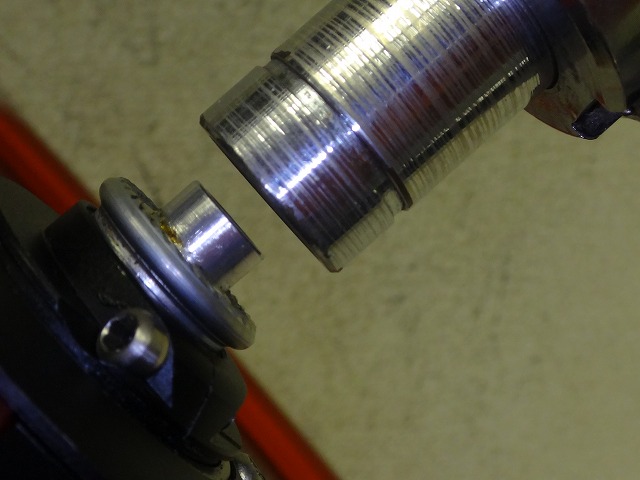
The centering is off by this much.
What's surprising isn't that fact itself, but rather
↑that it's actually been used in this condition.
In the top image, I shot it at the phase where the ZERO logos on both sides line up.
On the side shown in the bottom image, there's a distinctive band of wear marks.
Also, while it's pretty difficult to apply the rim sticker cleanly,
this generation of Racing Zero rims have
the Racing 1 with brass nipple specifications,
where the rim hole size is slightly smaller
and doesn't share specs with Racing Zero,
becoming a "unique specification not found on other models"—
rims like that are provided with stickers pre-applied from the start.
So the buyer of this rim didn't apply the sticker themselves.
With later models, for example the difference between Shamal Ultra and Eurus
is only in the hub shell material and bearing specifications,
with the rim itself being identical,
and those shared rims are provided without stickers.
Just fixing this properly wouldn't be a wheel rebuild, but
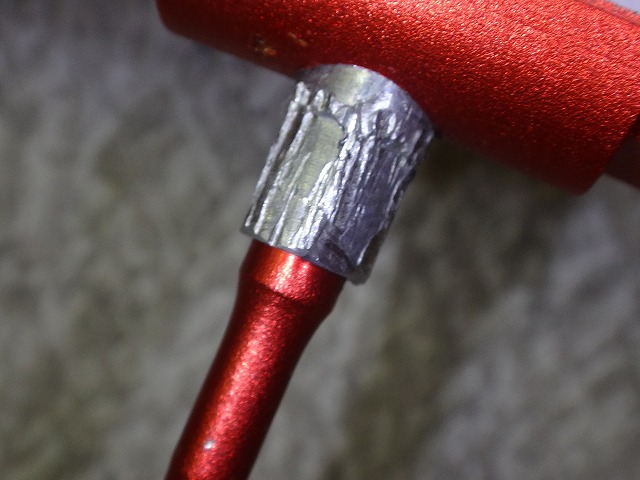

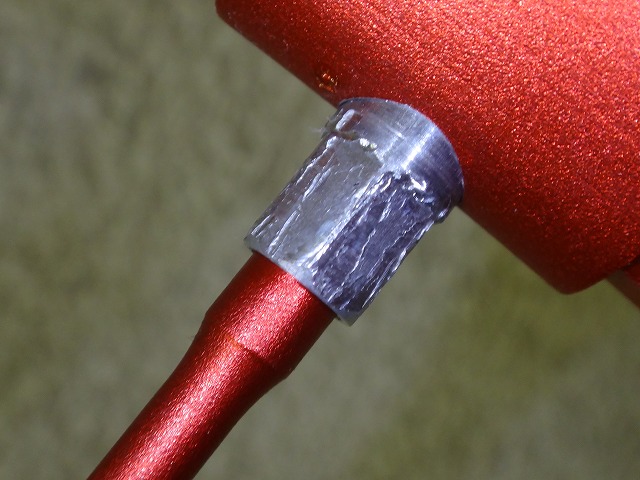
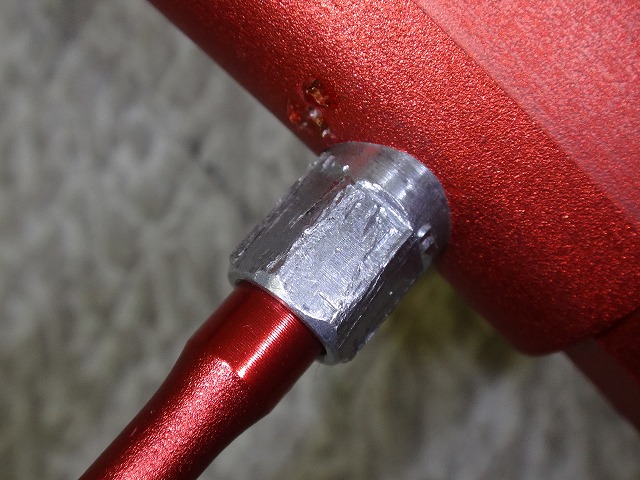
almost all the nipples have their corners worn away and need replacing,
so this becomes a wheel rebuild (the moment when rim and hub separate).
By the way, the top two images show the side where the rim is offset outward,
and the bottom two are the opposite side's spokes,
so you can see the length of the rounded portion sticking out from the nipple is quite different.
As for the nipples, they were apparently turned with pliers or a water pump plier.
Because of that,
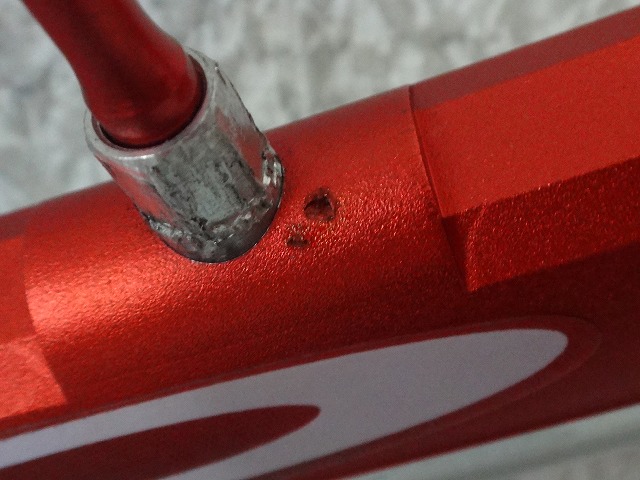
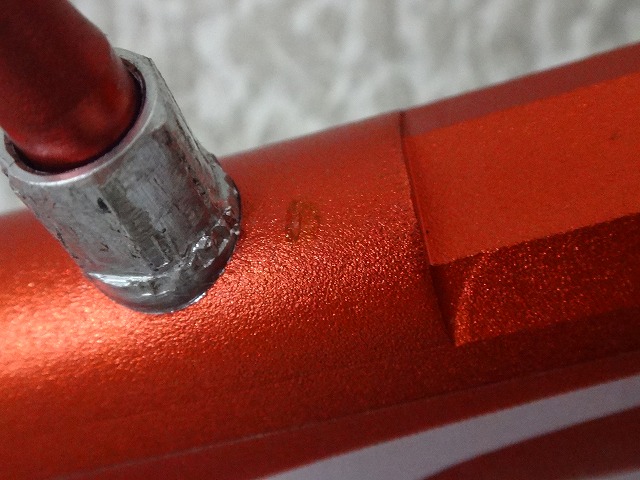
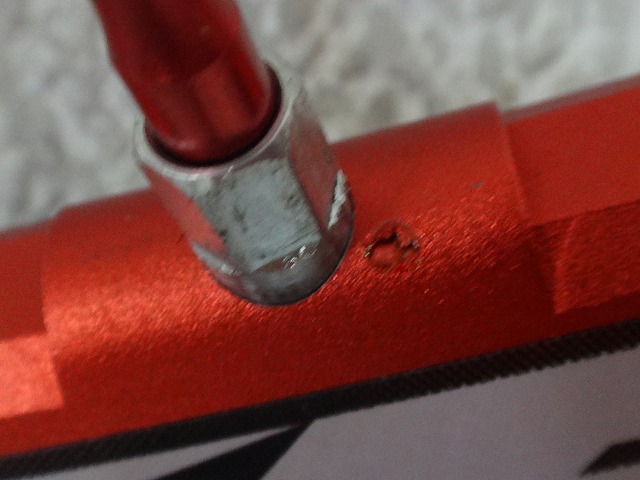
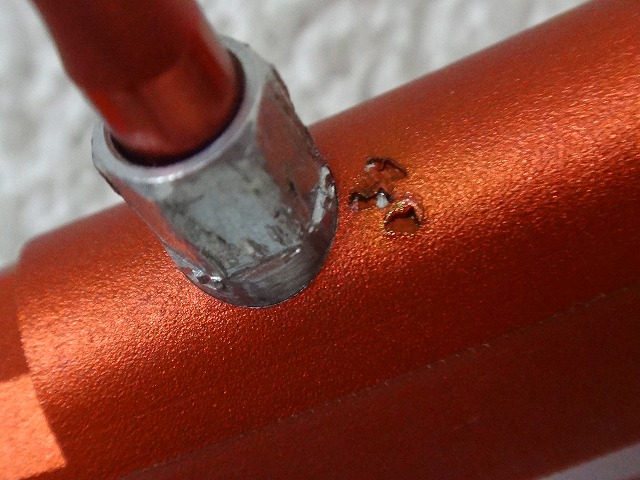
aside from the nipples, around the rim holes there were
marks where the tool's gripping edges had bitten into the metal—
you could see this to varying degrees all around.
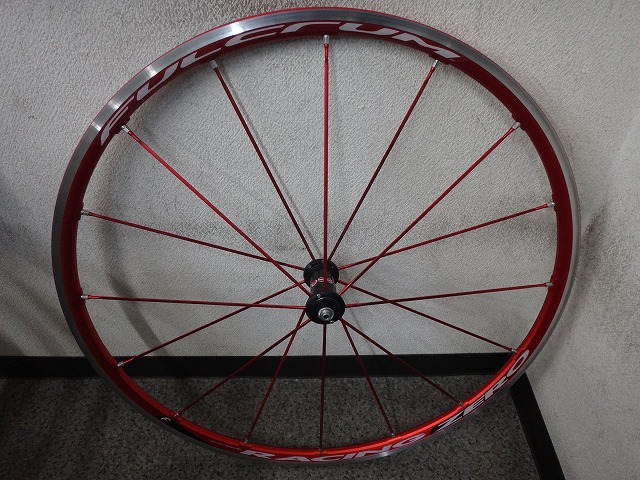
It's built.
It looks almost the same as the image at the beginning,
so I'm wondering if there's any point in showing it.
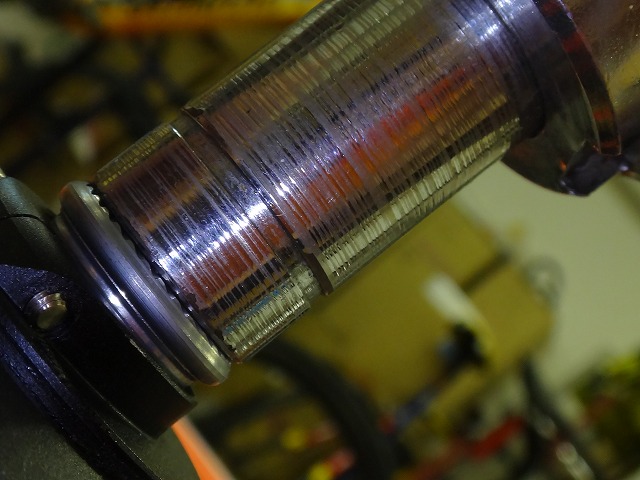
The centering is spot-on.
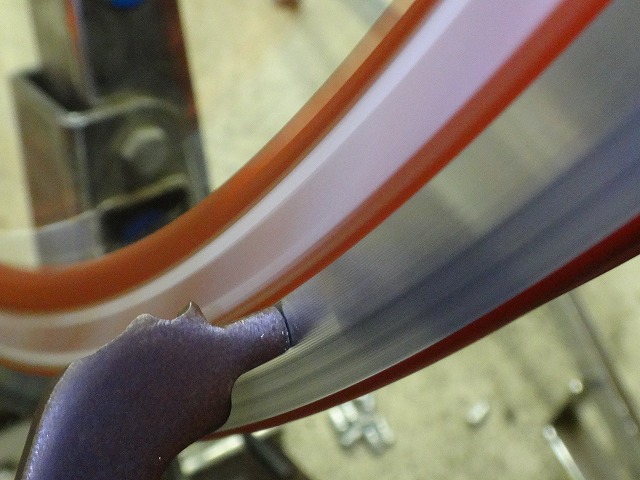
And I've dialed in the lateral run-out (just to note, the wheel in the image is spinning).
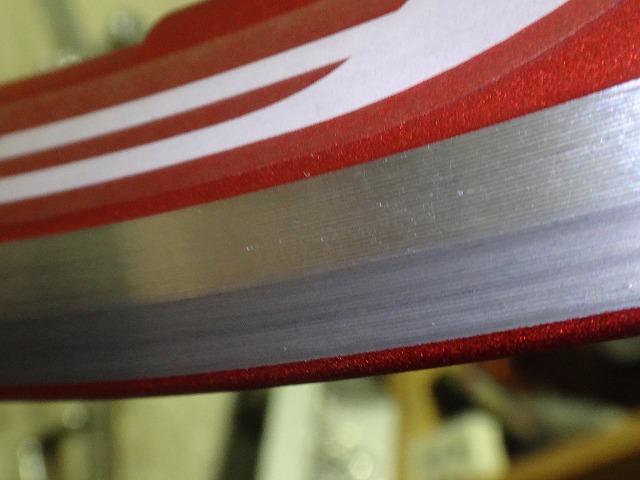
The brake zone on the side with the prominent wear marks
has wear marks all around the outer edge in this phase,
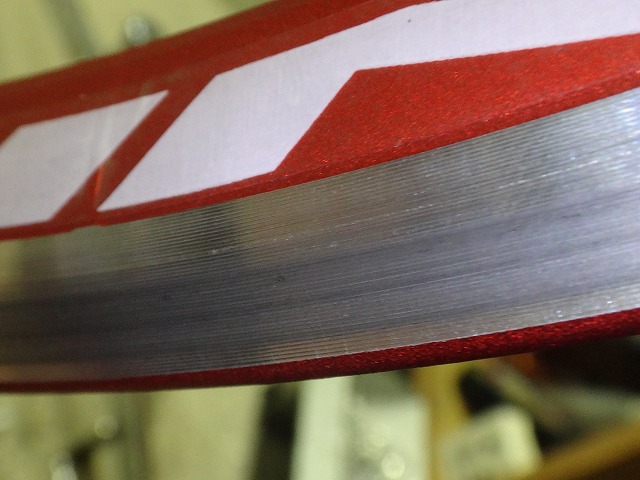
but at the phase where the vertical position was offset outward,
the shoe isn't touching the outermost edge.
At one point, this wear mark was perfectly circular.
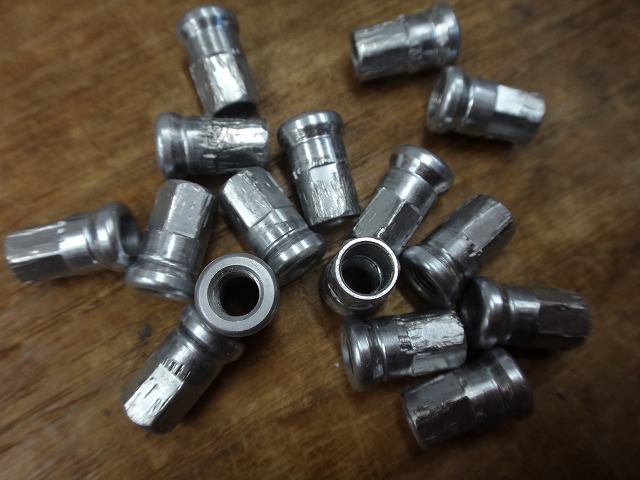
↑The original nipples (there are properly 16 of them)
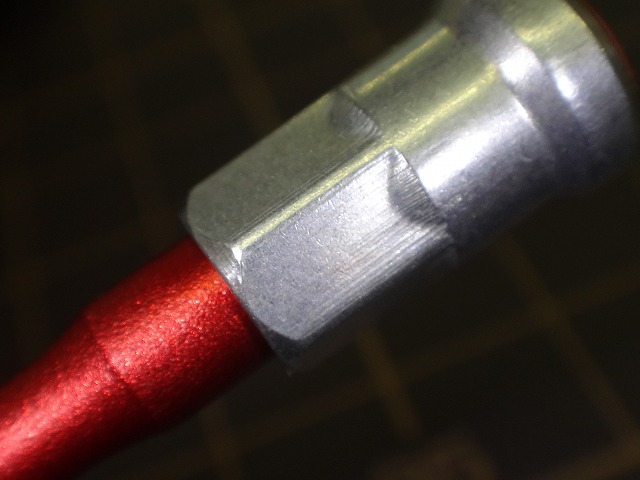
These red spokes have markings with four vertical strokes "IIII",
and are for a front hub with
a new retainer with two fewer bearing balls
and a new shaft where the right end and hub axle are separate parts,
with a smaller flange diameter—
and aside from color, they share the same length as Shamal Ultra and Racing Zero.
So they have a thread length that matches
the new nipples which have a nylon insert embedded on the outer end
to prevent loosening,
and when I screwed the spoke in by hand as far as it would go,
the point where it just barely caught the nylon nut is shown in the image above.
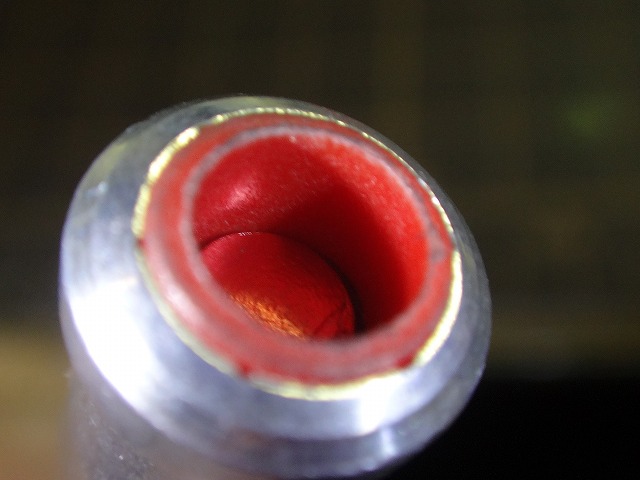
↑Like this.
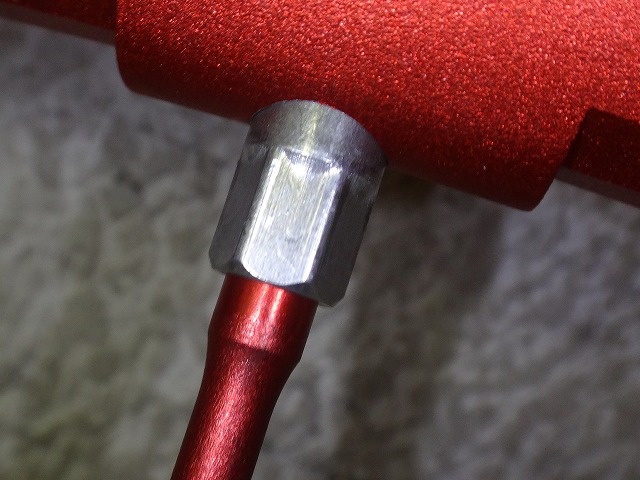
This is the state when building is complete, and while the spokes have
some slight variation in the length of the rounded portion sticking out,
from the feel, I'm certain that all the spoke threads are
engaging with the anti-loosening nylon.
Because I was confident this would happen,
I rebuilt it using new nipples where the old ones used to be.