Today it's wheels again (abbreviated hereafter).
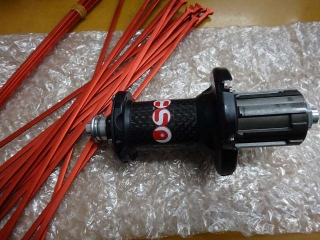
I'm building the rear wheel—the companion to the front wheel from the Racing Zero I worked on the other day.
This is speculation, but I'm fairly certain about the sequence of events:
・The first owner sold the hub and spokes on an auction site
・The second owner bought them,
obtained a front rim, and attempted to build a makeshift wheel
・The third owner (the customer who brought it to our shop) purchased it
It went something like that.
Regarding the front wheel that the second owner built themselves,
apparently they claimed "runout within 1mm,"
but even just lateral runout exceeded that,
and radial runout and center-line deviation weren't even close to wheel-worthy.
They wrote something like "nipples have minor blemishes,"
but we're talking about marks from gripping them with pliers—
I'm amazed at how delusional only a seller can be at that level.
Anyway, regarding the markings on the aluminum spokes,
their description apparently said
"explained in detail on a blog called Nomu Lab Diary,"
but what I actually wrote was just "if the markings are the same, the length is definitely identical even if the color differs"—
I never comprehensively explained which markings corresponded to which era or which location.
Well, regardless of who the third owner was, it's almost certain that there was an extremely high probability it would end up in our shop.
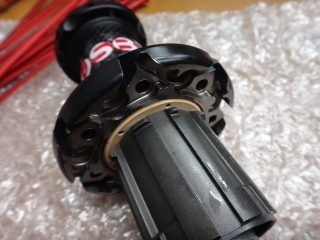
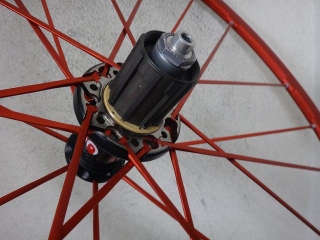
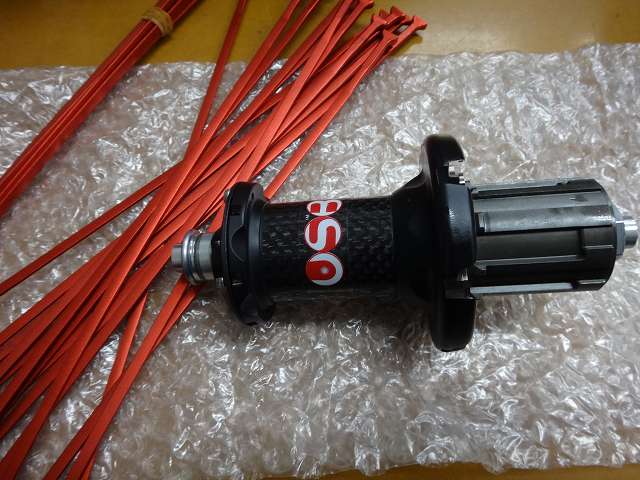
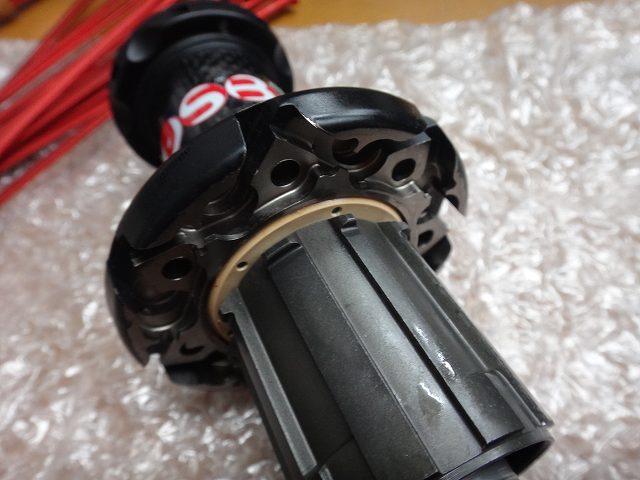
The hub shell is carbon, and the right flange is from before the oversized version.
The original Racing Zero has a tubeless-incompatible WO rim,
tie spokes, evenly-spaced rear rim holes, and a red anodized aluminum hub shell,
while the original Racing Zero 2WAY-FIT has straight spokes like the Shamal Ultra,
rear rim holes with rest phase, and a carbon hub shell.
These two were sold concurrently, and a model year existed where both were available.
After that, even the non-tubeless Racing Zero rim
got the same hub as the 2WAY-FIT (the one in the image above)
and rear rim with rest phase holes.
The point I'm getting at is: at the moment you have a carbon hub shell,
you can't build it with an evenly-spaced hole rim.
There's the issue of different spoke lengths,
but beyond that, when the rear hub is expecting rim holes in a different phase,
the slot coming out of the hub flange interferes with the spoke—that's also a problem.
There are examples of this being done with steel spokes while ignoring it... (→here).
There's another difficult issue.
Basically, Racing Zero models without tie spokes (including 2WAY-FIT)
don't have red anodized rims.
At least not in the regular models.
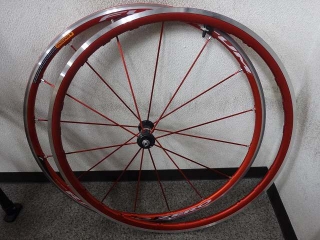
This rear rim is one we sourced at our shop.
It's a replacement part for a limited model,
and sourcing it requires a bit of technique.
It probably doesn't go through typical overseas retailer channels,
so rather than the second owner simply buying just the front rim first,
I suspect they were unable to obtain a rear rim.
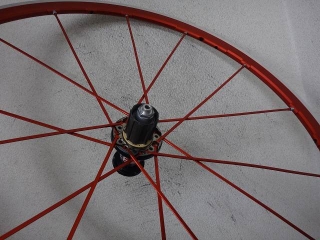
As a precaution, I did a trial assembly of just the freewheel side.
One spoke looks short to me, but that's okay for now.
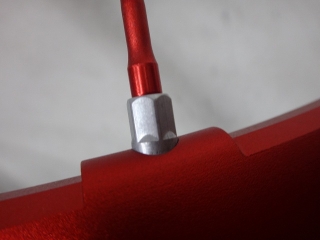
Ah, this will assemble. I can tell.

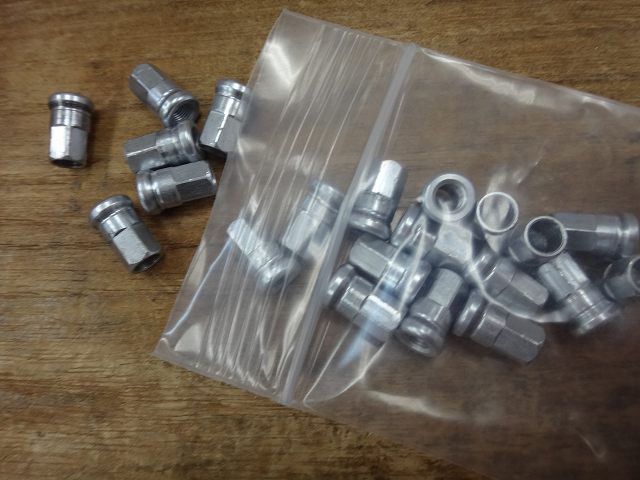
The rim came with nipples,
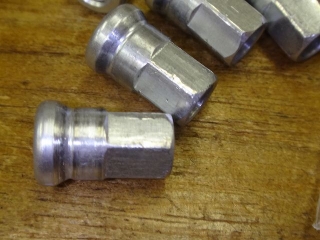
and when disassembled they showed tool marks,
but there weren't marks like they'd been gripped by pliers on the wrench flats—
they were in a condition reusable enough.
The fact that these are relatively clean also supports the theory that
My apologies to amateurs everywhere for almost thinking that you all
mistakenly believe Fulcrum nipples are meant to be turned with pliers.
I also used nylon-insert locking nipples for the rear wheel.
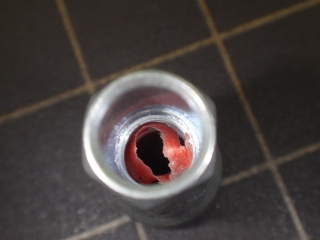
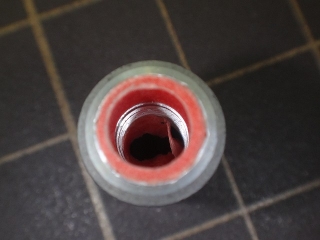
↑There was a nipple clogged with nylon debris,
and I thought it would be automatically expelled as I threaded the spoke in,
but that didn't happen, so
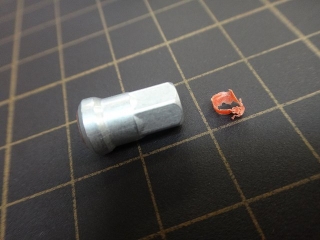
I removed it.
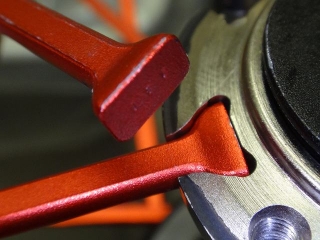
The customer (third owner) had
cleaned the spokes and grouped them as
14 on the freewheel side and 7 on the non-freewheel side, so I assembled them as-is for trial,
but I noticed that one spoke was crossed.
As shown in the image above, the marking on the non-freewheel side spokes is three vertical lines "III,"
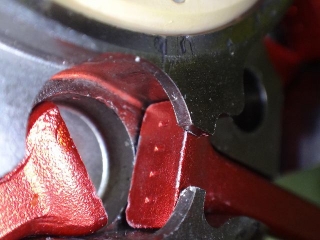
while the freewheel side has four vertical lines "IIII" like the front wheel
(before Mega right flange, the design tried to minimize spoke length varieties),
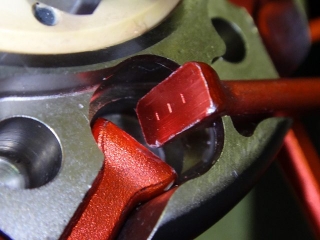
sure enough, one spoke was indeed crossed.
Close call. Real close call.
I'm not falling into the same pit as that certain terrible shop (→here).
But looking at it now, man, for something supposedly done by a "pro" (sarcasm),
those nipple wrench flats are pretty chewed up.
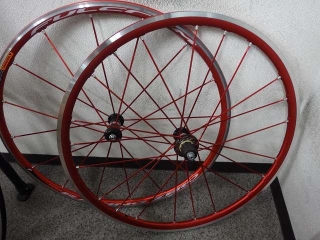
Built.
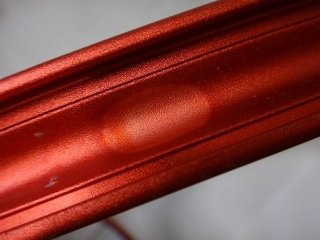
Racing Zero rims and such have
small holes near the valve hole,
and on tubeless 2WAY-FIT rims these holes are sealed afterward,
which suggests that drilling these holes is unavoidable in the manufacturing process.
The image above shows those traces.
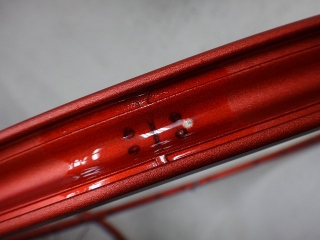
On 2WAY-FIT rims, around the valve hole and
at the rim joint (image above), there's a coating
that has a somewhat soft texture like dried adhesive.
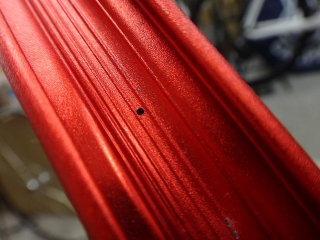

↑This is the non-tubeless front rim from the other day,
the holes are left as-is, and the joint is quite rough.
Whether due to the concave in the rim center that seems designed in anticipation of later tubeless rims,
or because pressurizing the tube with WO tires doesn't seat the bead hooks as well,
radial compliance is slightly compromised.
Six protrusions not necessarily centered run longitudinally,
but these can induce permanent deformation crease-like defects in the tube,
and this becomes especially pronounced with latex tubes,
so I consulted with the customer and applied Stans tubeless tape.
I'm building the rear wheel—the companion to the front wheel from the Racing Zero I worked on the other day.
This is speculation, but I'm fairly certain about the sequence of events:
・The first owner sold the hub and spokes on an auction site
・The second owner bought them,
obtained a front rim, and attempted to build a makeshift wheel
・The third owner (the customer who brought it to our shop) purchased it
It went something like that.
Regarding the front wheel that the second owner built themselves,
apparently they claimed "runout within 1mm,"
but even just lateral runout exceeded that,
and radial runout and center-line deviation weren't even close to wheel-worthy.
They wrote something like "nipples have minor blemishes,"
but we're talking about marks from gripping them with pliers—
I'm amazed at how delusional only a seller can be at that level.
Anyway, regarding the markings on the aluminum spokes,
their description apparently said
"explained in detail on a blog called Nomu Lab Diary,"
but what I actually wrote was just "if the markings are the same, the length is definitely identical even if the color differs"—
I never comprehensively explained which markings corresponded to which era or which location.
Well, regardless of who the third owner was, it's almost certain that there was an extremely high probability it would end up in our shop.
The hub shell is carbon, and the right flange is from before the oversized version.
The original Racing Zero has a tubeless-incompatible WO rim,
tie spokes, evenly-spaced rear rim holes, and a red anodized aluminum hub shell,
while the original Racing Zero 2WAY-FIT has straight spokes like the Shamal Ultra,
rear rim holes with rest phase, and a carbon hub shell.
These two were sold concurrently, and a model year existed where both were available.
After that, even the non-tubeless Racing Zero rim
got the same hub as the 2WAY-FIT (the one in the image above)
and rear rim with rest phase holes.
The point I'm getting at is: at the moment you have a carbon hub shell,
you can't build it with an evenly-spaced hole rim.
There's the issue of different spoke lengths,
but beyond that, when the rear hub is expecting rim holes in a different phase,
the slot coming out of the hub flange interferes with the spoke—that's also a problem.
There are examples of this being done with steel spokes while ignoring it... (→here).
There's another difficult issue.
Basically, Racing Zero models without tie spokes (including 2WAY-FIT)
don't have red anodized rims.
At least not in the regular models.

This rear rim is one we sourced at our shop.
It's a replacement part for a limited model,
and sourcing it requires a bit of technique.
It probably doesn't go through typical overseas retailer channels,
so rather than the second owner simply buying just the front rim first,
I suspect they were unable to obtain a rear rim.

As a precaution, I did a trial assembly of just the freewheel side.
One spoke looks short to me, but that's okay for now.

Ah, this will assemble. I can tell.
The rim came with nipples,
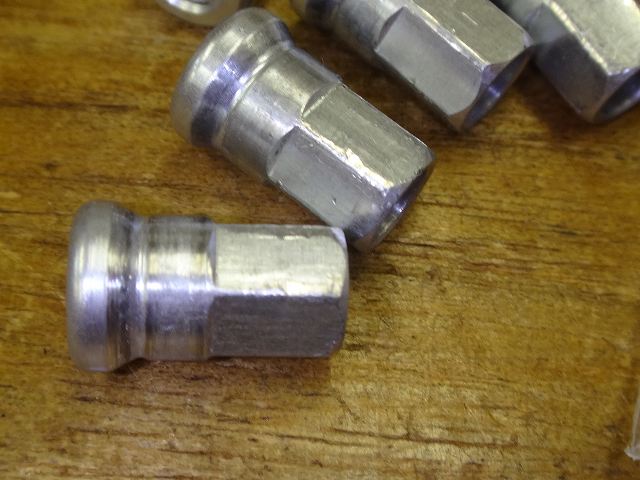
and when disassembled they showed tool marks,
but there weren't marks like they'd been gripped by pliers on the wrench flats—
they were in a condition reusable enough.
The fact that these are relatively clean also supports the theory that
My apologies to amateurs everywhere for almost thinking that you all
mistakenly believe Fulcrum nipples are meant to be turned with pliers.
I also used nylon-insert locking nipples for the rear wheel.
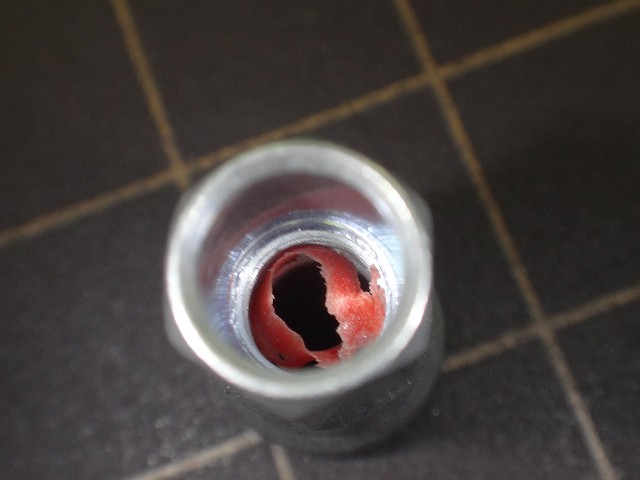
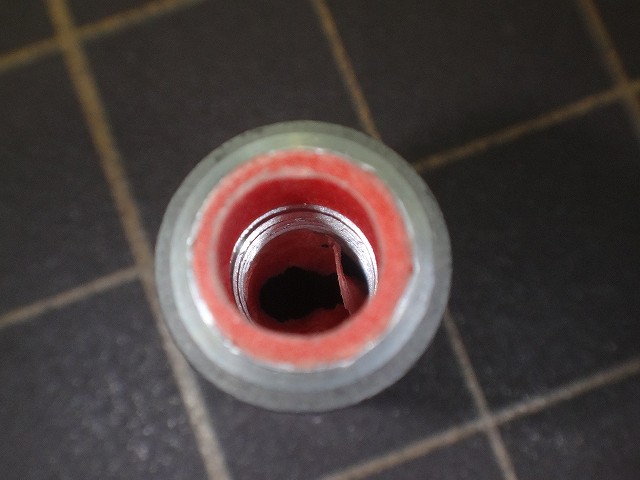
↑There was a nipple clogged with nylon debris,
and I thought it would be automatically expelled as I threaded the spoke in,
but that didn't happen, so
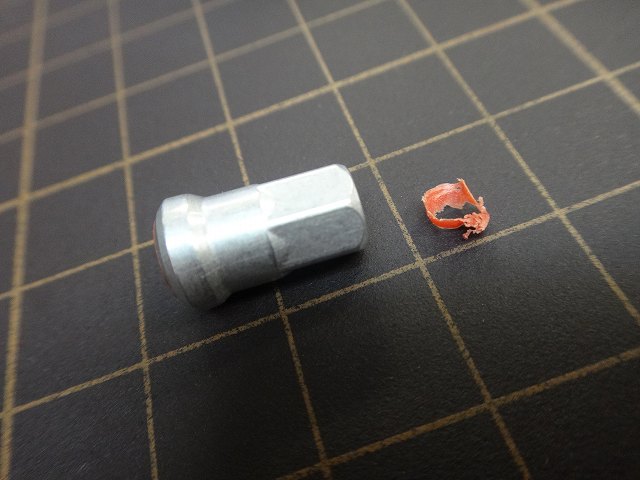
I removed it.
The customer (third owner) had
cleaned the spokes and grouped them as
14 on the freewheel side and 7 on the non-freewheel side, so I assembled them as-is for trial,
but I noticed that one spoke was crossed.
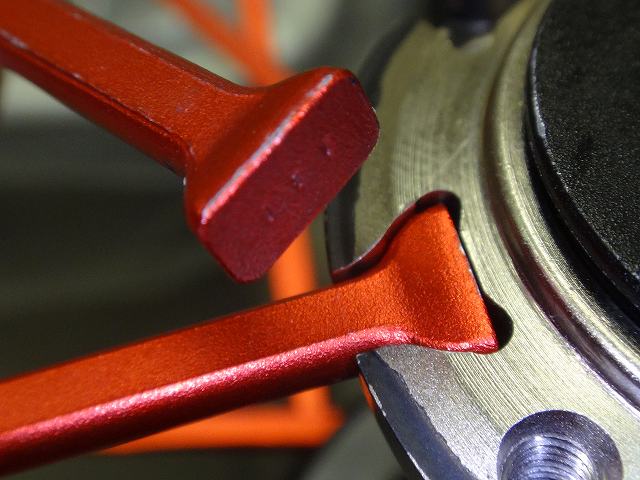
As shown in the image above, the marking on the non-freewheel side spokes is three vertical lines "III,"
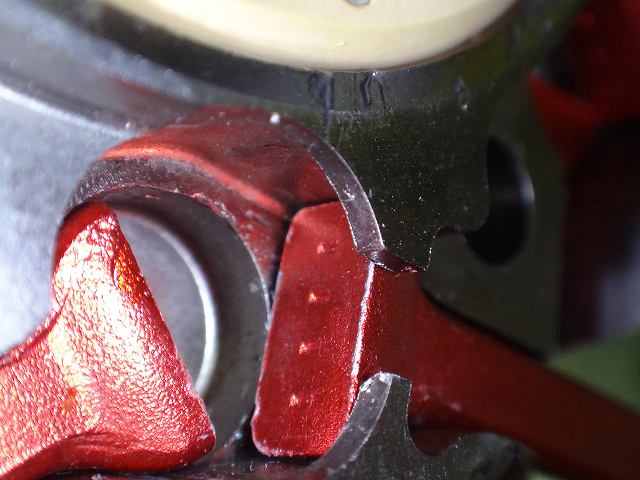
while the freewheel side has four vertical lines "IIII" like the front wheel
(before Mega right flange, the design tried to minimize spoke length varieties),
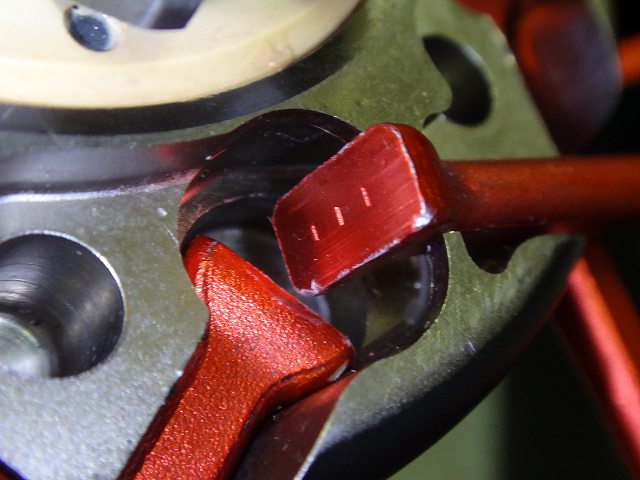
sure enough, one spoke was indeed crossed.
Close call. Real close call.
I'm not falling into the same pit as that certain terrible shop (→here).
But looking at it now, man, for something supposedly done by a "pro" (sarcasm),
those nipple wrench flats are pretty chewed up.

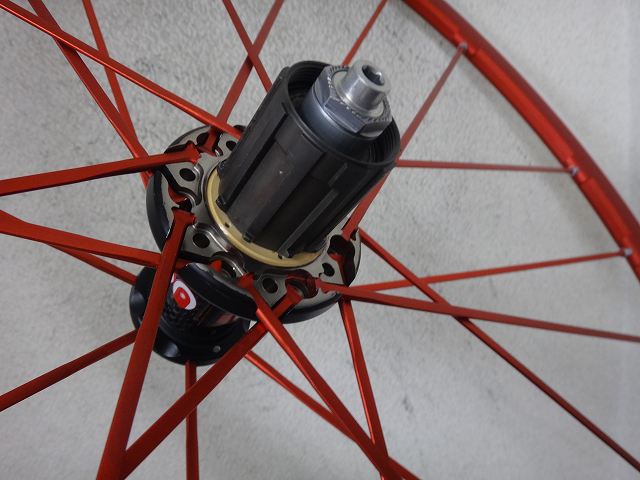
Built.
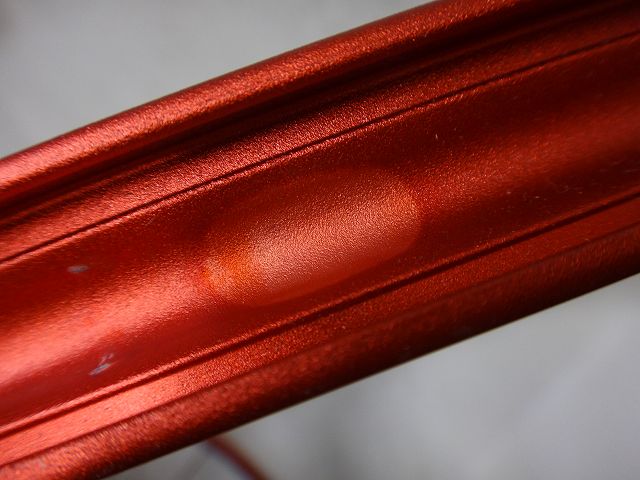
Racing Zero rims and such have
small holes near the valve hole,
and on tubeless 2WAY-FIT rims these holes are sealed afterward,
which suggests that drilling these holes is unavoidable in the manufacturing process.
The image above shows those traces.
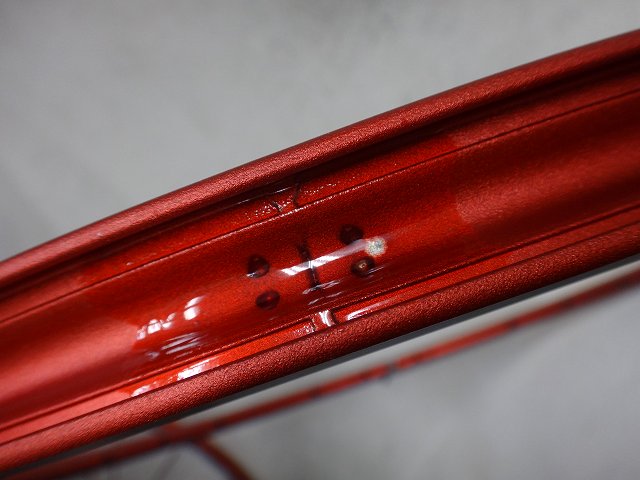
On 2WAY-FIT rims, around the valve hole and
at the rim joint (image above), there's a coating
that has a somewhat soft texture like dried adhesive.
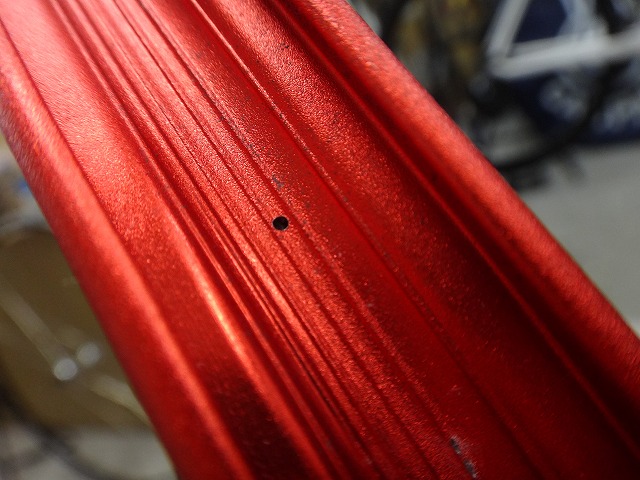

↑This is the non-tubeless front rim from the other day,
the holes are left as-is, and the joint is quite rough.
Whether due to the concave in the rim center that seems designed in anticipation of later tubeless rims,
or because pressurizing the tube with WO tires doesn't seat the bead hooks as well,
radial compliance is slightly compromised.
Six protrusions not necessarily centered run longitudinally,
but these can induce permanent deformation crease-like defects in the tube,
and this becomes especially pronounced with latex tubes,
so I consulted with the customer and applied Stans tubeless tape.