Another day of wheels (and so on).
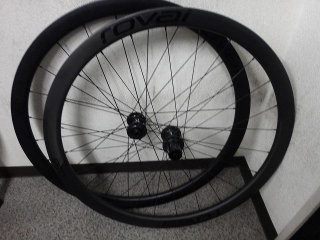
Continuing from yesterday. I'm rebuilding the rear wheel on the Roval C38.
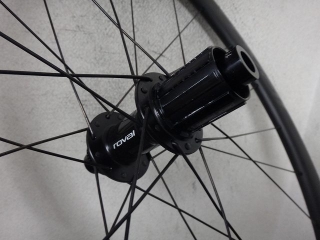
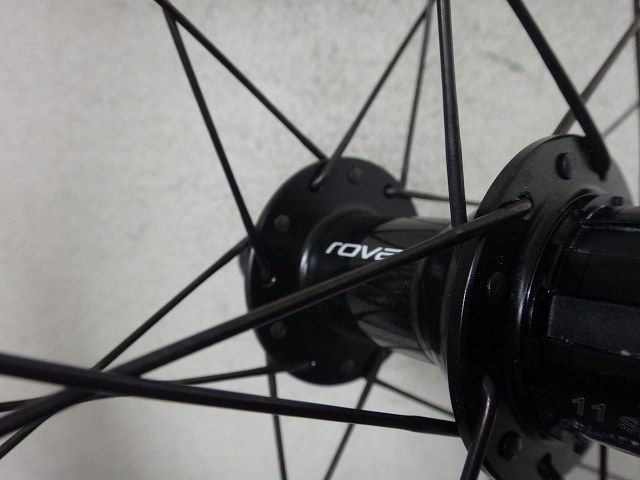
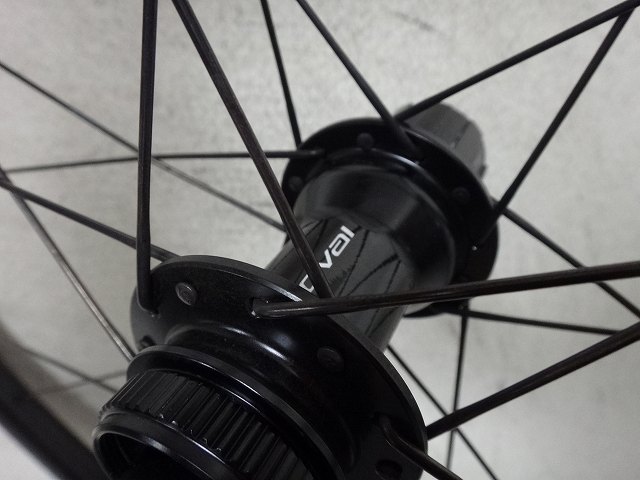
DT 350 disc hub, 24H, black Competition Lace 4-cross build.
Sometimes when brands try to make the upper models look better by changing the specs of lower models
or constructing them with cheaper parts,
the lower model actually ends up being better.
This wheel too, with its Competition Lace (which gets that weird deflection when tensioned)
that's almost like Revolution proportions,
rather than using CX-RAY and doing a normal 4-cross build,
regardless of rim weight, as a structural system this wheel
should be faster than the CLX series.
Getting a 2:1 build to perform better than equal-spoke-count builds
isn't impossible, but it's extremely difficult.
A company like Roval, obsessed only with wind tunnel testing and understanding nothing about wheels,
couldn't manage it.
On a 2:1 rear wheel, if you do tangent spoking on the non-freehub side,
that side ends up under higher tension and becomes stiffer with less deflection,
so the limit when tensioning as much as the rim and spokes allow is determined by the non-freehub side,
which means the freehub side becomes looser.
If you have a stock CLX disc rear wheel, try grabbing the last two crossing spokes on the freehub side...
The freehub side being loose is also related to bad spoke angles though.
But if you use radial spoking on the non-freehub side,
you can't avoid the inherent properties that come from radial spoking as a structure.
I once had a colleague who hand-built a 2:1 rear wheel with rim brakes (non-freehub side radial)
and claimed "maximum total spoke tension means maximum strength,"
so I'd really like to see him open a retail shop
and see how that wheel performs in the real world.
Now that I think about it, after giving me an earful,
there were a couple of shops and brands that disappeared from the face of the earth pretty much overnight—
and coincidentally, both of them were doing 2:1 builds using generic materials
like J-bend spokes and evenly-spaced holes rims.

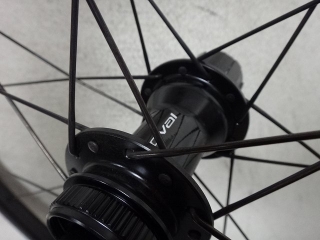
Disc brake rear wheels are usually built either JIS-style or reverse Italian-style,
but either way the non-freehub side spoking ends up the same.
But this rear wheel was built Italian-style.
That's extremely rare.
Roval must have thought deeply about wheels and concluded
there was a rational reason to do it this way.
Well, I'm going to rebuild it JIS-style anyway.
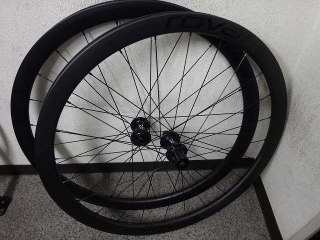
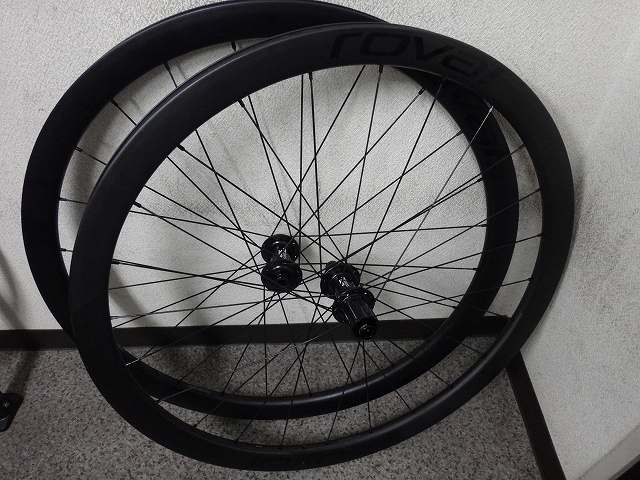
Built it.
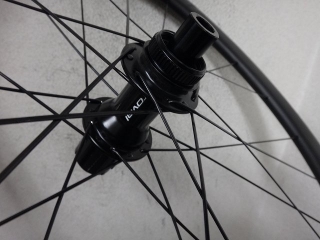
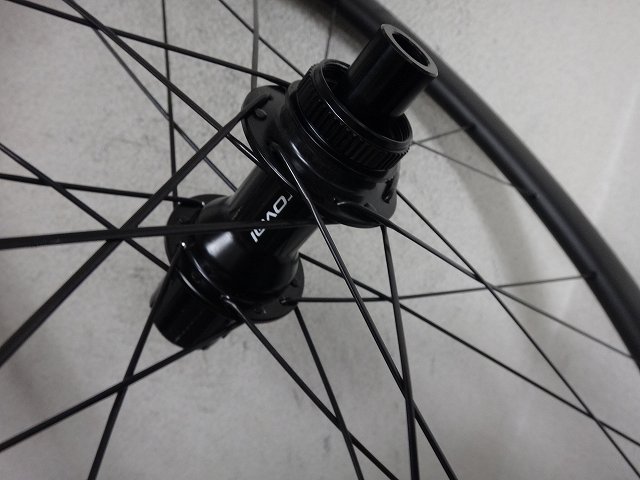
24H black semi-comp JIS-style build.
I'll do the truing later.
Also, I've changed both front and rear wheels to DT black aluminum nipples.
As for the C38, the rim is where you could say it's achieved differentiation through intentional detuning.
Regarding the hub, the 350 hub has larger bearings in the hub body
and durability that's incomparably higher than the CLX hub,
so it can't simply be called a superior version.
The rim is almost the same weight as the higher-profile CLX 50.
In height-to-weight ratio, the C38 clearly loses.
As for how much spoke tension you can apply,
it was about the same as the CLX, so there's no problem there.
I stated definitively that rim weight is about the same as the CLX 50 because I have a source for it,
but I have no intention of presenting it.
Like there's some site offering free public archives of Roval's actual rim weights.
↑wow this guy's got bad vibes
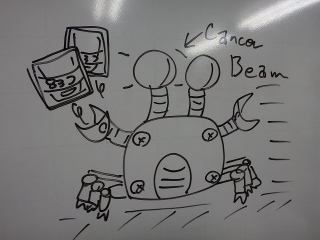
Sorry for the wait! Please view this image!

Front rim!
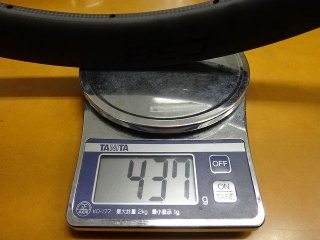
Rear rim!
↑Cut it out!
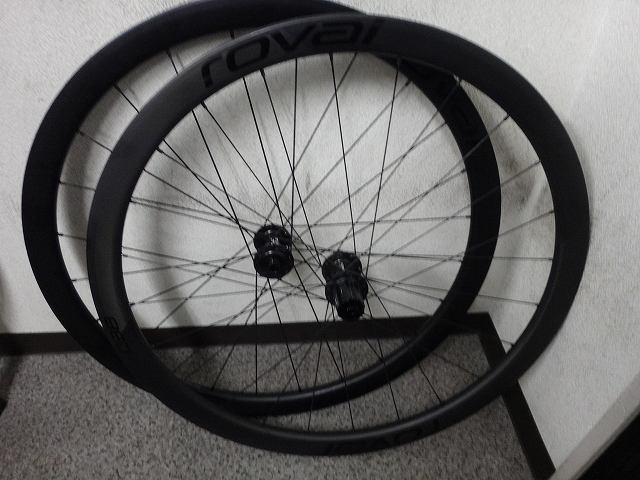
Continuing from yesterday. I'm rebuilding the rear wheel on the Roval C38.

DT 350 disc hub, 24H, black Competition Lace 4-cross build.
Sometimes when brands try to make the upper models look better by changing the specs of lower models
or constructing them with cheaper parts,
the lower model actually ends up being better.
This wheel too, with its Competition Lace (which gets that weird deflection when tensioned)
that's almost like Revolution proportions,
rather than using CX-RAY and doing a normal 4-cross build,
regardless of rim weight, as a structural system this wheel
should be faster than the CLX series.
Getting a 2:1 build to perform better than equal-spoke-count builds
isn't impossible, but it's extremely difficult.
A company like Roval, obsessed only with wind tunnel testing and understanding nothing about wheels,
couldn't manage it.
On a 2:1 rear wheel, if you do tangent spoking on the non-freehub side,
that side ends up under higher tension and becomes stiffer with less deflection,
so the limit when tensioning as much as the rim and spokes allow is determined by the non-freehub side,
which means the freehub side becomes looser.
If you have a stock CLX disc rear wheel, try grabbing the last two crossing spokes on the freehub side...
The freehub side being loose is also related to bad spoke angles though.
But if you use radial spoking on the non-freehub side,
you can't avoid the inherent properties that come from radial spoking as a structure.
I once had a colleague who hand-built a 2:1 rear wheel with rim brakes (non-freehub side radial)
and claimed "maximum total spoke tension means maximum strength,"
so I'd really like to see him open a retail shop
and see how that wheel performs in the real world.
Now that I think about it, after giving me an earful,
there were a couple of shops and brands that disappeared from the face of the earth pretty much overnight—
and coincidentally, both of them were doing 2:1 builds using generic materials
like J-bend spokes and evenly-spaced holes rims.
Disc brake rear wheels are usually built either JIS-style or reverse Italian-style,
but either way the non-freehub side spoking ends up the same.
But this rear wheel was built Italian-style.
That's extremely rare.
Roval must have thought deeply about wheels and concluded
there was a rational reason to do it this way.
Well, I'm going to rebuild it JIS-style anyway.
Built it.
24H black semi-comp JIS-style build.
I'll do the truing later.
Also, I've changed both front and rear wheels to DT black aluminum nipples.
As for the C38, the rim is where you could say it's achieved differentiation through intentional detuning.
Regarding the hub, the 350 hub has larger bearings in the hub body
and durability that's incomparably higher than the CLX hub,
so it can't simply be called a superior version.
The rim is almost the same weight as the higher-profile CLX 50.
In height-to-weight ratio, the C38 clearly loses.
As for how much spoke tension you can apply,
it was about the same as the CLX, so there's no problem there.
I stated definitively that rim weight is about the same as the CLX 50 because I have a source for it,
but I have no intention of presenting it.
Like there's some site offering free public archives of Roval's actual rim weights.
↑wow this guy's got bad vibes
Sorry for the wait! Please view this image!
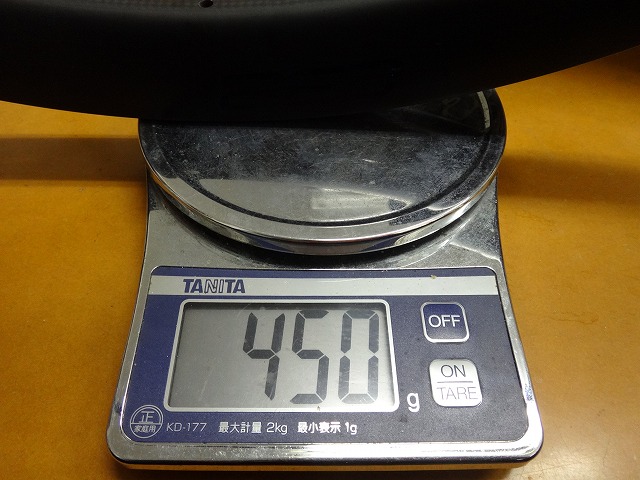
Front rim!
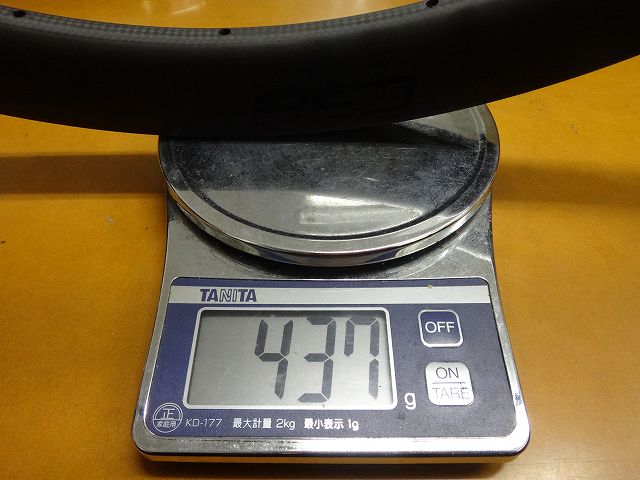
Rear rim!
↑Cut it out!