I recently replaced my tubeless tire.
I only run tubeless tires on the rear wheel,
and I didn't have to replace it as a result of a puncture—
this is actually the first time I've replaced one based on wear and tear judgment.
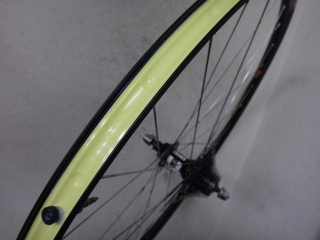
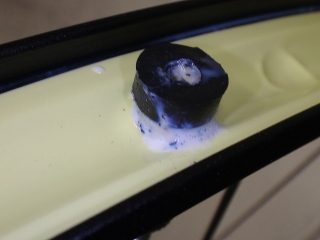
On the rim side after removing the tire, just rinsing with water
and the Imajii sealant comes off almost completely clean.
Some remains around the tubeless valve,
but that also falls off with a little rubbing.
There's absolutely no gum-like hardened residue stuck on.
The tire gets thrown away anyway, but on the rim side,
especially inside the bead hook, if sealant buildup accumulates
I worry it could cause air leaks in future setups,
so it's not a pleasant prospect.

Since the removed tire is getting thrown away, there's no need to wash it, but
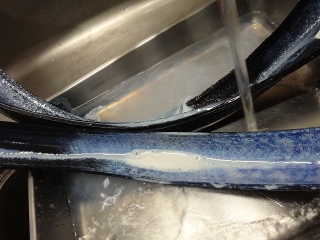
with the water pressure from a faucet (not fully open),
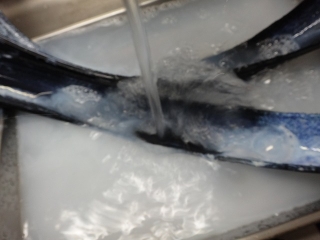
just rinsing
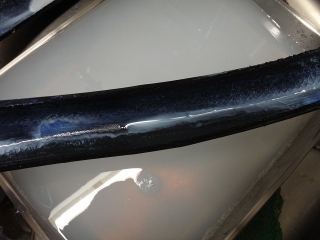
gets it this clean.
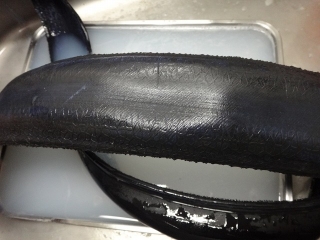
Rubbing gently with a sponge looks like this.
Based solely on this property of the sealant not hardening into chunks,
personally I'm an Imajii sealant exclusive, but
it's true that its sealing power is weak.
Sealant shows a behavior like "below a certain minimum amount required based on tire volume capacity, it's no better than not using any"
(in my opinion).
For example, if there's a sealant that only works starting at 40ml for a certain tire,
in extreme terms, up to 39ml would be the same as not putting any in at all.
Since Imajii sealant is originally weak in effectiveness per volume,
at our shop we only stock the stronger
"Imajii Plus" with microfiber,
but even so, you need to add slightly more than
Stans' standard model "Tire Sealant" for it to work.
Also, initial air leaks are quite common.
In this tire replacement too, after putting in 6.8 bar,
it had dropped to 3.5 bar after eight hours.
But in situations like this, if you just add air without topping up sealant,
it eventually stabilizes and
holds air just like normal butyl tubes.
I'm certain about this from experience.
At our shop, besides Imajii, we stock
Stans Tire Sealant and the stronger Race Sealant for work,
and also Effetto Mariposa Cafélatex,
but Imajii can't be used unless we can keep the wheelset overnight or longer
for observation, because there's a possibility the tire will be completely flat by the next day.
Also, when checking wheels and needing to use a reliable center gauge,
when we remove a tubeless tire, we sometimes top up with the same or similar sealant
that was in the original tire,
so we keep both Stans varieties and Cafélatex in stock.
Additionally, with tires like Vittoria Corsa—
so-called open tubular-type tires—
making them work as tubeless tires
seems problematic to me
(Challenge and Veloflex are similar, but we don't see them much),
and Corsa Tubeless can't stop air leaks with Imajii sealant
no matter how much you put in, so
we use Stans Race Sealant instead.
It's also not suitable for tires where air leaks are pronounced from parts
"other than" the bead area
(→here).
While it depends considerably on the tire's air retention properties,
if you pair it with a tire where you can reliably reach a stable state through experience,
Imajii sealant is recommended for the minimal hassle afterward.
I've written similar articles before,
but when I changed tires the other day, I felt like writing about it again.
I only run tubeless tires on the rear wheel,
and I didn't have to replace it as a result of a puncture—
this is actually the first time I've replaced one based on wear and tear judgment.

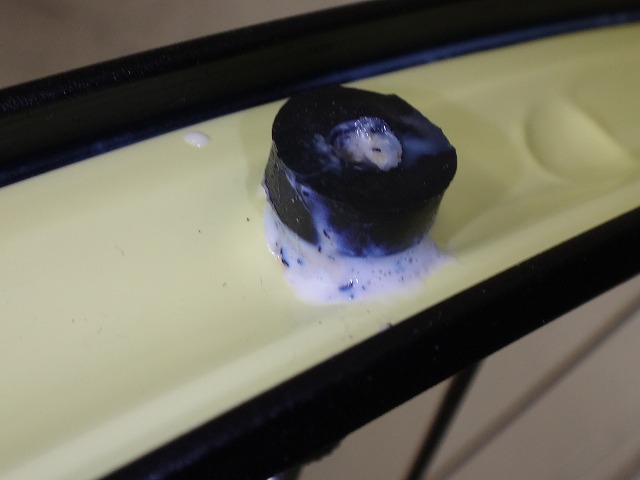
On the rim side after removing the tire, just rinsing with water
and the Imajii sealant comes off almost completely clean.
Some remains around the tubeless valve,
but that also falls off with a little rubbing.
There's absolutely no gum-like hardened residue stuck on.
The tire gets thrown away anyway, but on the rim side,
especially inside the bead hook, if sealant buildup accumulates
I worry it could cause air leaks in future setups,
so it's not a pleasant prospect.
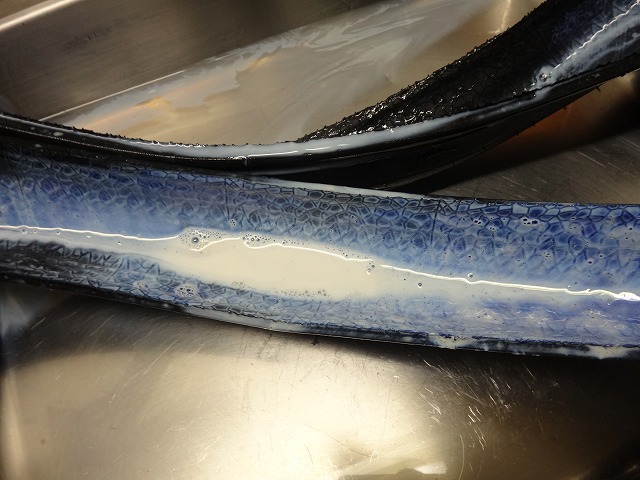
Since the removed tire is getting thrown away, there's no need to wash it, but
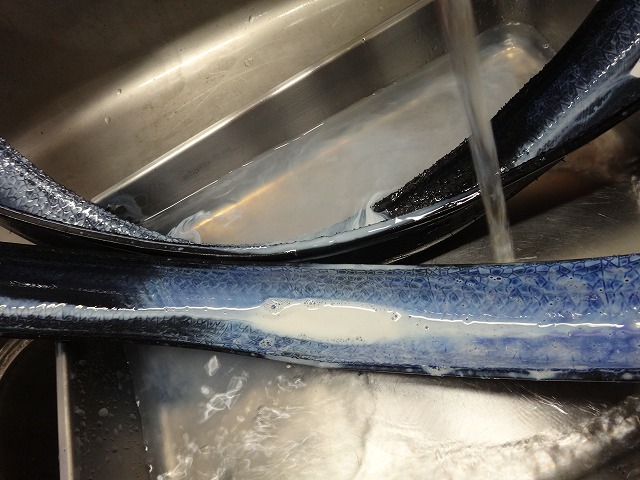
with the water pressure from a faucet (not fully open),
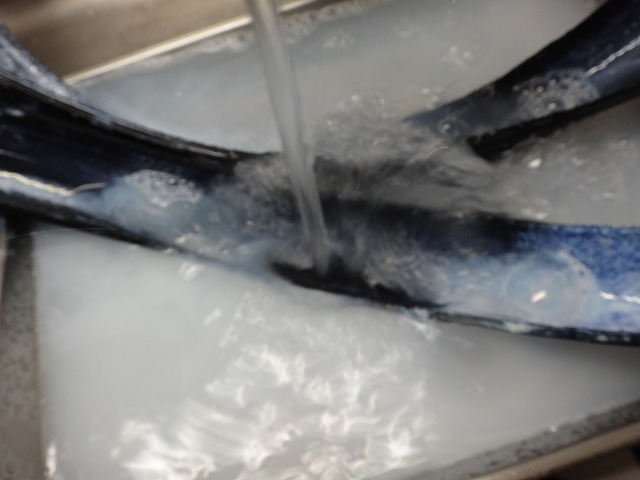
just rinsing
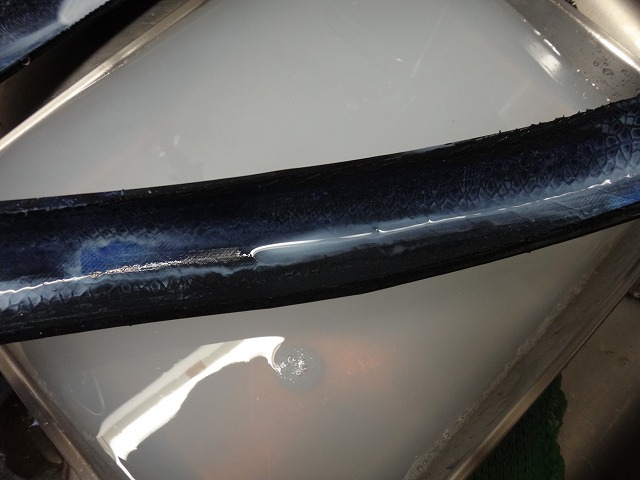
gets it this clean.

Rubbing gently with a sponge looks like this.
Based solely on this property of the sealant not hardening into chunks,
personally I'm an Imajii sealant exclusive, but
it's true that its sealing power is weak.
Sealant shows a behavior like "below a certain minimum amount required based on tire volume capacity, it's no better than not using any"
(in my opinion).
For example, if there's a sealant that only works starting at 40ml for a certain tire,
in extreme terms, up to 39ml would be the same as not putting any in at all.
Since Imajii sealant is originally weak in effectiveness per volume,
at our shop we only stock the stronger
"Imajii Plus" with microfiber,
but even so, you need to add slightly more than
Stans' standard model "Tire Sealant" for it to work.
Also, initial air leaks are quite common.
In this tire replacement too, after putting in 6.8 bar,
it had dropped to 3.5 bar after eight hours.
But in situations like this, if you just add air without topping up sealant,
it eventually stabilizes and
holds air just like normal butyl tubes.
I'm certain about this from experience.
At our shop, besides Imajii, we stock
Stans Tire Sealant and the stronger Race Sealant for work,
and also Effetto Mariposa Cafélatex,
but Imajii can't be used unless we can keep the wheelset overnight or longer
for observation, because there's a possibility the tire will be completely flat by the next day.
Also, when checking wheels and needing to use a reliable center gauge,
when we remove a tubeless tire, we sometimes top up with the same or similar sealant
that was in the original tire,
so we keep both Stans varieties and Cafélatex in stock.
Additionally, with tires like Vittoria Corsa—
so-called open tubular-type tires—
making them work as tubeless tires
seems problematic to me
(Challenge and Veloflex are similar, but we don't see them much),
and Corsa Tubeless can't stop air leaks with Imajii sealant
no matter how much you put in, so
we use Stans Race Sealant instead.
It's also not suitable for tires where air leaks are pronounced from parts
"other than" the bead area
(→here).
While it depends considerably on the tire's air retention properties,
if you pair it with a tire where you can reliably reach a stable state through experience,
Imajii sealant is recommended for the minimal hassle afterward.
I've written similar articles before,
but when I changed tires the other day, I felt like writing about it again.