Mavic proposed a through-axle standard called
"Speed Release."
Frame brands like Cannondale and LOOK,
and ENVE as a standalone fork, have adopted it.
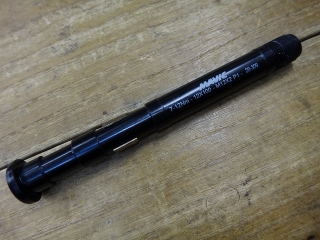
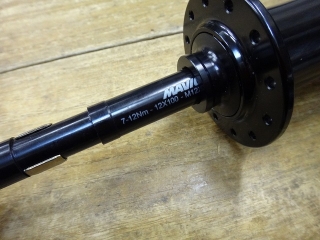
↑This is the axle for the allen-key style Speed Release
that comes with a LOOK frameset.
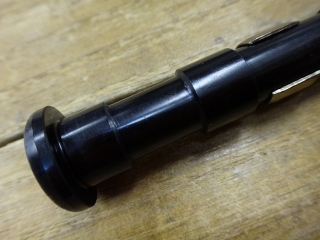
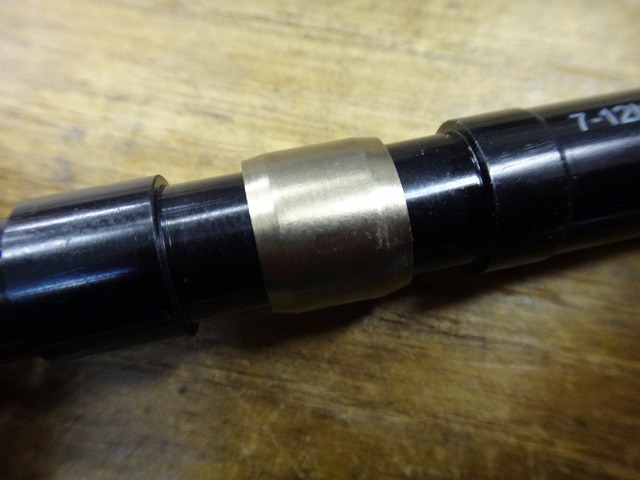
↑Notice here how it's stepped and recessed, and
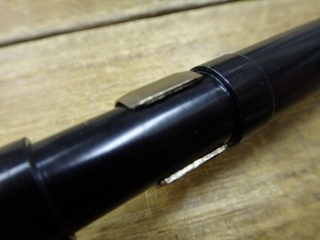
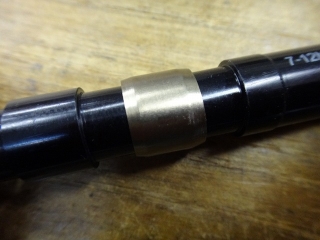
↑This C-ring shaped tube (probably brass)
is what distinguishes it from other axles.
Update: I received a comment saying "The brass-colored component is probably phosphor bronze, which is used for spring materials." Much appreciated!
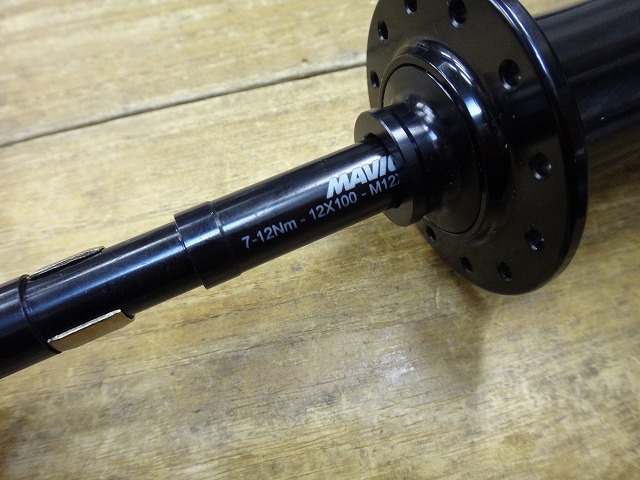
Let me try threading it through a disc front hub.
It passes through easily since it's undersized relative to the hub axle's inner diameter, but

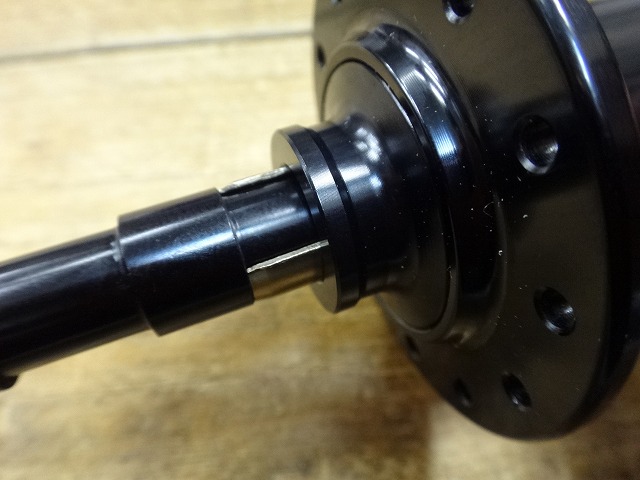
Here it catches with a snap!
Push it in further, and this C-ring continues to exert
an outward force against the inside of the hub axle, so
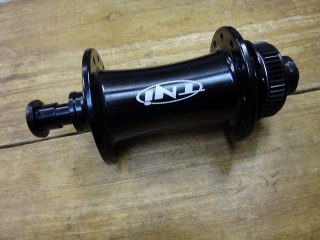
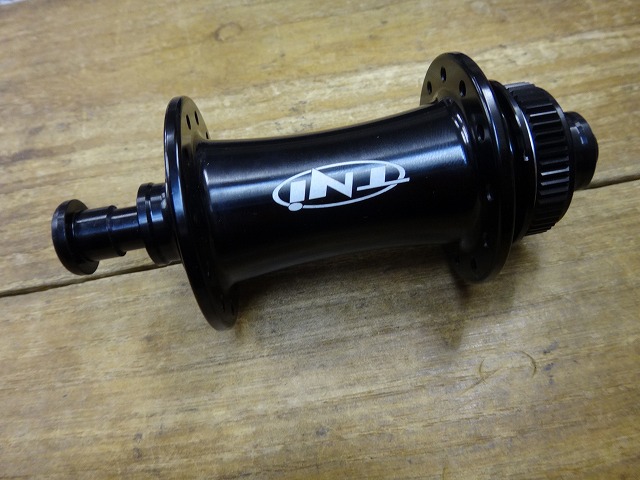
←←← this end here
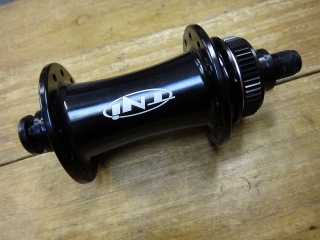
→→→ and this end here
The axle can move within the width of the recess where the C-ring seats,
but it won't fall out on its own.

So when you tighten it into a particular front fork,
the gap between the hub end will actually be wider than in the image above,
but the axle's position at full tightening gets locked in.
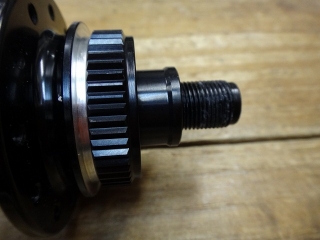
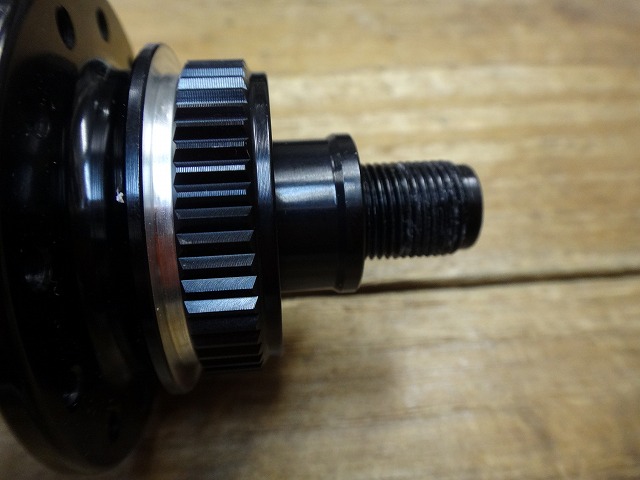
At that point, the threaded end of the axle
goes through the fork's threaded hole, but
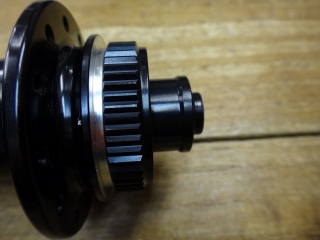
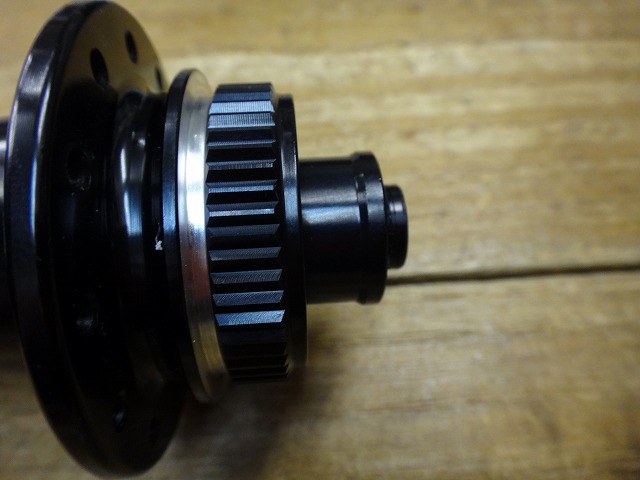
When you loosen the allen key (or lever) side,
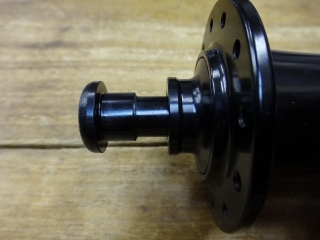
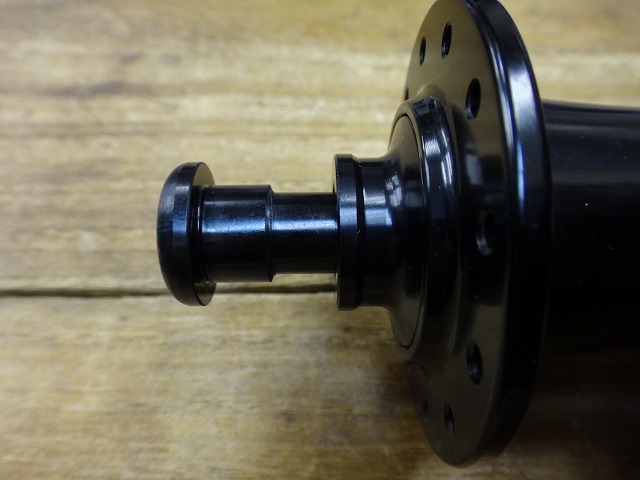
the part sticking out from the hub becomes the thinly recessed section.
Speed Release-compatible front forks have
a cutout on this side just like quick-release forks, so
you can quickly remove the wheel while leaving the axle in position
without pulling it out of the hub.
In case of a flat during a race and needing wheel service at a neutral support,
you might need to pull the axle out,
but when getting a flat during practice or a ride and removing the wheel roadside,
you don't have to set the removed axle down on the ground.
That's the explanation you often see, but
Speed Release has even further advantages.
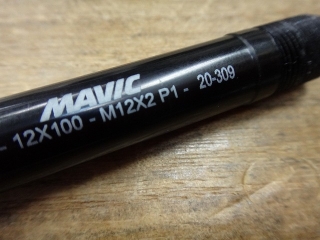
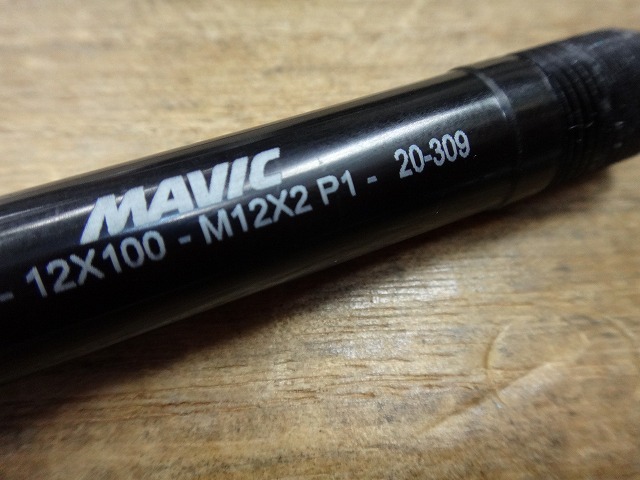
The axle marking says M12×2 P1.
I understand the 12mm diameter and pitch 1mm,
but what does this "×2" mean?
It indicates "dual-start thread."
Before explaining dual-start thread,
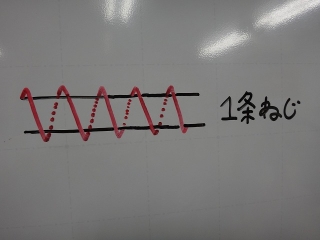
first, let me show single-start thread.
If you wrap a single line around a cylinder with consistent pitch,
that line becomes the thread ridge in a single-start thread.
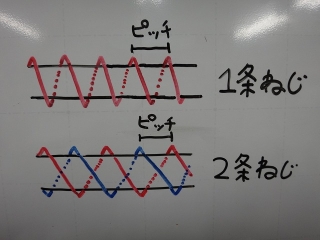
When that line becomes two, it's dual-start thread,
and beyond that, three lines make triple-start thread, and so on.
An n-start thread advances by
n times the pitch for each full rotation.
If you compare single-start and dual-start threads with the same
pitch as shown above,
the dual-start advances twice as much
per rotation.
Speed Release has an apparent pitch of 1.0mm,
so the thread advances 2.0mm per rotation—
greater than single-start 1.75mm pitch.
In practice, loosen it just 3 turns and the front wheel Speed Release comes off
(the published spec is 4 turns, so manufacturers set
a maximum of 8 ridges).
※ The term "apparent pitch" isn't precise.
Regardless of the number of starts, pitch refers to
the spacing between one thread ridge and the next.
Probably nobody hasn't encountered multi-start threads—
bottle caps use them.
Multi-start threads have a drawback of "inferior clamping force,"
but in the Speed Release case this works out perfectly,
and whether it was intentional is unclear,
but the tightening force sits in a sweet spot:
"sufficient to secure the wheel while preventing
over-tightening."
Even if you tried to tighten it like an X-12 through-axle
to the point of damaging hub bearings,
with Speed Release the axle's internal width
compresses the fork or frame,
and immediately after that you hit a resistance
that prevents further tightening.
Furthermore, Mavic's genuine lever-style Speed Release axles have
a ratchet mechanism like a torque wrench built into the lever base,
ensuring over-tightening is impossible.
Once the lever starts clicking,
the rotation no longer converts to tightening force—
it just positions the lever for appearance.
With older lever-style quick-releases,
if you tried to tighten with force enough to damage hub bearings,
the cam at the lever base would almost self-destruct,
so there's a kind of foolproofing built in that makes
tightening with such force impossible in the first place.
Shimano's E-THRU axle represents a through-axle standard
where the final clamp is a cam lever.
It's 12×1.5mm with a coarser thread pitch,
and like quick-releases, it prevents over-tightening of bearings.
Speed Release requires the threaded hole side to be dual-start as well,
so it can't be used on incompatible frames or forks.
Almost certainly (I'm confident about this),
if someone unaware of dual-start threads and weak bearings
on pop-on end hubs used a Roval front wheel,
and installed it on both a Specialized X-12 through-axle fork
and a Cannondale Speed Release fork,
then used them over time,
with a sufficiently large sample size,
the front wheel on the Specialized fork would show
noticeably higher rates of gritty bearing rotation.
"Speed Release."
Frame brands like Cannondale and LOOK,
and ENVE as a standalone fork, have adopted it.
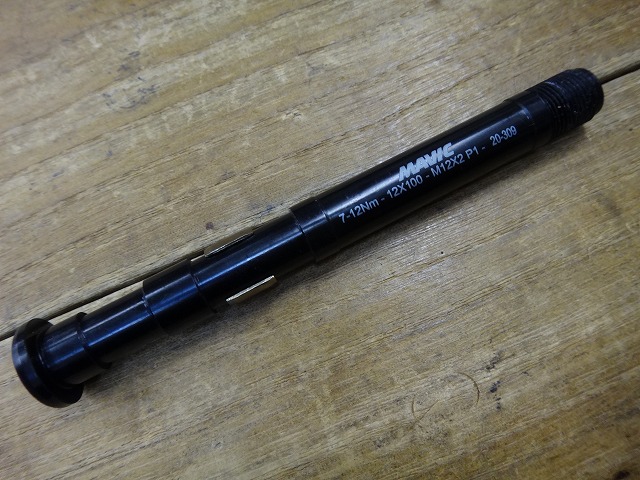
↑This is the axle for the allen-key style Speed Release
that comes with a LOOK frameset.
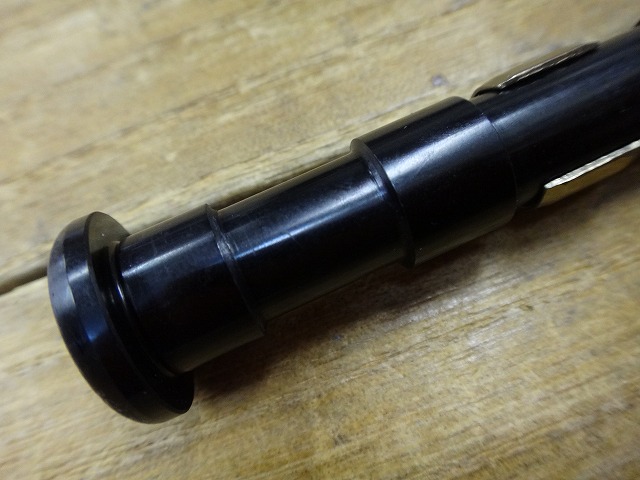
↑Notice here how it's stepped and recessed, and
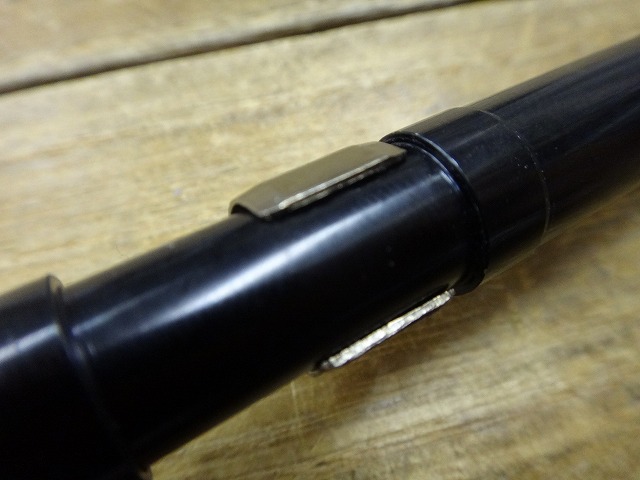
↑This C-ring shaped tube (probably brass)
is what distinguishes it from other axles.
Update: I received a comment saying "The brass-colored component is probably phosphor bronze, which is used for spring materials." Much appreciated!
Let me try threading it through a disc front hub.
It passes through easily since it's undersized relative to the hub axle's inner diameter, but
Here it catches with a snap!
Push it in further, and this C-ring continues to exert
an outward force against the inside of the hub axle, so
←←← this end here

→→→ and this end here
The axle can move within the width of the recess where the C-ring seats,
but it won't fall out on its own.

So when you tighten it into a particular front fork,
the gap between the hub end will actually be wider than in the image above,
but the axle's position at full tightening gets locked in.
At that point, the threaded end of the axle
goes through the fork's threaded hole, but
When you loosen the allen key (or lever) side,
the part sticking out from the hub becomes the thinly recessed section.
Speed Release-compatible front forks have
a cutout on this side just like quick-release forks, so
you can quickly remove the wheel while leaving the axle in position
without pulling it out of the hub.
In case of a flat during a race and needing wheel service at a neutral support,
you might need to pull the axle out,
but when getting a flat during practice or a ride and removing the wheel roadside,
you don't have to set the removed axle down on the ground.
That's the explanation you often see, but
Speed Release has even further advantages.
The axle marking says M12×2 P1.
I understand the 12mm diameter and pitch 1mm,
but what does this "×2" mean?
It indicates "dual-start thread."
Before explaining dual-start thread,
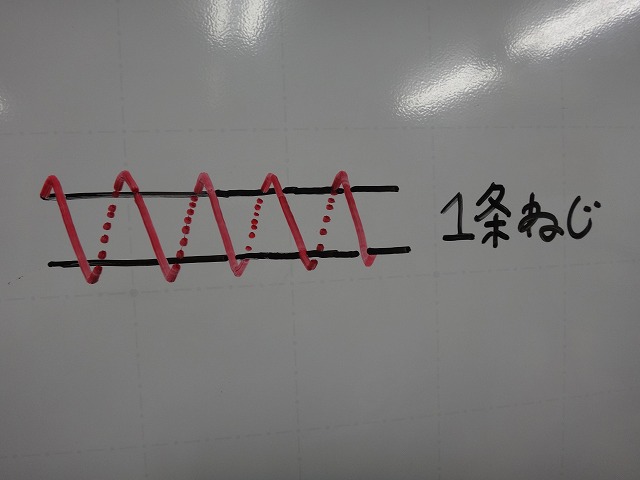
first, let me show single-start thread.
If you wrap a single line around a cylinder with consistent pitch,
that line becomes the thread ridge in a single-start thread.

When that line becomes two, it's dual-start thread,
and beyond that, three lines make triple-start thread, and so on.
An n-start thread advances by
n times the pitch for each full rotation.
If you compare single-start and dual-start threads with the same
pitch as shown above,
the dual-start advances twice as much
per rotation.
Speed Release has an apparent pitch of 1.0mm,
so the thread advances 2.0mm per rotation—
greater than single-start 1.75mm pitch.
In practice, loosen it just 3 turns and the front wheel Speed Release comes off
(the published spec is 4 turns, so manufacturers set
a maximum of 8 ridges).
※ The term "apparent pitch" isn't precise.
Regardless of the number of starts, pitch refers to
the spacing between one thread ridge and the next.
Probably nobody hasn't encountered multi-start threads—
bottle caps use them.
Multi-start threads have a drawback of "inferior clamping force,"
but in the Speed Release case this works out perfectly,
and whether it was intentional is unclear,
but the tightening force sits in a sweet spot:
"sufficient to secure the wheel while preventing
over-tightening."
Even if you tried to tighten it like an X-12 through-axle
to the point of damaging hub bearings,
with Speed Release the axle's internal width
compresses the fork or frame,
and immediately after that you hit a resistance
that prevents further tightening.
Furthermore, Mavic's genuine lever-style Speed Release axles have
a ratchet mechanism like a torque wrench built into the lever base,
ensuring over-tightening is impossible.
Once the lever starts clicking,
the rotation no longer converts to tightening force—
it just positions the lever for appearance.
With older lever-style quick-releases,
if you tried to tighten with force enough to damage hub bearings,
the cam at the lever base would almost self-destruct,
so there's a kind of foolproofing built in that makes
tightening with such force impossible in the first place.
Shimano's E-THRU axle represents a through-axle standard
where the final clamp is a cam lever.
It's 12×1.5mm with a coarser thread pitch,
and like quick-releases, it prevents over-tightening of bearings.
Speed Release requires the threaded hole side to be dual-start as well,
so it can't be used on incompatible frames or forks.
Almost certainly (I'm confident about this),
if someone unaware of dual-start threads and weak bearings
on pop-on end hubs used a Roval front wheel,
and installed it on both a Specialized X-12 through-axle fork
and a Cannondale Speed Release fork,
then used them over time,
with a sufficiently large sample size,
the front wheel on the Specialized fork would show
noticeably higher rates of gritty bearing rotation.