I took in a Ridley bike from a customer.
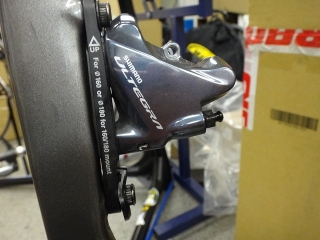
Due to a handlebar replacement,
I needed to remove the brake hose that runs through the drop bar,
which naturally also requires bleeding the brakes.
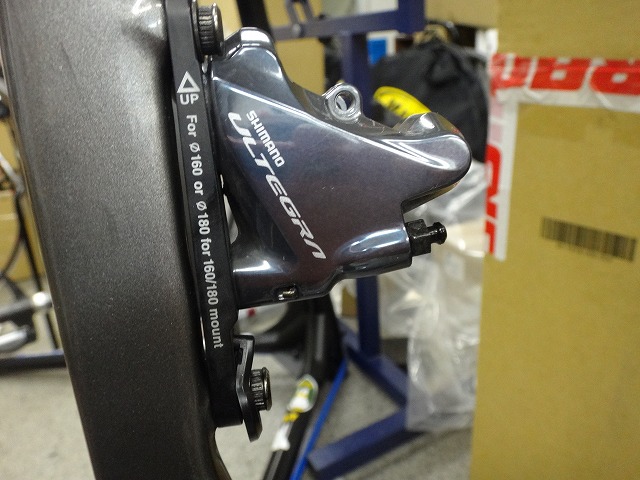
The brakes are BR-R8070, and
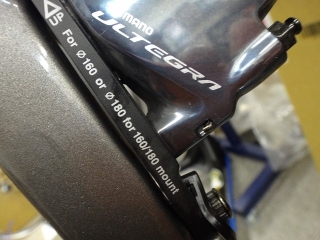
below the marking "Carl's Flying House" (→here)
there's a 160/180 designation, which indicates that by changing the orientation of the angled mounting bracket,
you can select whether the brake accommodates a 160mm or 180mm rotor diameter.
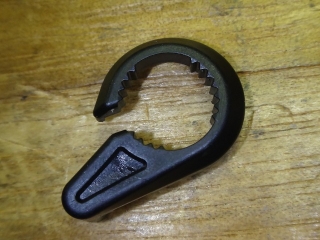
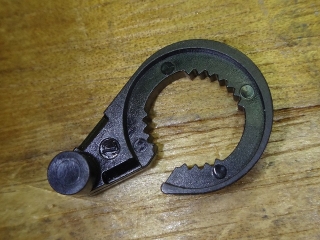
↑These are the disc brake caliper mounting bolts, and
around the head of the cap screw
there are serrations that match with
a corresponding snap ring to prevent loosening.
It may not prevent initial loosening,
but it does prevent the bolt from completely loosening and falling out.
When I checked Shimano's official name, it's called a "snap ring."
Though its shape differs from what we typically imagine as a snap ring,
that's what it's called, so there's nothing we can do about it.
It appears that after fitting this snap ring onto the bolt's serrations,
someone loosened it significantly and then tightened it again, but
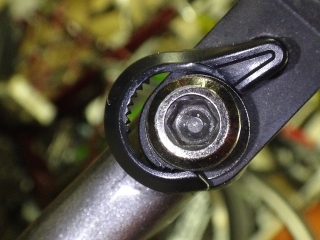
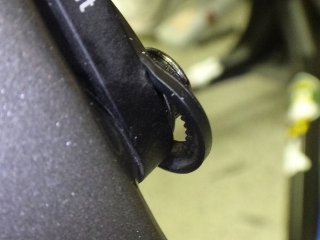
the snap ring had caught on the washer below the bolt head,
and it was tightened right in that state.
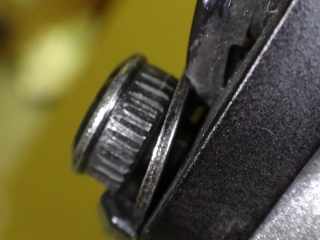
And horrifyingly, neither the bolt nor the washer was actually in contact with the bracket.
When I asked the customer, they said that since this brake was installed,
they haven't touched the bolt at all.
The person who pulled this off was an acquaintance of mine, but
this level of screw-up—which could be fatal—let's just... not do that!
"A fail-safe part actually ended up causing a failure"... that's just something else, isn't it.
Due to a handlebar replacement,
I needed to remove the brake hose that runs through the drop bar,
which naturally also requires bleeding the brakes.
The brakes are BR-R8070, and
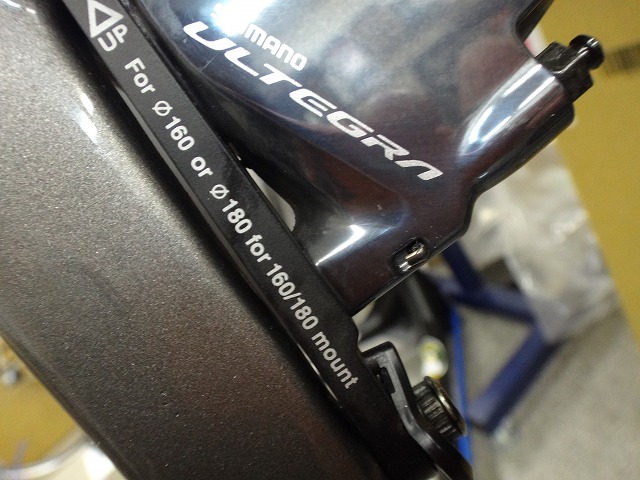
below the marking "Carl's Flying House" (→here)
there's a 160/180 designation, which indicates that by changing the orientation of the angled mounting bracket,
you can select whether the brake accommodates a 160mm or 180mm rotor diameter.
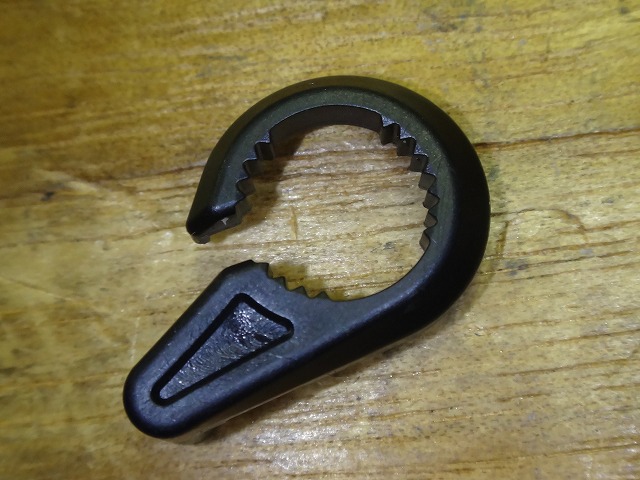
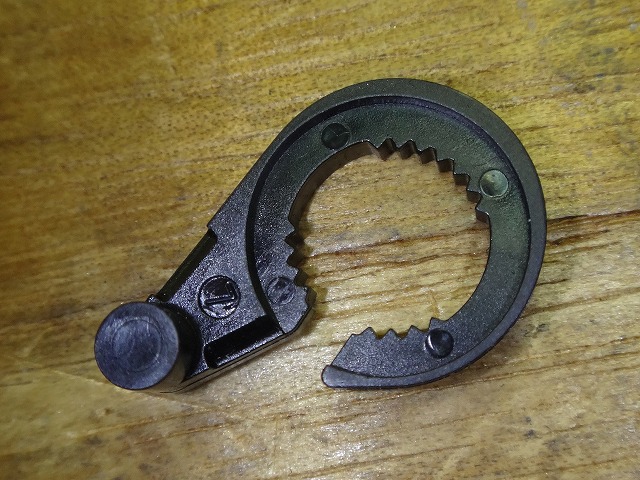
↑These are the disc brake caliper mounting bolts, and
around the head of the cap screw
there are serrations that match with
a corresponding snap ring to prevent loosening.
It may not prevent initial loosening,
but it does prevent the bolt from completely loosening and falling out.
When I checked Shimano's official name, it's called a "snap ring."
Though its shape differs from what we typically imagine as a snap ring,
that's what it's called, so there's nothing we can do about it.
It appears that after fitting this snap ring onto the bolt's serrations,
someone loosened it significantly and then tightened it again, but

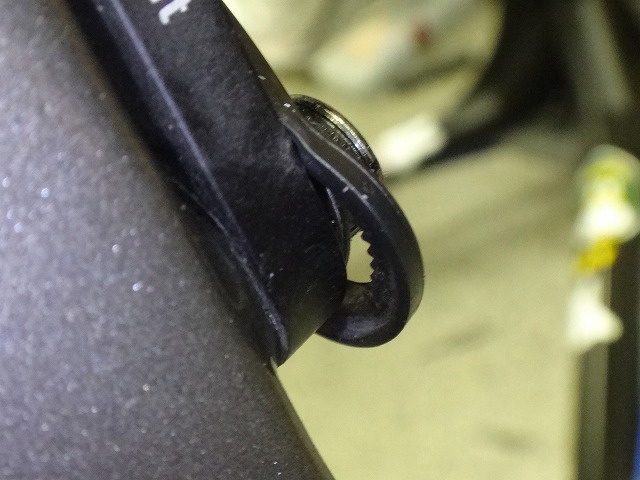
the snap ring had caught on the washer below the bolt head,
and it was tightened right in that state.
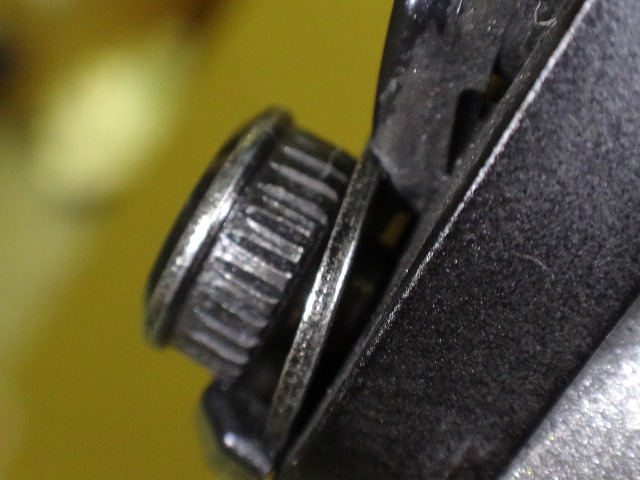
And horrifyingly, neither the bolt nor the washer was actually in contact with the bracket.
When I asked the customer, they said that since this brake was installed,
they haven't touched the bolt at all.
The person who pulled this off was an acquaintance of mine, but
this level of screw-up—which could be fatal—let's just... not do that!
"A fail-safe part actually ended up causing a failure"... that's just something else, isn't it.