Silca's titanium bottle cage, SICURO (Sicuro), now has
V2 (Version Two) added to the end of the model name
with changed specifications.
The packaging changed from a half box-style
to mounting on cardboard,
and titanium bolts are no longer included.
For details on the previous packaging and included bolts,
please see here.

↑V1 on the left (what I'll call it for convenience), V2 on the right.
In the article below, when images are arranged side by side,
V1 is on the left and V2 is on the right.
From this angle, there's barely any visible difference.

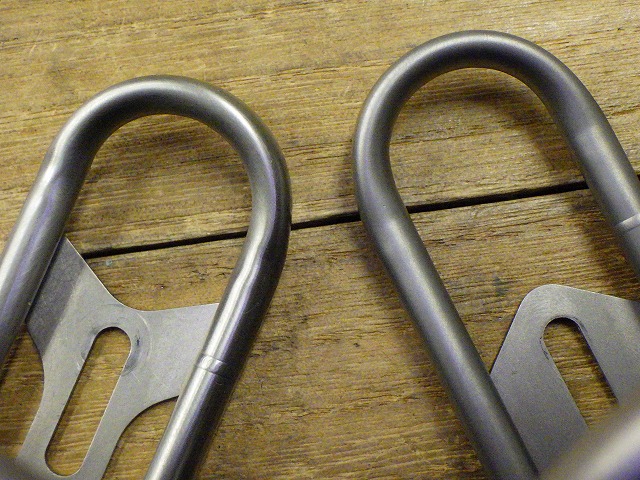
First, the shape of the mounting plate for the frame is different.
As for other differences, the welding finish
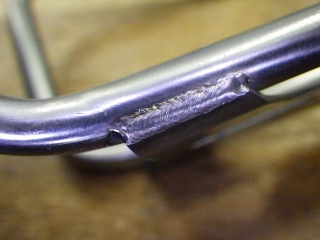
V1 underside
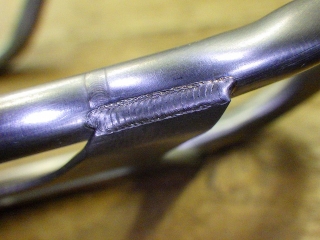
V1 top side
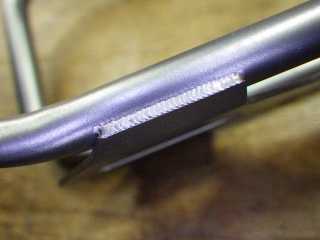
V2 underside
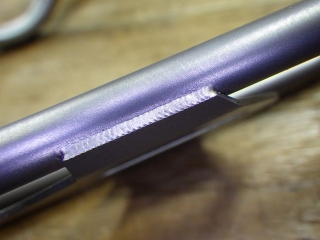
V2 top side
V2's welding bead finish (both V1 and V2 have two welds) has become
shorter in pitch but longer overall.

↑Like this when compared
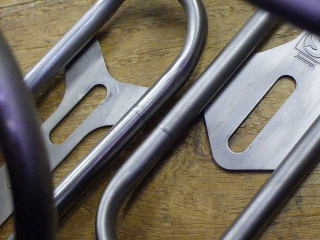
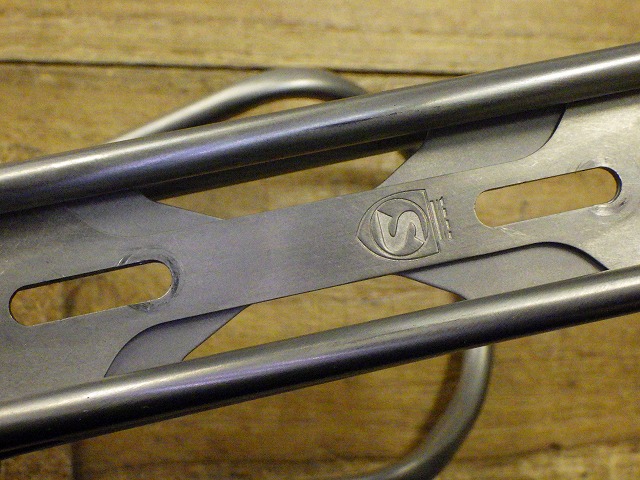
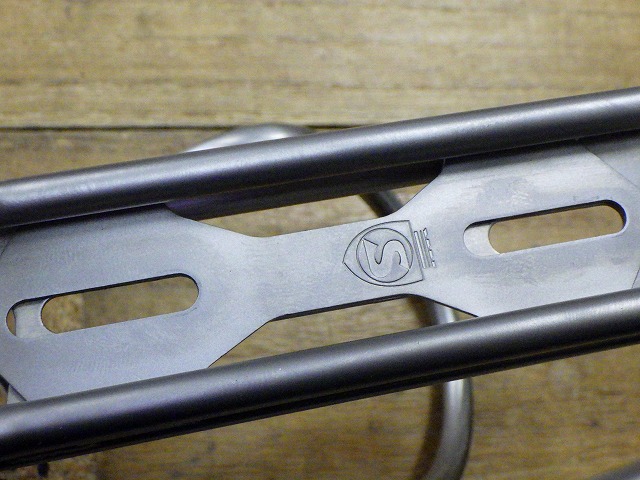
Another difference: V2 has elongated holes in the plate.
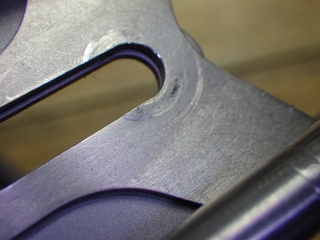
I aligned the upper hole edges of V1 and V2.
V1 has mounting marks on it because it's my personal one.

From the V1 side like that,
you can't really tell the difference in hole length,
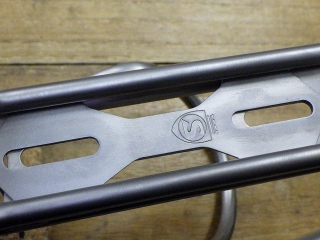
but flipped around and viewed from the V2 side,
it looks like this.
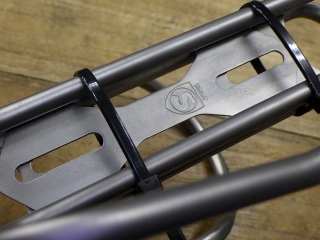
Some people want to raise the bottle cage position, while
others want to lower it,
but I'd say more people want to lower it.
When the down tube bottle interferes with the seat tube bottle
and won't go in all the way, you'd want to "raise" it,
but when the seat tube threading is positioned high and
the bottle or tool canister ends up floating awkwardly,
looking bad and affecting weight distribution,
you'd want to "lower" it. That's probably the more common scenario.
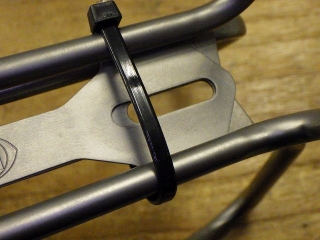
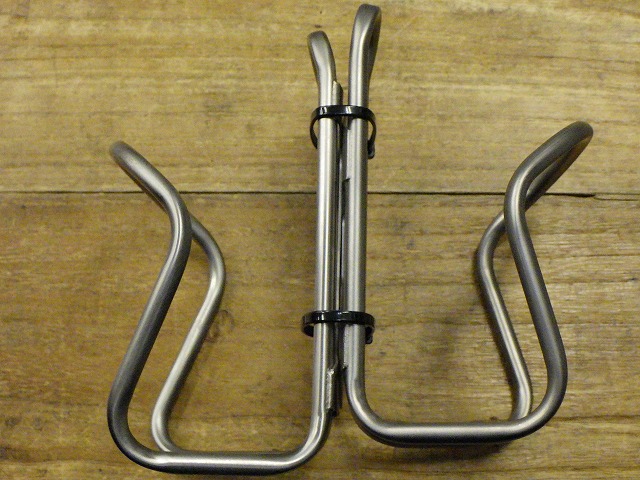
To investigate this,
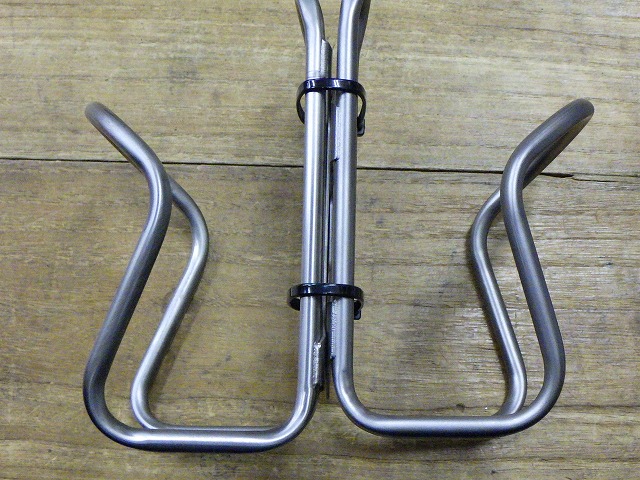
I first aligned the upper hole edges of V1 and V2 plates
and strapped them together with zip ties.
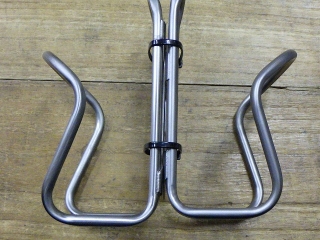
V1 is slightly lower.
Hmm, if V2 could be lowered way more, I'd consider upgrading,
but the result went the opposite way from my expectations.
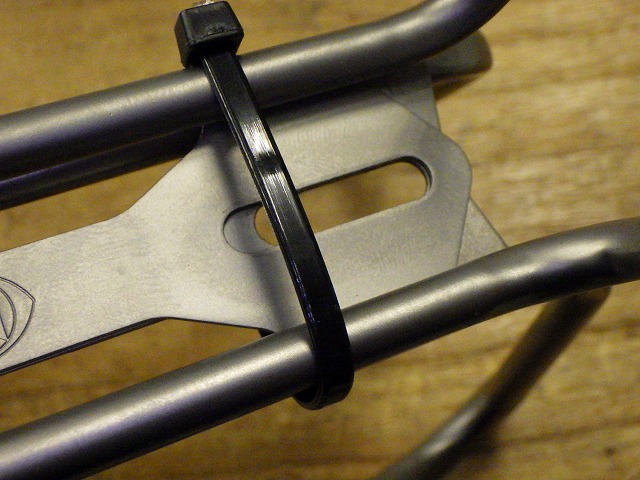
Next, I aligned the lower hole edges.
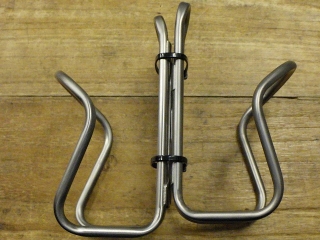
More noticeably this time, V2 sits higher.
If you're currently running two V1s and your down tube bottle
is just barely clearing the seat tube bottle,
you might consider switching just the down tube one to V2.
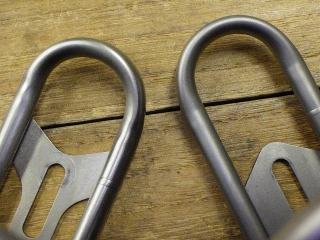
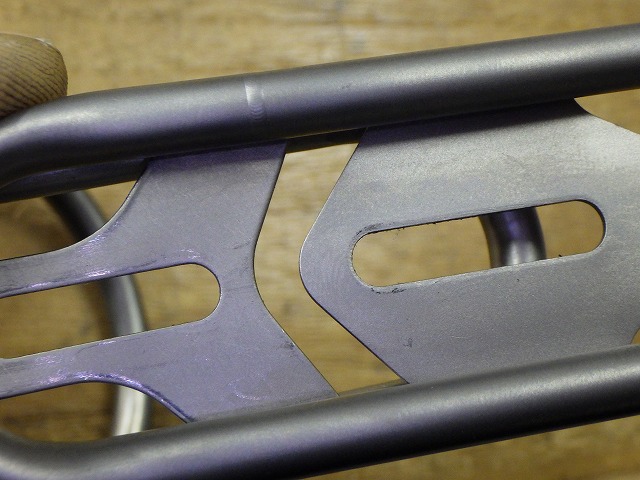
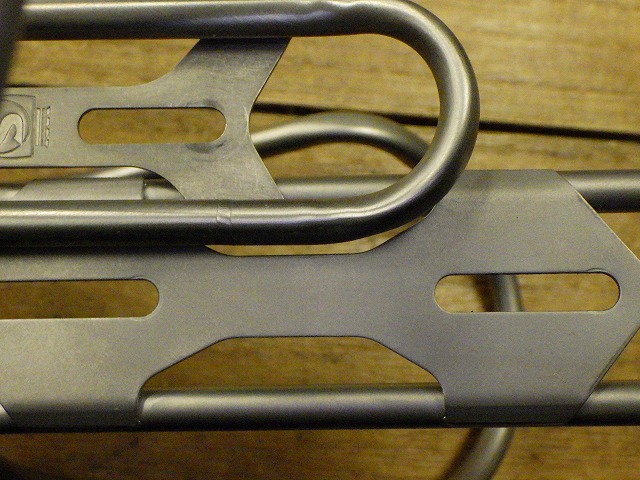
What also caught my attention is this difference in plate shape.

Hmm...
Maybe Alfred Wegener felt the same way about this.
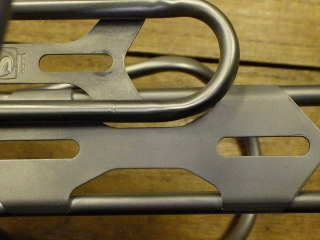
↑Plate side view, V1 on top

↑Same, V2 on top
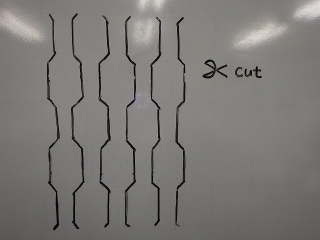
These might be...
A single sheet of titanium cut like in the diagram above,
then
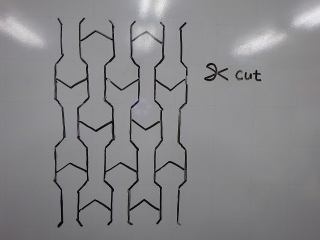
further cut out like this

to make V1 and V2 plates.
That would be manufacturing with SDGs in mind.
I can't say how much of that is true, but
Silca says the material usage rate from titanium bottle cage materials is 99.9%,
with only the cutting scraps being waste (the material punched out for the plate's elongated holes—are they being remelted?).
Or even if they're not being cut that precisely,
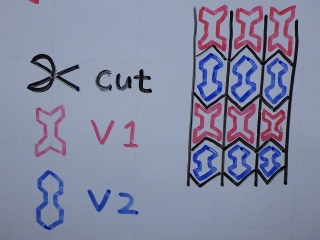
↑they probably do something to this extent.
If Silca releases a V1' (prime) or V3 with V1's plate shape but V2's welding finish
and hole length specs, and then alternates between V2 and that going forward,
this theory would hold more weight.
However, infinite tiling with just the V1 shape would be wasteful,
while tiling with just the V2 shape wastes very little,
so the V1 plate shape might already be obsolete.
I mentioned SDGs earlier, but
Silca, with impressive business savvy, takes the scrap from the hollow titanium tubes
in their bottle cages and finishes them as titanium straws (※) to sell them.
Their main website actually describes these products as
reusable and sustainable.
Pretty high-minded of them, huh.
※A two-piece set with straight and bent shapes, with
bending work on the bent piece, laser logo engraving,
six color options via anodizing, and ultrasonic cleaning before shipment—
it's definitely a labor-intensive operation.
V2 (Version Two) added to the end of the model name
with changed specifications.
The packaging changed from a half box-style
to mounting on cardboard,
and titanium bolts are no longer included.
For details on the previous packaging and included bolts,
please see here.
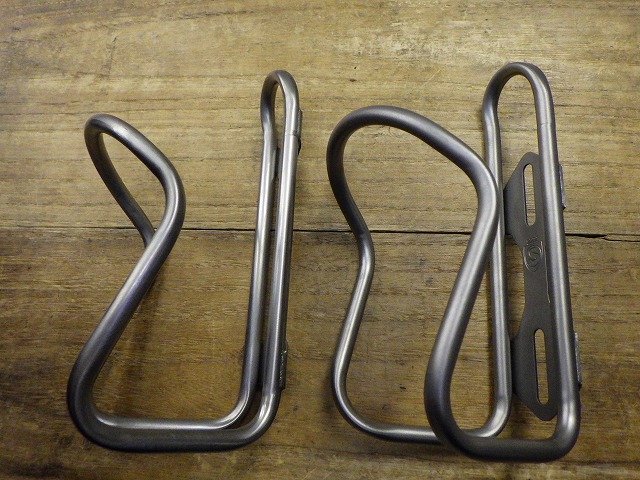
↑V1 on the left (what I'll call it for convenience), V2 on the right.
In the article below, when images are arranged side by side,
V1 is on the left and V2 is on the right.
From this angle, there's barely any visible difference.
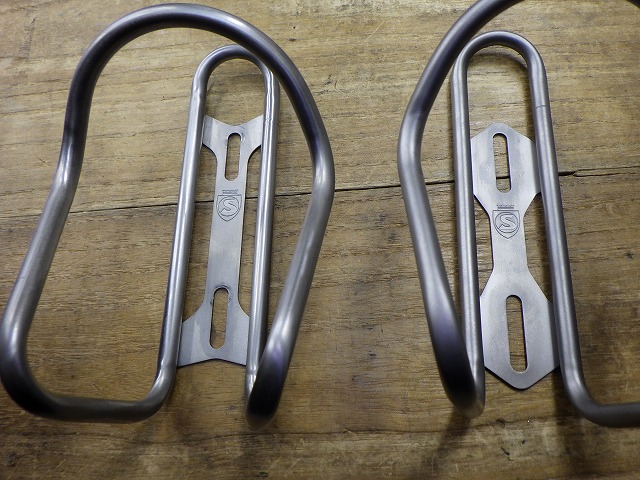
First, the shape of the mounting plate for the frame is different.
As for other differences, the welding finish
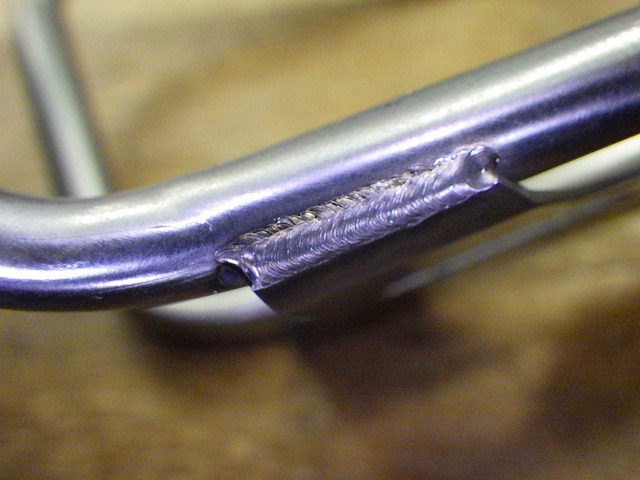
V1 underside
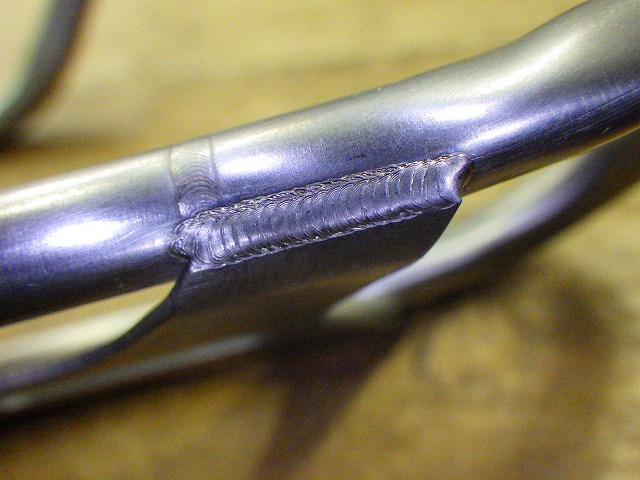
V1 top side
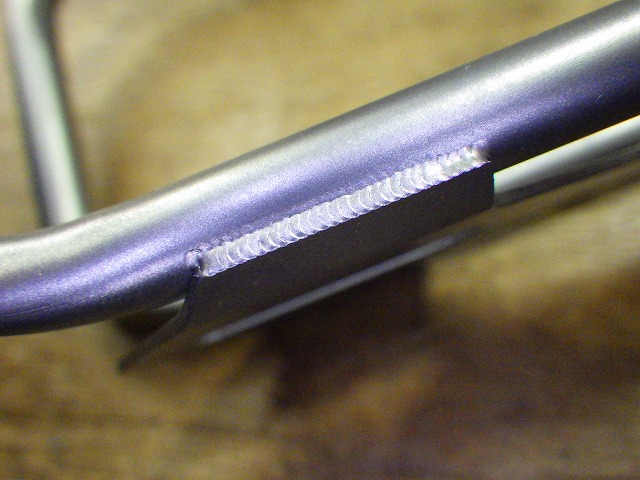
V2 underside

V2 top side
V2's welding bead finish (both V1 and V2 have two welds) has become
shorter in pitch but longer overall.
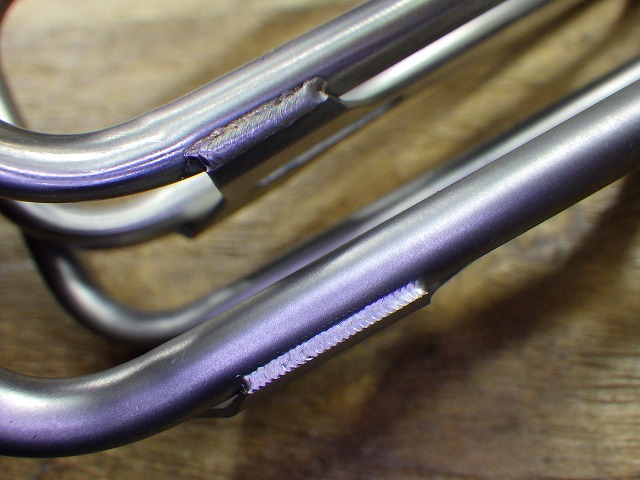
↑Like this when compared
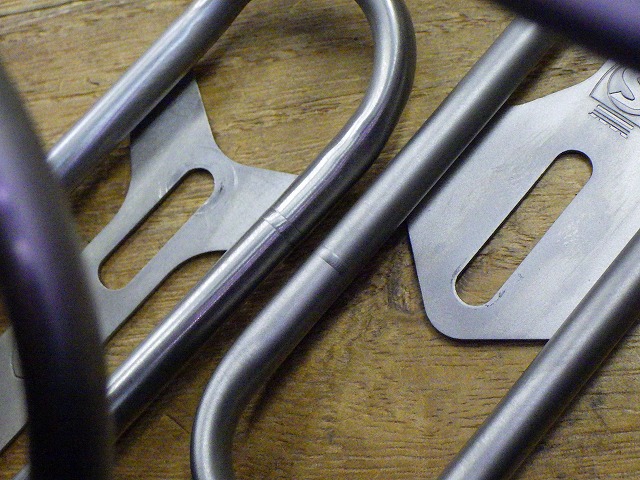
Another difference: V2 has elongated holes in the plate.
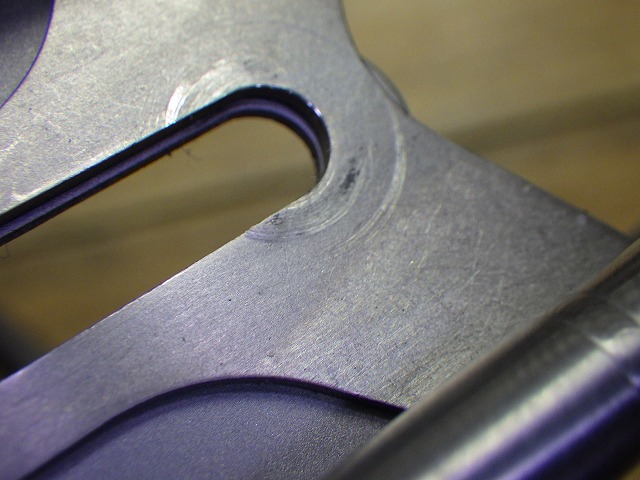
I aligned the upper hole edges of V1 and V2.
V1 has mounting marks on it because it's my personal one.
From the V1 side like that,
you can't really tell the difference in hole length,
but flipped around and viewed from the V2 side,
it looks like this.

Some people want to raise the bottle cage position, while
others want to lower it,
but I'd say more people want to lower it.
When the down tube bottle interferes with the seat tube bottle
and won't go in all the way, you'd want to "raise" it,
but when the seat tube threading is positioned high and
the bottle or tool canister ends up floating awkwardly,
looking bad and affecting weight distribution,
you'd want to "lower" it. That's probably the more common scenario.
To investigate this,
I first aligned the upper hole edges of V1 and V2 plates
and strapped them together with zip ties.
V1 is slightly lower.
Hmm, if V2 could be lowered way more, I'd consider upgrading,
but the result went the opposite way from my expectations.
Next, I aligned the lower hole edges.
More noticeably this time, V2 sits higher.
If you're currently running two V1s and your down tube bottle
is just barely clearing the seat tube bottle,
you might consider switching just the down tube one to V2.
What also caught my attention is this difference in plate shape.
Hmm...
Maybe Alfred Wegener felt the same way about this.
↑Plate side view, V1 on top
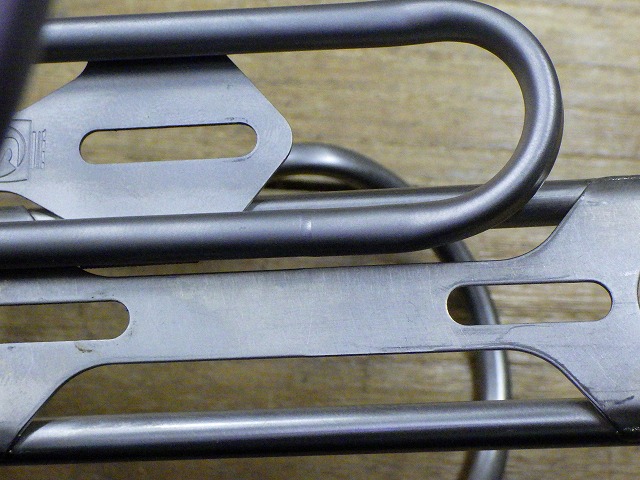
↑Same, V2 on top
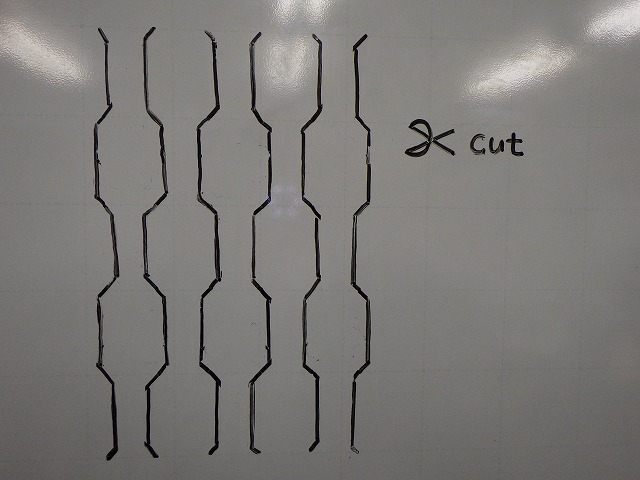
These might be...
A single sheet of titanium cut like in the diagram above,
then
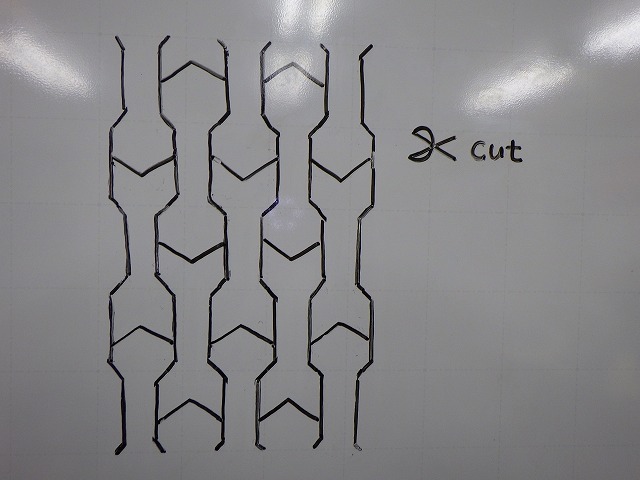
further cut out like this

to make V1 and V2 plates.
That would be manufacturing with SDGs in mind.
I can't say how much of that is true, but
Silca says the material usage rate from titanium bottle cage materials is 99.9%,
with only the cutting scraps being waste (the material punched out for the plate's elongated holes—are they being remelted?).
Or even if they're not being cut that precisely,
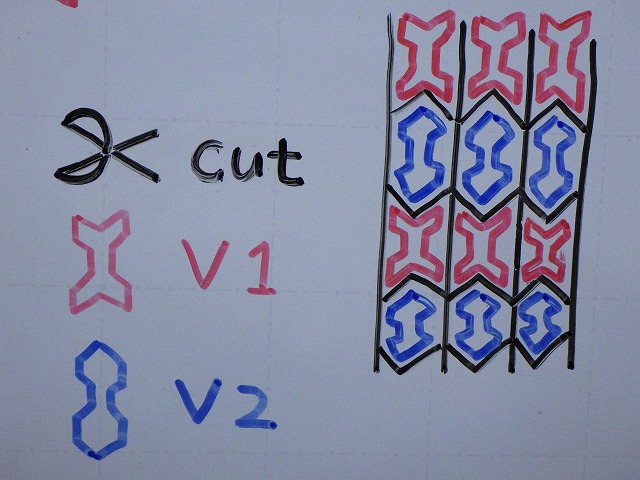
↑they probably do something to this extent.
If Silca releases a V1' (prime) or V3 with V1's plate shape but V2's welding finish
and hole length specs, and then alternates between V2 and that going forward,
this theory would hold more weight.
However, infinite tiling with just the V1 shape would be wasteful,
while tiling with just the V2 shape wastes very little,
so the V1 plate shape might already be obsolete.
I mentioned SDGs earlier, but
Silca, with impressive business savvy, takes the scrap from the hollow titanium tubes
in their bottle cages and finishes them as titanium straws (※) to sell them.
Their main website actually describes these products as
reusable and sustainable.
Pretty high-minded of them, huh.
※A two-piece set with straight and bent shapes, with
bending work on the bent piece, laser logo engraving,
six color options via anodizing, and ultrasonic cleaning before shipment—
it's definitely a labor-intensive operation.