Another day with wheels (etc.).
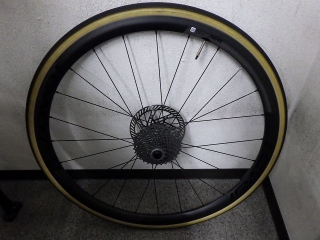
I rebuilt the rear wheel of the Alpinist CLX
with the black ROVAL logo.
I'm only storing the rear wheel for now.
The white logo Alpinist CLX
has already been delivered to the customer,
but since they live very close to the shop,
they stopped by on the way back from a ride.
At that time, I swapped just the front wheel—which had
spokes laced and both tire and rotor already installed—
for the Zonda DB they were riding on,
and had them take it for a test ride back home.
Then they came back to pick up
the Zonda DB front wheel in the FF Yamaguchi wheel bag and
the Alpinist CLX rear wheel with spokes laced,
and when I asked how much different the front wheel was
(the comparison was against the Alpinist CLX before rebuilding,
not the Zonda DB, just to be clear),
they said it was completely different! No more flex feeling
and the spoke noise is gone!
The other day, another Alpinist CLX customer whose bike had
silver spokes and was rebuilt asked me to do the same thing,
and I'm currently storing a disc brake CLX 50,
and in their work order they were also enthusiastically praising
how the Alpinist's ride quality changed.
When I hear things like this,
even if I'm the one asking the question,
I often give a sarcastically dismissive answer like "Wow, such a Nomu Lab fanatic,"
so don't mind that.
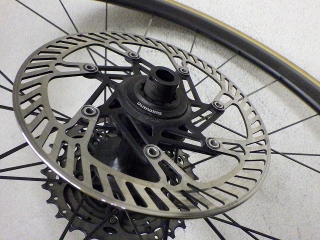
The disc rotor that came with this wheel,
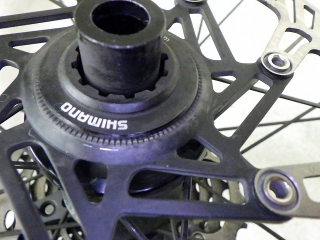
The lockring is a Shimano item,
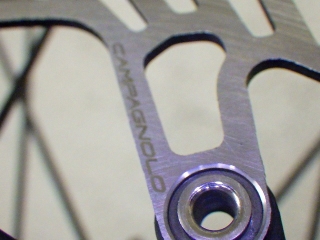
but the rotor is a Campagnolo one.
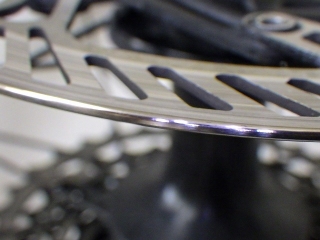
This rotor has a perfectly circular outer edge with no cutouts,
and it's beveled extremely carefully.
It's rounded like a plastic toy knife blade
from a pretend play set—the kind connected with velcro
to a toy carrot you're supposed to cut.
Even Shimano disc rotors don't have beveling this extensive,
and while they're not serrated, they do have cutouts on the outer edge.
It seems Campagnolo is willing to sacrifice
some cooling performance and brake pad cleaning effectiveness
in order to reduce the severity of impact to the human body
in the event of a mass pile-up.
I already know this, so I don't touch it
(and I don't want hand oils on the rotor anyway),
but the finish on this rotor's outer edge
is genuinely awe-inspiring to the touch.
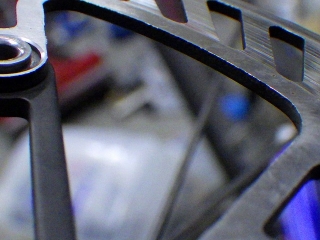
※Note for parents:
The areas outside the outer edge are not beveled
and are sharp as a machete, so there's a risk of hand injury.

before
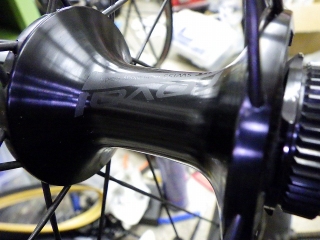
The timeline jumps ahead to after the rebuild, here's the after shot.
Since I'm taking the wheel apart, I'm wiping down the hub.
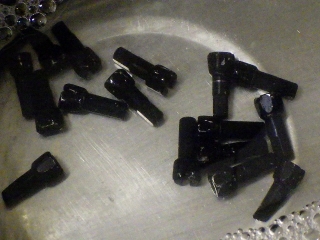
When I loosened the nipples, black grime
came pouring out of the spoke pockets, so I gave it an ultrasonic cleaning.
I thought dirt would come out of the holes like a black haze,
but it wasn't quite that dramatic.
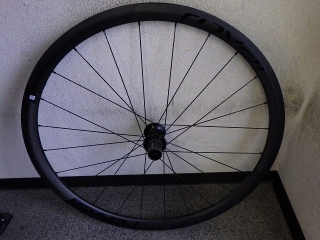
All laced up.
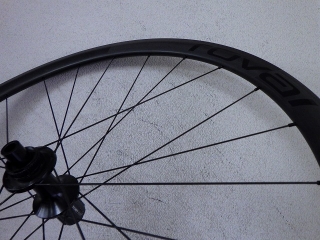
I've set the non-drive side to black CX Sprint spokes.
I'll do the lacing on the drive side later.
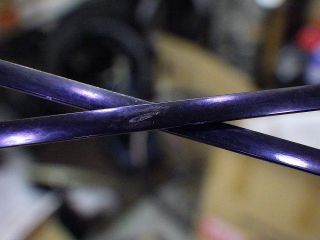
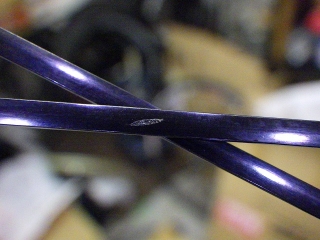
↑This is the final crossing on the drive side before lacing
of the white logo Alpinist CLX from yesterday.
Since I'm building without being conscious of the original front/back,
I photographed the final crossing with the wear marks oriented outward (to the right).
The camera light is reflecting off the spokes.
And indeed, the rear wheel can't be tensioned as clearly initially
compared to the front wheel.
On the non-drive side, I'm pursuing resistance to deformation through
a slight increase from the original second cross tension plus heavier spoke weight,
and on the drive side, a slight increase from the original second cross tension plus lacing.
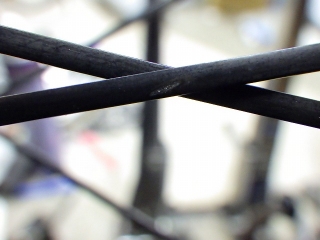
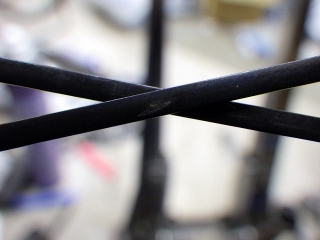
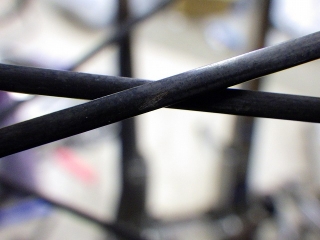
↑This is today's black logo Alpinist CLX.
I didn't turn on the camera light.
Again, the wear marks haven't extended beyond the final crossing zone.
If the non-drive side were radial laced, I could tension it a bit more.
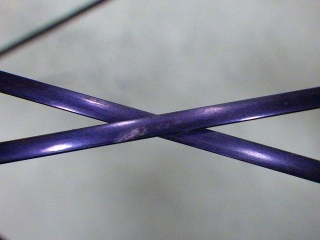
By the way, here's the front wheel image from the other day.
The wear marks have completely extended beyond the spoke crossing,
but this is possible not only because the lower spoke count side is radial laced,
but also because the front wheel has less lateral runout to begin with—and that's the major factor.

I rebuilt the rear wheel of the Alpinist CLX
with the black ROVAL logo.
I'm only storing the rear wheel for now.
The white logo Alpinist CLX
has already been delivered to the customer,
but since they live very close to the shop,
they stopped by on the way back from a ride.
At that time, I swapped just the front wheel—which had
spokes laced and both tire and rotor already installed—
for the Zonda DB they were riding on,
and had them take it for a test ride back home.
Then they came back to pick up
the Zonda DB front wheel in the FF Yamaguchi wheel bag and
the Alpinist CLX rear wheel with spokes laced,
and when I asked how much different the front wheel was
(the comparison was against the Alpinist CLX before rebuilding,
not the Zonda DB, just to be clear),
they said it was completely different! No more flex feeling
and the spoke noise is gone!
The other day, another Alpinist CLX customer whose bike had
silver spokes and was rebuilt asked me to do the same thing,
and I'm currently storing a disc brake CLX 50,
and in their work order they were also enthusiastically praising
how the Alpinist's ride quality changed.
When I hear things like this,
even if I'm the one asking the question,
I often give a sarcastically dismissive answer like "Wow, such a Nomu Lab fanatic,"
so don't mind that.

The disc rotor that came with this wheel,

The lockring is a Shimano item,

but the rotor is a Campagnolo one.

This rotor has a perfectly circular outer edge with no cutouts,
and it's beveled extremely carefully.
It's rounded like a plastic toy knife blade
from a pretend play set—the kind connected with velcro
to a toy carrot you're supposed to cut.
Even Shimano disc rotors don't have beveling this extensive,
and while they're not serrated, they do have cutouts on the outer edge.
It seems Campagnolo is willing to sacrifice
some cooling performance and brake pad cleaning effectiveness
in order to reduce the severity of impact to the human body
in the event of a mass pile-up.
I already know this, so I don't touch it
(and I don't want hand oils on the rotor anyway),
but the finish on this rotor's outer edge
is genuinely awe-inspiring to the touch.

※Note for parents:
The areas outside the outer edge are not beveled
and are sharp as a machete, so there's a risk of hand injury.

before

The timeline jumps ahead to after the rebuild, here's the after shot.
Since I'm taking the wheel apart, I'm wiping down the hub.

When I loosened the nipples, black grime
came pouring out of the spoke pockets, so I gave it an ultrasonic cleaning.
I thought dirt would come out of the holes like a black haze,
but it wasn't quite that dramatic.

All laced up.

I've set the non-drive side to black CX Sprint spokes.
I'll do the lacing on the drive side later.


↑This is the final crossing on the drive side before lacing
of the white logo Alpinist CLX from yesterday.
Since I'm building without being conscious of the original front/back,
I photographed the final crossing with the wear marks oriented outward (to the right).
The camera light is reflecting off the spokes.
And indeed, the rear wheel can't be tensioned as clearly initially
compared to the front wheel.
On the non-drive side, I'm pursuing resistance to deformation through
a slight increase from the original second cross tension plus heavier spoke weight,
and on the drive side, a slight increase from the original second cross tension plus lacing.


↑This is today's black logo Alpinist CLX.
I didn't turn on the camera light.
Again, the wear marks haven't extended beyond the final crossing zone.
If the non-drive side were radial laced, I could tension it a bit more.
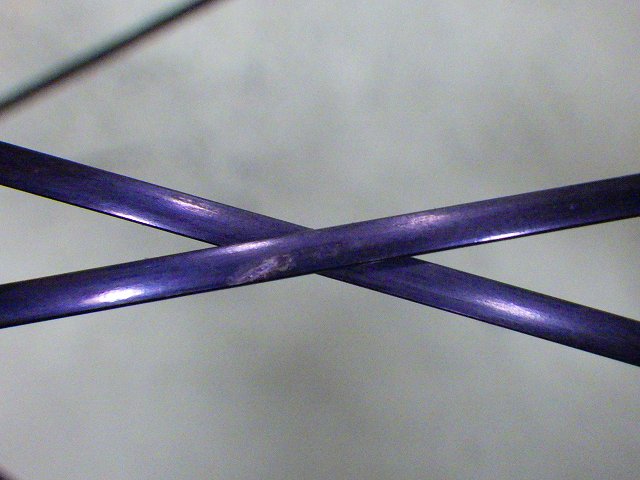
By the way, here's the front wheel image from the other day.
The wear marks have completely extended beyond the spoke crossing,
but this is possible not only because the lower spoke count side is radial laced,
but also because the front wheel has less lateral runout to begin with—and that's the major factor.