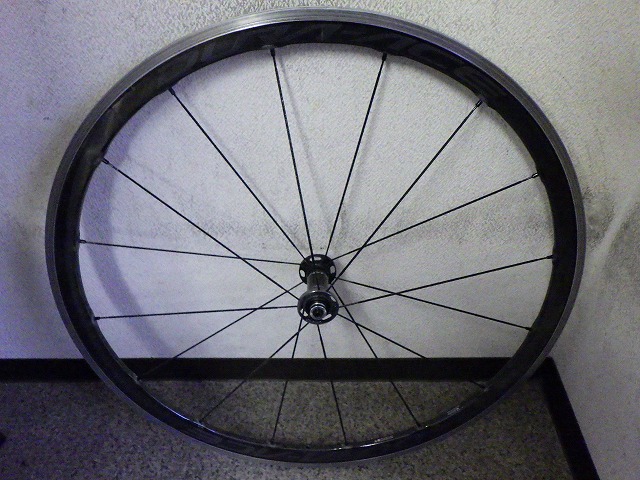
A customer brought in a WH-R9100-C40
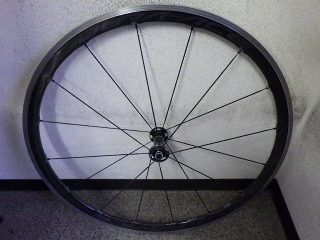
wheelset in WO rim (clincher) specification.
The customer requested that I perform a hub overhaul if I deem it necessary,
plus inspection work like truing.
Despite being called C40, the WO rim version
uses the same rim as the C35 from the previous 9000 series,
so the rim height isn't actually 40mm.
The tubular specification does have a modified rim,
but it still only reaches 37mm in height—short of the 40mm mark.
Let me start with the front wheel.
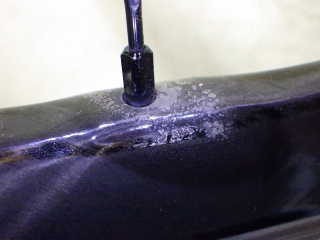
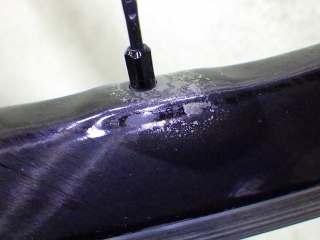
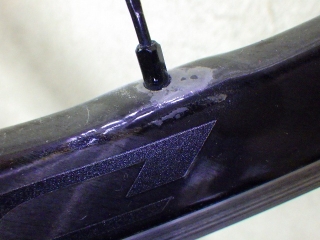
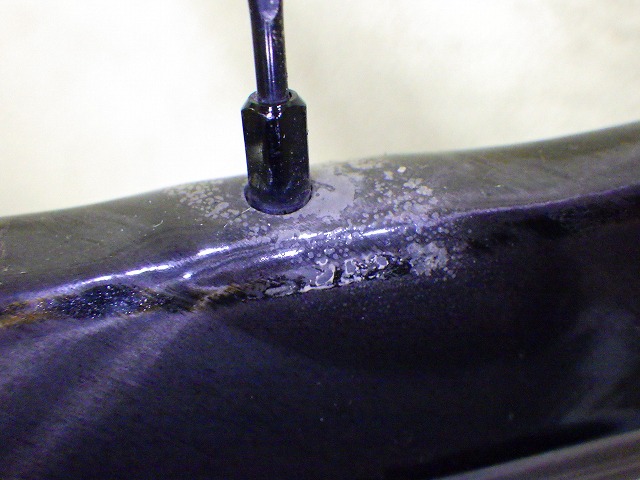
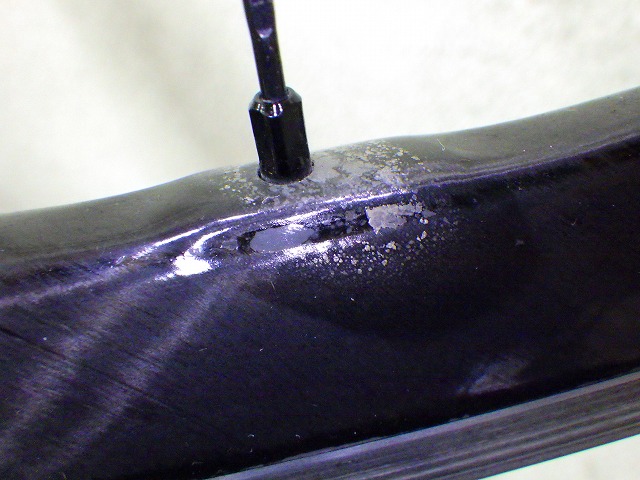
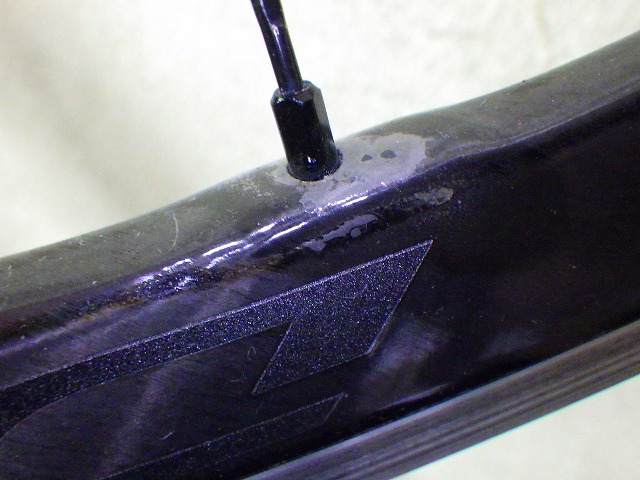
There were some air bubbles in the carbon only around the spoke holes.
Since this rim isn't tubeless-compatible,
the aluminum rim portion bears the spoke tension,
so there's no risk of failure.
Besides, the R9100 series doesn't have
a tubeless-compatible carbon laminate rim—they quietly discontinued
that design back in the 9000 series.
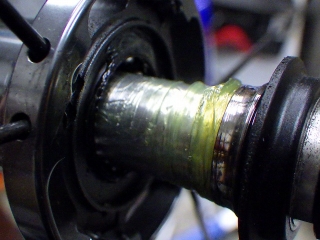
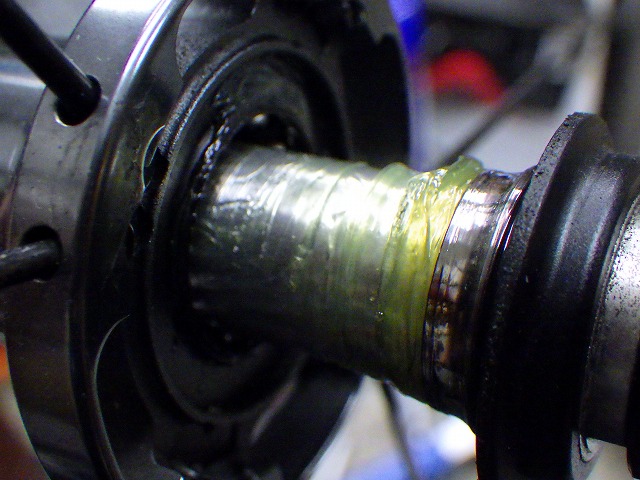
I didn't feel the hub really needed a full overhaul,
but there was a faint grinding sensation,
so I cleaned it and regreased it.
Not all Shimano hubs, but specifically the Dura-Ace and XTR hubs
have pretty robust labyrinth seals, so
the grease inside won't escape unless you hit it with a high-pressure washer directly.
As long as you don't run the hub with play for an extended period,
the rim's braking surface wear limit comes first—the hub
has such a long service life that many Dura-Ace grade wheels
can be ridden their whole life with zero maintenance.
(Though the braking surface does wear somewhat quickly,
so the rim and hub durability are completely out of sync.)
When it comes to hubs, there are people who can't properly adjust the bearing preload
but like to attempt regreasing anyway—they're actually
shortening the hub's lifespan more often than not.
The same goes for higher-end Campagnolo and Fulcrum models with
cup-and-cone hubs. I've seen countless examples where people packed in
fancy grease (laughs) but were oblivious to hub radial play,
and the ball races were completely pitted.
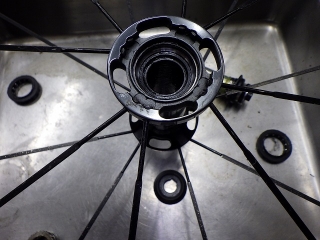
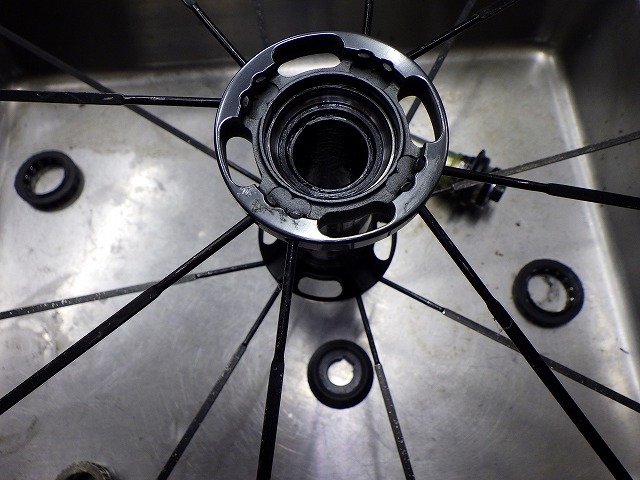
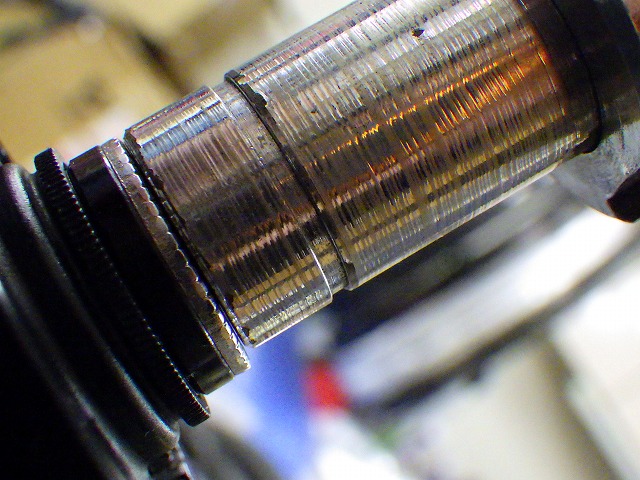
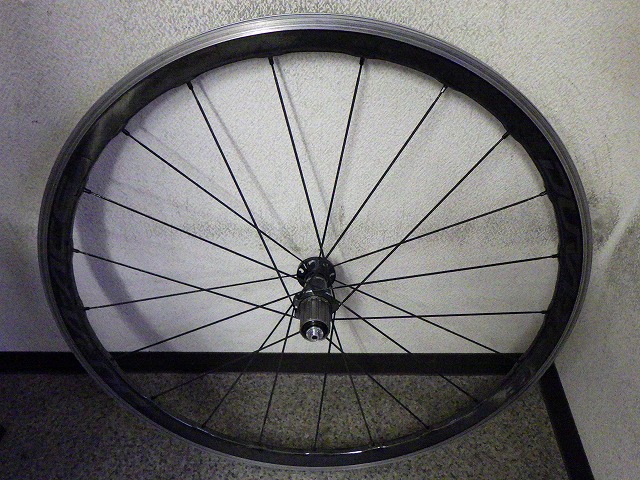
After disassembly, cleaning, and regreasing,
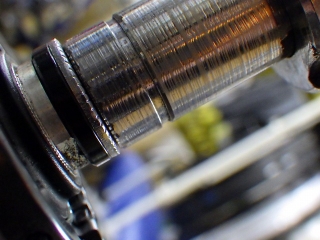
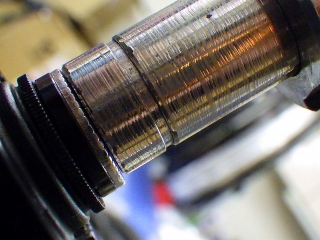
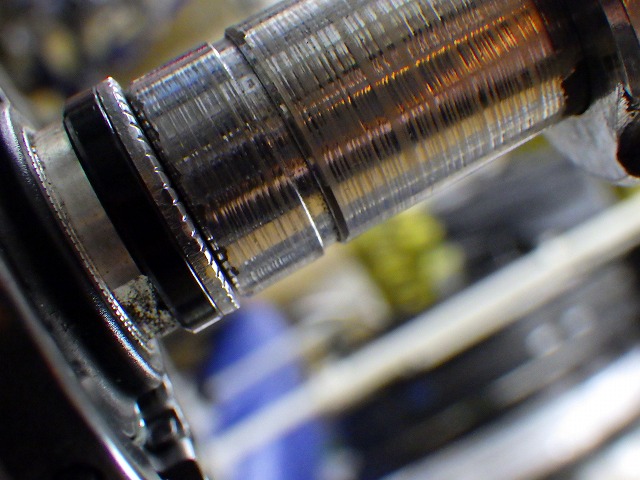
I checked with a centering gauge and it was spot-on.
I trued a few minor runouts by adjusting a few nipples,
but the wheel center didn't shift.
The image above isn't strictly the final state, but
the final state would look essentially identical, so I didn't bother taking another shot.

Now for the rear wheel.
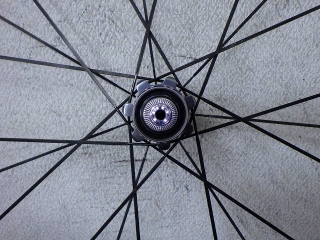
It's an Optibar with a 2:1 radial/tangential (J-bend) lacing pattern, which is fine,
but I think they should have made the flange spacing more extreme (high-low).
Well, if they went with Fulcrum-level mega high-low flanges,
the hub would get heavier, and if the total wheel weight
crosses a 100-gram threshold,
it becomes less attractive to people who fixate on weight alone.
So I checked the claimed weight: 674g for the front wheel and 834g for the rear,
totaling 1508g. If it were 1490g instead, switching to a high-low rear hub
wouldn't prevent it from being a 1400-gram wheelset, but
at 1508g, a rear hub design change alone
won't push it into the 1600-gram range anyway, and
the rear wheel won't slip into the 900-gram range either.
For the rear wheel, I only confirmed the hub internals were undamaged
and didn't do a full overhaul.
The ball races had worn in properly,
and the rotation was silky smooth—if I overhaul it now,
the hub rotation would actually feel stiffer right after,
at least initially.
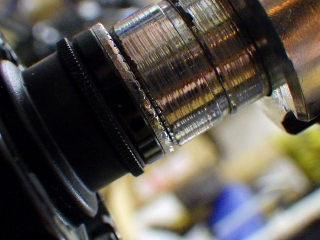
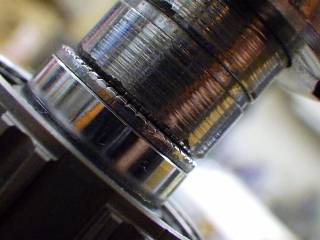
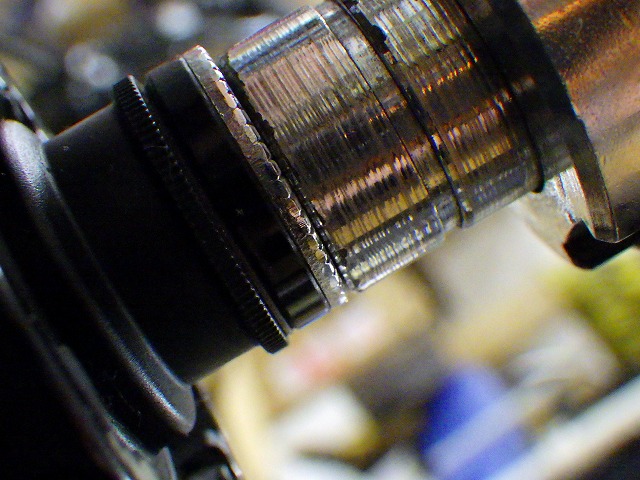
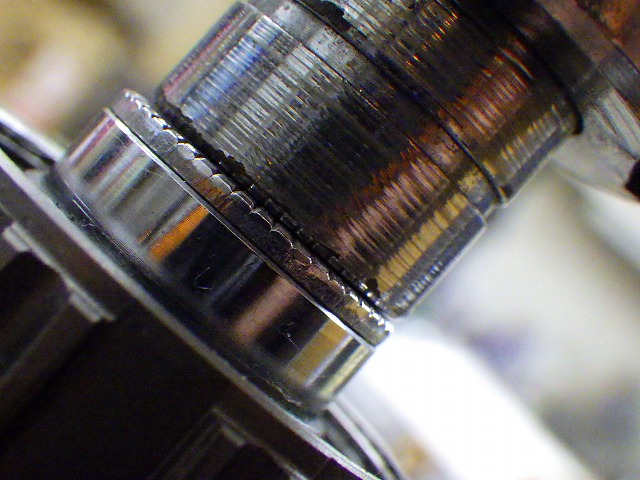
The photo didn't come out perfectly, but the rim is shifted slightly to the right
by less than one sheet of paper's thickness—
probably just the amount it drifted over time from perfect center.
The lateral runout was also minimal, but I nitpicked
and forced myself to find microscopic lateral runout in a few spots,
then adjusted those nipples on the non-freewheel side to tension more.
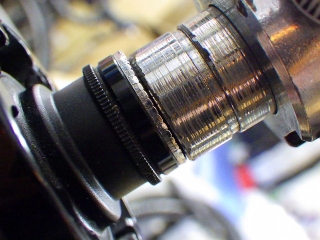
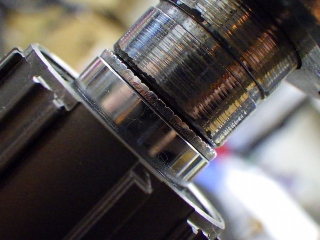
The center came in perfectly.
If you tighten all the non-freewheel side nipples by the same amount,
there's a good chance you'll overshoot center and
the rim will drift to the left side.
wheelset in WO rim (clincher) specification.
The customer requested that I perform a hub overhaul if I deem it necessary,
plus inspection work like truing.
Despite being called C40, the WO rim version
uses the same rim as the C35 from the previous 9000 series,
so the rim height isn't actually 40mm.
The tubular specification does have a modified rim,
but it still only reaches 37mm in height—short of the 40mm mark.
Let me start with the front wheel.
There were some air bubbles in the carbon only around the spoke holes.
Since this rim isn't tubeless-compatible,
the aluminum rim portion bears the spoke tension,
so there's no risk of failure.
Besides, the R9100 series doesn't have
a tubeless-compatible carbon laminate rim—they quietly discontinued
that design back in the 9000 series.
I didn't feel the hub really needed a full overhaul,
but there was a faint grinding sensation,
so I cleaned it and regreased it.
Not all Shimano hubs, but specifically the Dura-Ace and XTR hubs
have pretty robust labyrinth seals, so
the grease inside won't escape unless you hit it with a high-pressure washer directly.
As long as you don't run the hub with play for an extended period,
the rim's braking surface wear limit comes first—the hub
has such a long service life that many Dura-Ace grade wheels
can be ridden their whole life with zero maintenance.
(Though the braking surface does wear somewhat quickly,
so the rim and hub durability are completely out of sync.)
When it comes to hubs, there are people who can't properly adjust the bearing preload
but like to attempt regreasing anyway—they're actually
shortening the hub's lifespan more often than not.
The same goes for higher-end Campagnolo and Fulcrum models with
cup-and-cone hubs. I've seen countless examples where people packed in
fancy grease (laughs) but were oblivious to hub radial play,
and the ball races were completely pitted.
After disassembly, cleaning, and regreasing,
I checked with a centering gauge and it was spot-on.
I trued a few minor runouts by adjusting a few nipples,
but the wheel center didn't shift.
The image above isn't strictly the final state, but
the final state would look essentially identical, so I didn't bother taking another shot.
Now for the rear wheel.

It's an Optibar with a 2:1 radial/tangential (J-bend) lacing pattern, which is fine,
but I think they should have made the flange spacing more extreme (high-low).
Well, if they went with Fulcrum-level mega high-low flanges,
the hub would get heavier, and if the total wheel weight
crosses a 100-gram threshold,
it becomes less attractive to people who fixate on weight alone.
So I checked the claimed weight: 674g for the front wheel and 834g for the rear,
totaling 1508g. If it were 1490g instead, switching to a high-low rear hub
wouldn't prevent it from being a 1400-gram wheelset, but
at 1508g, a rear hub design change alone
won't push it into the 1600-gram range anyway, and
the rear wheel won't slip into the 900-gram range either.
For the rear wheel, I only confirmed the hub internals were undamaged
and didn't do a full overhaul.
The ball races had worn in properly,
and the rotation was silky smooth—if I overhaul it now,
the hub rotation would actually feel stiffer right after,
at least initially.
The photo didn't come out perfectly, but the rim is shifted slightly to the right
by less than one sheet of paper's thickness—
probably just the amount it drifted over time from perfect center.
The lateral runout was also minimal, but I nitpicked
and forced myself to find microscopic lateral runout in a few spots,
then adjusted those nipples on the non-freewheel side to tension more.
The center came in perfectly.
If you tighten all the non-freewheel side nipples by the same amount,
there's a good chance you'll overshoot center and
the rim will drift to the left side.