Another day with wheels (and so on).
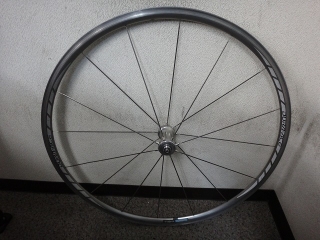
I took in a WH-7800 from a customer.
In my assessment, this is Shimano's greatest wheel masterpiece of all time.
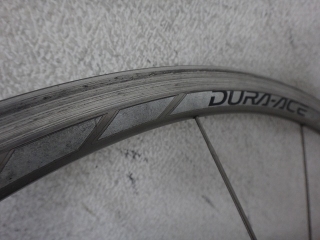
It's hard to see in the photo, but
where the brake zone has worn thin,
the air pressure from the WO tire is causing
the bead hook to spread open.
I'll show you examples later, but bead hooks can actually burst.
With tubular tires, the air pressure doesn't spread the bead hook
(or rather, there's no bead hook in the first place),
so this kind of problem doesn't occur.
The customer wants the rim replaced, but since upgrading the rear hub to 11-speed isn't possible,
we came to an agreement that the rebuild would only work with 10-speed components.
The hub internals were practically undamaged despite the rim being beyond its service life—
that's Dura-Ace for you.
I can accept that the hub and rim have mismatched service lives because the hub is overspecced,
but spare parts availability being shorter than the hub's service life
seems like a real problem to me.
In this case too, since the original rim wasn't available, I used something else.
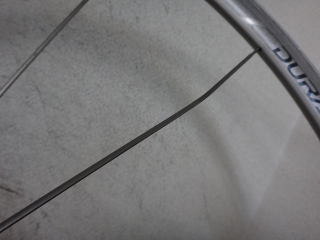
While disassembling the wheel, I found a bent spoke.
I wasn't planning to reuse it anyway.
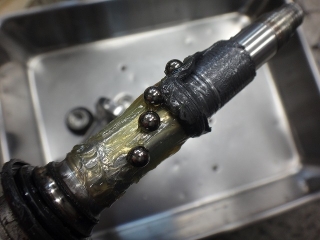
The hub shaft rotation had some roughness,
so I did a complete hub overhaul.
When I said earlier that the hub internals weren't damaged,
I meant there was no pitting on the ball races and no discoloration on the ball bearings.
Looking at the image above, I momentarily thought maybe molybdenum grease had been applied to just one side,
but that wasn't it—there was a reason.
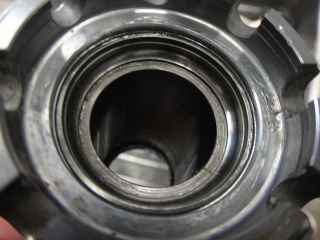
What Campagnolo calls the "gold-fish-scoop net membrane" (→here)—
a guard that prevents grease from flowing into the hub body—
is inserted before the cone is pressed on,
but on this hub, it's a thin metal washer instead.
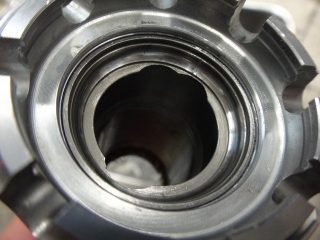
On one side, this washer had cracked, and the thin fragments
were shaken into powder and mixed with the grease—that's what we saw before.
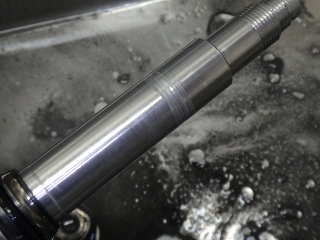
After cleaning the hub shaft,
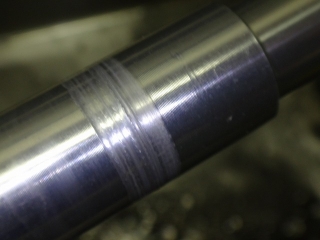
there was some wear marks directly below where it sits in the hub body,
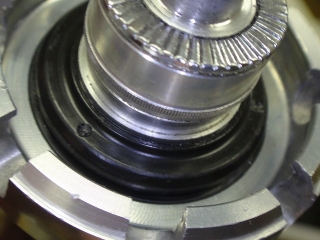
but the ball races and ball bearings showed no damage whatsoever,
so when reassembled, the rotation was smooth as a new hub.
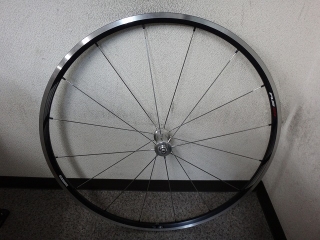
Built it.
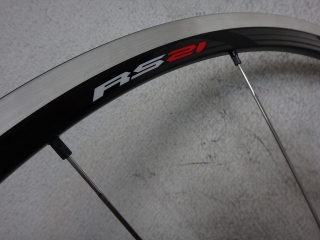
I'm using an RS21 rim as a substitute.
The rim holes require aluminum nipples with a 4mm hex socket
(technically 3.95mm) to turn,
and these nipples only come in black or red,
so I'm using black ones.
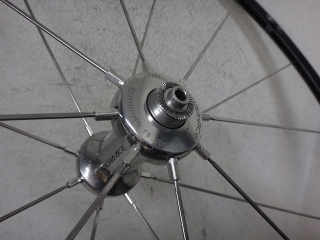
For the spokes, I hesitated to use CX-RAY equivalent spokes
for a 16-hole configuration,
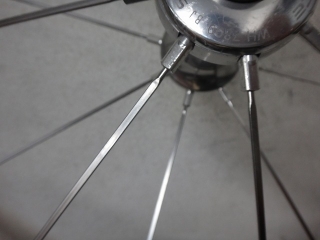
so I machined Hoshi Aero Star Bright III spokes to double-butted and used those.
The original spokes also had greater weight than CX-RAY,
so avoiding CX-RAY seems like the right call.
The fatal mistake with Dura-Ace C24 front wheels from WH-7900 onward
is building them with 16 holes using CX-RAY equivalent spokes.
If they either increased the spoke count to 20 holes while keeping the same gauge,
or kept it at 16 holes but increased spoke weight,
they'd get noticeably better stiffness,
but since their miscalculation of which factors matter is good for my business,
I'm fine with them not fixing it.
When you weigh the weight increase and aerodynamic penalty from four more spokes
against the stiffness improvement gained, the latter is more important.
Someone will inevitably argue that 24H or 28H would be even better,
but understanding the relative importance of different factors is about finding the "optimal balance,"
For example, recently with tire width, if wider tires reduce rolling resistance or whatever,
then if the frame and fork allow it, wouldn't 32C or 35C tires roll better?
In today's road bike world, 25C seems to be the accepted "optimal balance."
I have my doubts about this, but it's true that putting 23C on a wide WO rim creates a pinched tire, which isn't good.
In that case, you have no choice but to use 25C.
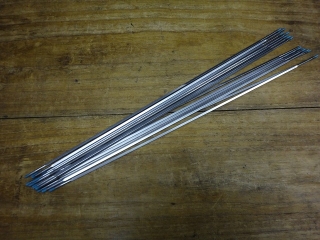
I fabricated the spokes.
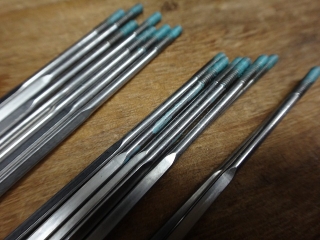
The side with the longer plain section is the rim end,
and this one needs no machining.

The side with the shorter plain section is the hub end.
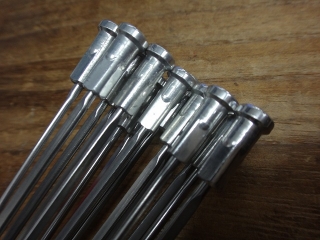
I installed the rim-end nipples.
By holding the spoke on this side to prevent it from spinning
and then building the wheel, it should be fine.
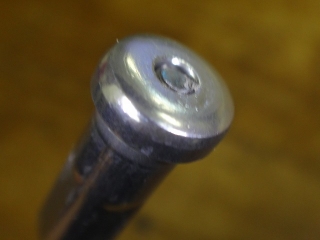
The hub-end nipples have a 4.4mm hex socket,
and their supply has ended, both in general and in my stock (※),
so if a nipple breaks with a spoke jammed inside it,
the whole wheel is done for.
Of course, that's not my fault.
※ Prayer might coax a few out, but basically they're gone.
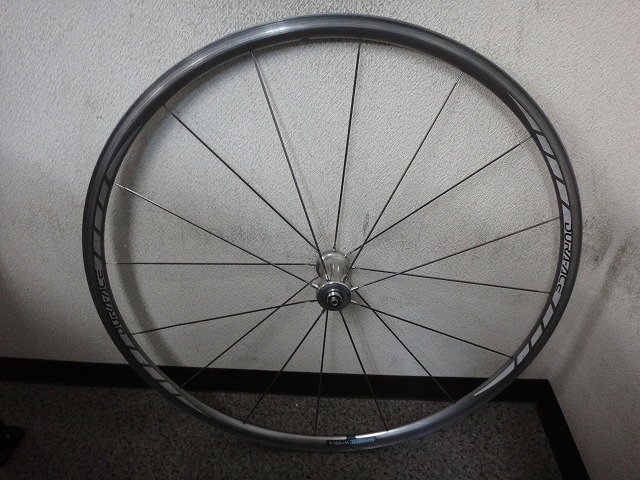
I took in a WH-7800 from a customer.
In my assessment, this is Shimano's greatest wheel masterpiece of all time.
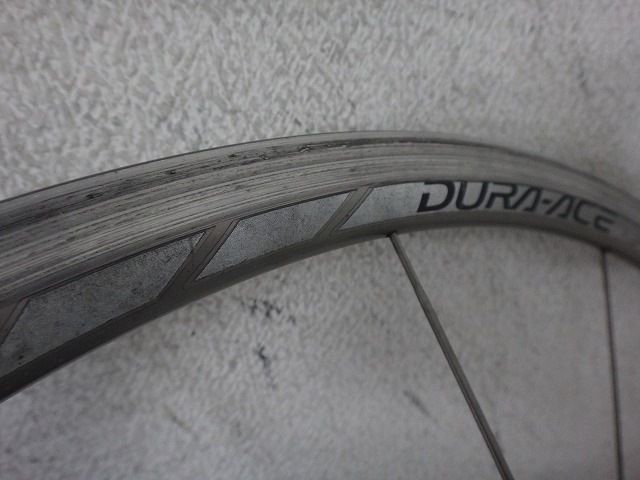
It's hard to see in the photo, but
where the brake zone has worn thin,
the air pressure from the WO tire is causing
the bead hook to spread open.
I'll show you examples later, but bead hooks can actually burst.
With tubular tires, the air pressure doesn't spread the bead hook
(or rather, there's no bead hook in the first place),
so this kind of problem doesn't occur.
The customer wants the rim replaced, but since upgrading the rear hub to 11-speed isn't possible,
we came to an agreement that the rebuild would only work with 10-speed components.
The hub internals were practically undamaged despite the rim being beyond its service life—
that's Dura-Ace for you.
I can accept that the hub and rim have mismatched service lives because the hub is overspecced,
but spare parts availability being shorter than the hub's service life
seems like a real problem to me.
In this case too, since the original rim wasn't available, I used something else.

While disassembling the wheel, I found a bent spoke.
I wasn't planning to reuse it anyway.
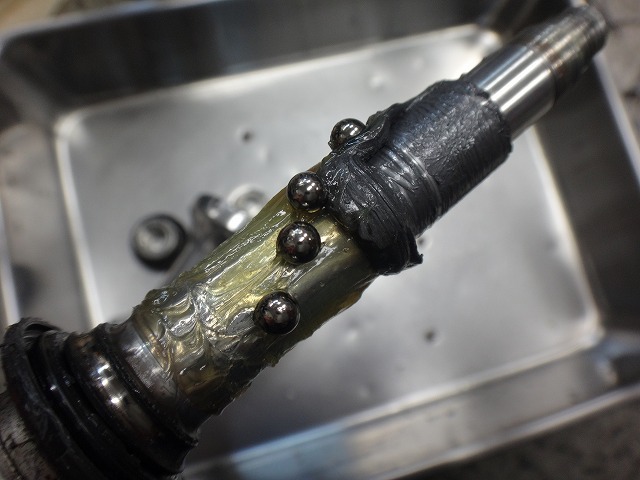
The hub shaft rotation had some roughness,
so I did a complete hub overhaul.
When I said earlier that the hub internals weren't damaged,
I meant there was no pitting on the ball races and no discoloration on the ball bearings.
Looking at the image above, I momentarily thought maybe molybdenum grease had been applied to just one side,
but that wasn't it—there was a reason.
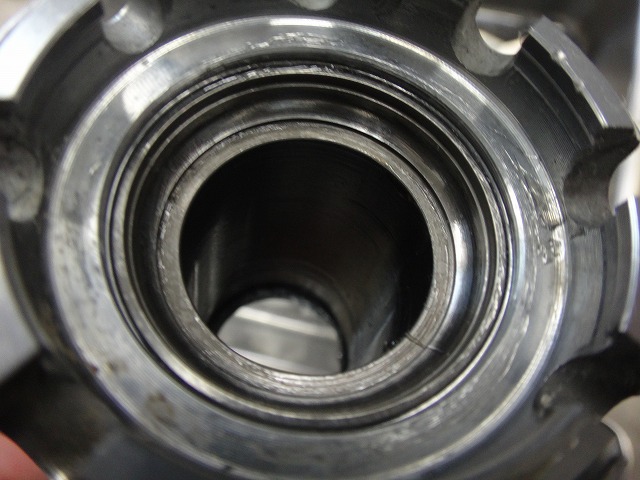
What Campagnolo calls the "gold-fish-scoop net membrane" (→here)—
a guard that prevents grease from flowing into the hub body—
is inserted before the cone is pressed on,
but on this hub, it's a thin metal washer instead.
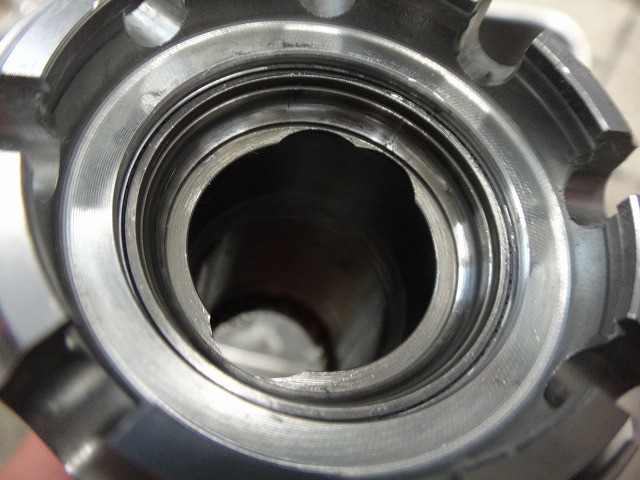
On one side, this washer had cracked, and the thin fragments
were shaken into powder and mixed with the grease—that's what we saw before.
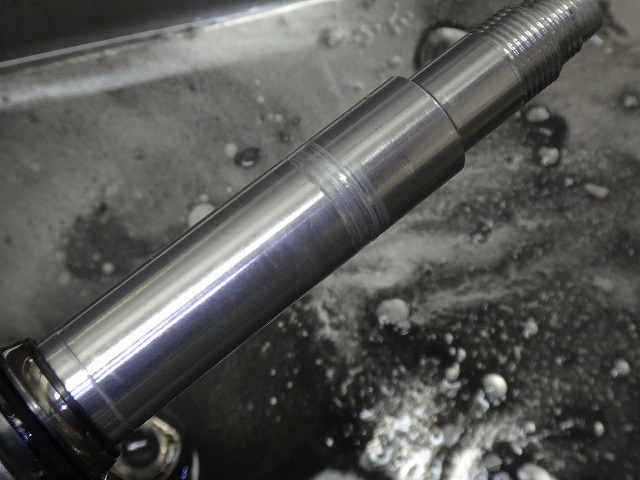
After cleaning the hub shaft,

there was some wear marks directly below where it sits in the hub body,
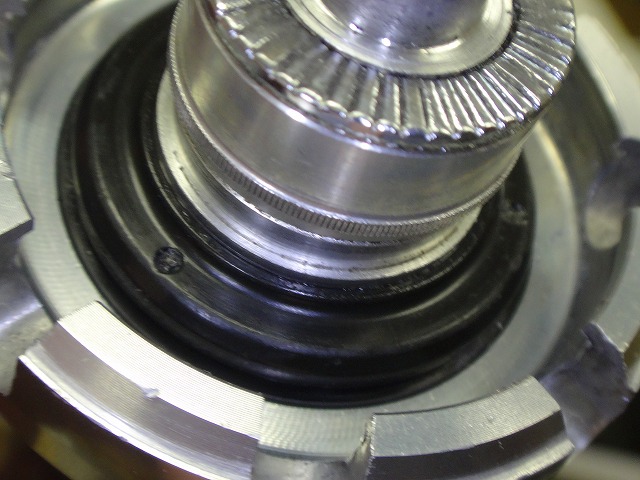
but the ball races and ball bearings showed no damage whatsoever,
so when reassembled, the rotation was smooth as a new hub.

Built it.
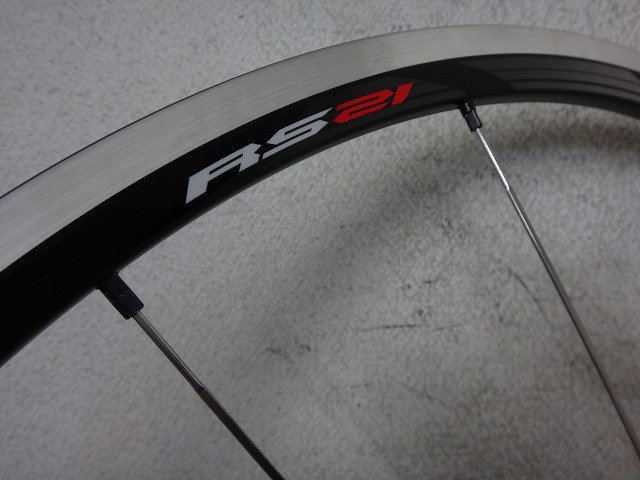
I'm using an RS21 rim as a substitute.
The rim holes require aluminum nipples with a 4mm hex socket
(technically 3.95mm) to turn,
and these nipples only come in black or red,
so I'm using black ones.
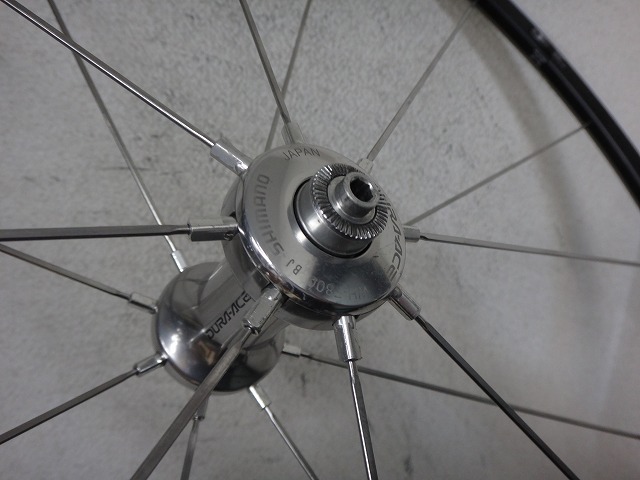
For the spokes, I hesitated to use CX-RAY equivalent spokes
for a 16-hole configuration,
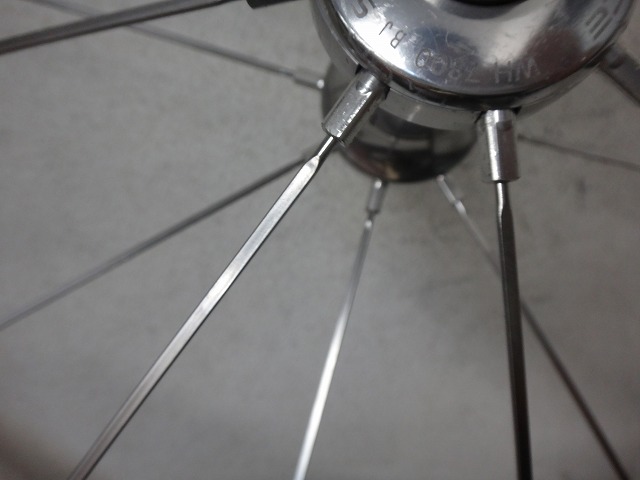
so I machined Hoshi Aero Star Bright III spokes to double-butted and used those.
The original spokes also had greater weight than CX-RAY,
so avoiding CX-RAY seems like the right call.
The fatal mistake with Dura-Ace C24 front wheels from WH-7900 onward
is building them with 16 holes using CX-RAY equivalent spokes.
If they either increased the spoke count to 20 holes while keeping the same gauge,
or kept it at 16 holes but increased spoke weight,
they'd get noticeably better stiffness,
but since their miscalculation of which factors matter is good for my business,
I'm fine with them not fixing it.
When you weigh the weight increase and aerodynamic penalty from four more spokes
against the stiffness improvement gained, the latter is more important.
Someone will inevitably argue that 24H or 28H would be even better,
but understanding the relative importance of different factors is about finding the "optimal balance,"
For example, recently with tire width, if wider tires reduce rolling resistance or whatever,
then if the frame and fork allow it, wouldn't 32C or 35C tires roll better?
In today's road bike world, 25C seems to be the accepted "optimal balance."
I have my doubts about this, but it's true that putting 23C on a wide WO rim creates a pinched tire, which isn't good.
In that case, you have no choice but to use 25C.
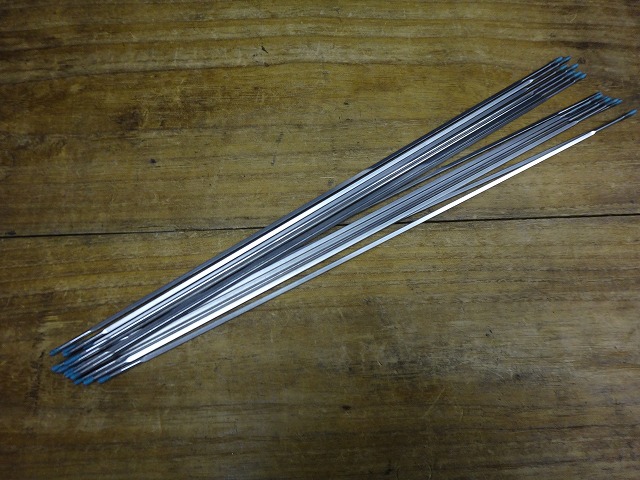
I fabricated the spokes.
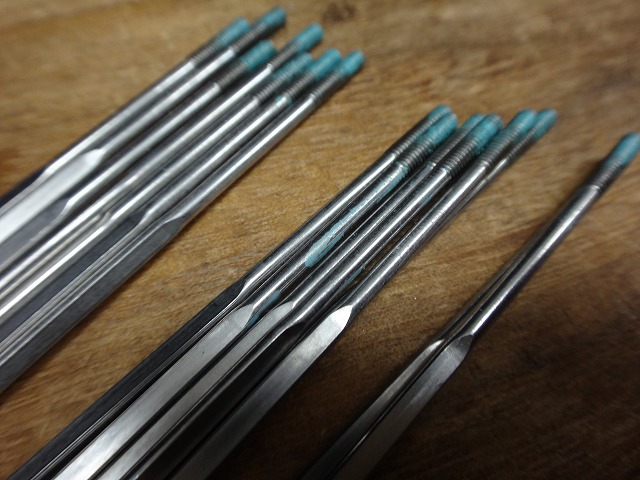
The side with the longer plain section is the rim end,
and this one needs no machining.
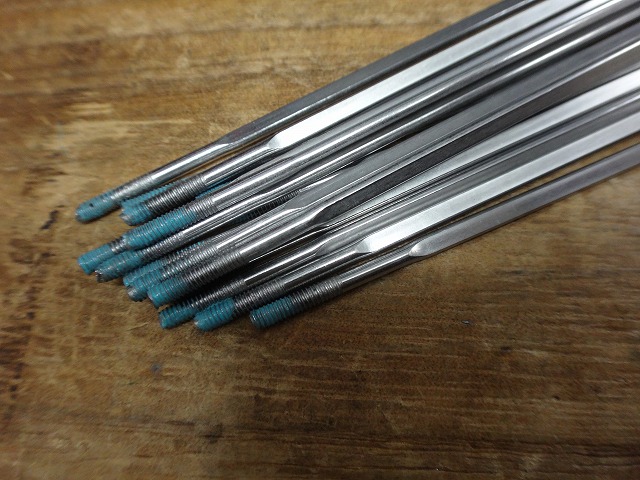
The side with the shorter plain section is the hub end.

I installed the rim-end nipples.
By holding the spoke on this side to prevent it from spinning
and then building the wheel, it should be fine.
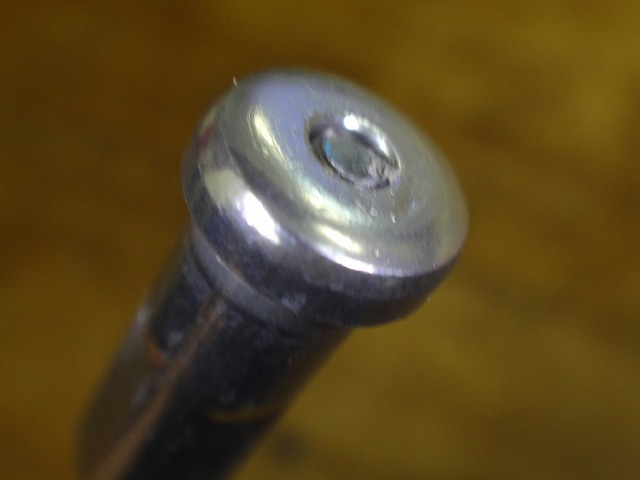
The hub-end nipples have a 4.4mm hex socket,
and their supply has ended, both in general and in my stock (※),
so if a nipple breaks with a spoke jammed inside it,
the whole wheel is done for.
Of course, that's not my fault.
※ Prayer might coax a few out, but basically they're gone.