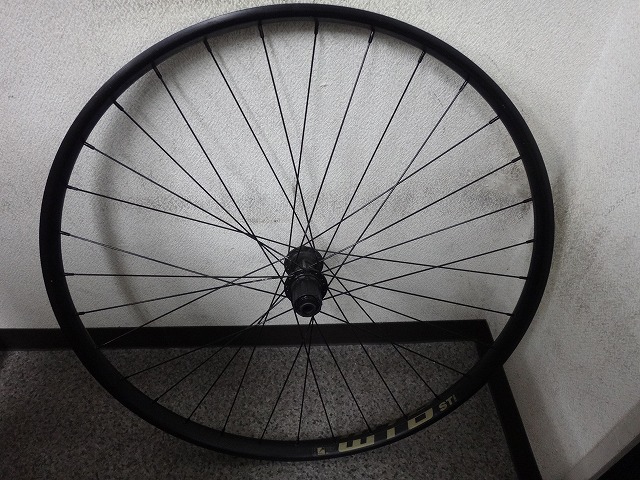
A customer dropped off a rear wheel built with a Shimano MT400 hub and
a WTB rim for repair.
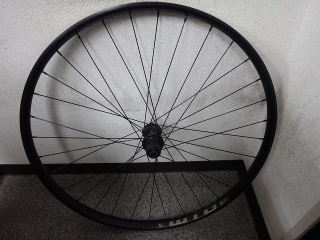
Since the parts needed for the repair didn't come in,
I've been holding onto it for about 10 months.
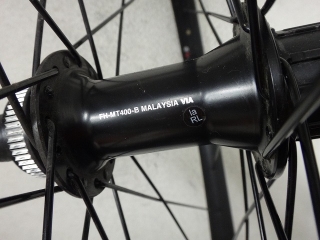
The hub is an FH-MT400-B, and with the "B" at the end,
it's a BOOST-standard hub.

The rim is from WTB,
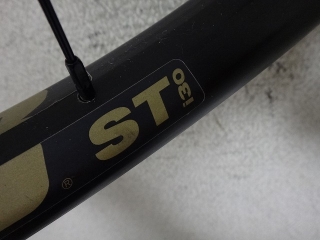
an ST i30 rim, 32-hole with #14 plain 6x6 lacing.
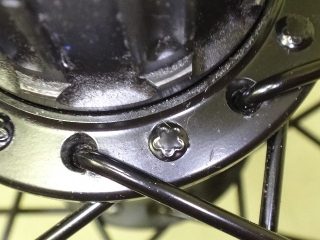
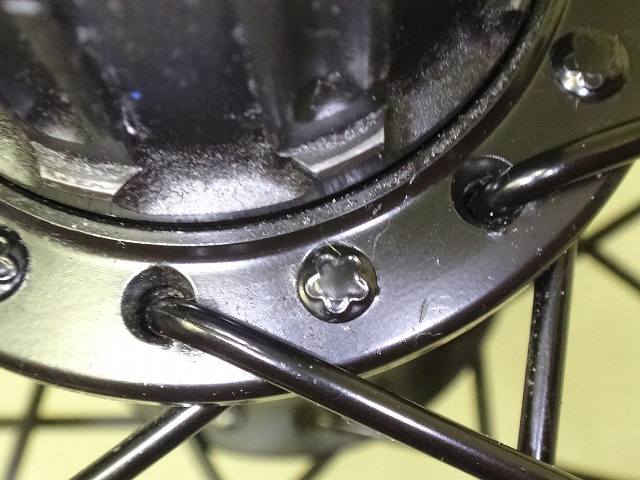
The spoke head stamp is like a five-petaled flower, spokes made
by "HT's" or "Hsing Ta Industrial," a Taiwanese manufacturer,
though they're more of a pedal maker than a spoke maker.
Search "HTI pedal" and you'll find pedals stamped with the HT logo.
Search "HTI spoke" and you'll find spoke heads stamped with
something like an "S" shape, but it's the same manufacturer
as the stamp in the photo above.
These spokes are cheap, but actually harder to source domestically,
so this wheel might be an in-house wheel from a manufacturer
like ENVE or SRM.

The chain fell inside the sprocket, so if they decide it needs
replacing, they want it replaced.
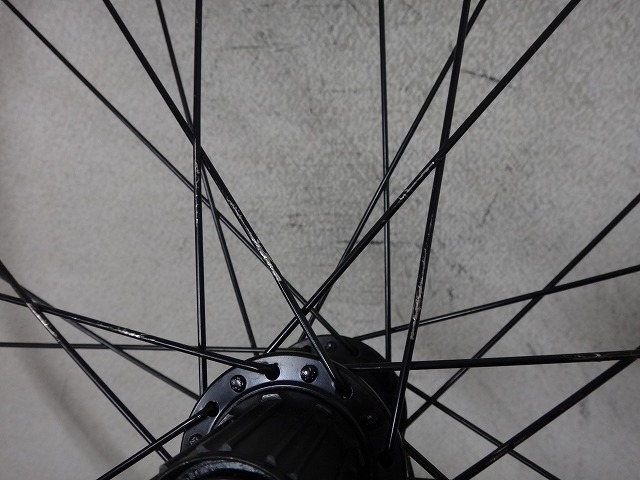
All the inpokes and some of the outpokes have paint damage,
but there aren't many with severe splintering or obvious deformation,
so I ended up replacing just 3 spokes.
I used DT black Champion spokes.
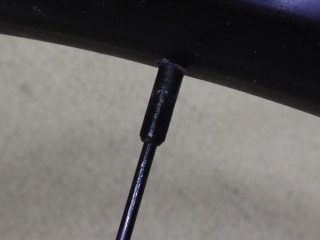
The nipples are long nipples, though there's no particularly logical reason for it,
so I just reused them as-is.
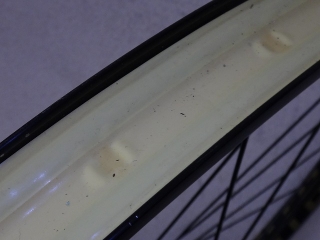
Stans tubeless tape was already applied,
but we don't stock this wide type in our shop.
We could order it in, but I didn't want to peel it off unless it was absolutely necessary,
so I did the work with it left on.
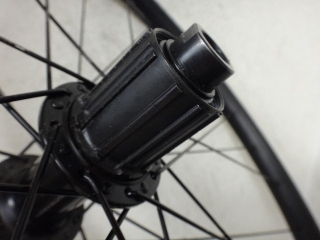
As for the spoke replacement, that's one thing,
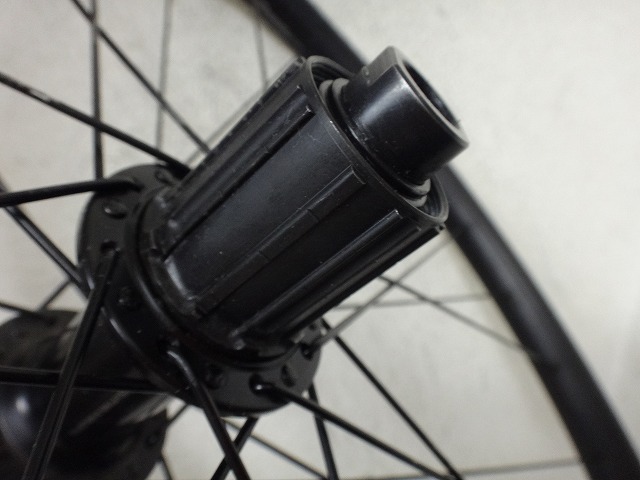
but there's play in the freehub body.
The customer thought it might be related to the chain drop damage,
but while it's true the chain did fall, and it's also true there's slight play
in the freehub body, I don't think there's a causal relationship.
Shimano freehub bodies contain ratchet pawls and loose ball bearings internally,
and since the balls aren't in a retainer, there's a gap of slightly less than one ball
relative to the ball race. As grease works out over time,
it starts to rattle and squeak.
For more on this and the rarely-seen insides of HG freehub bodies,
(→check here).
Separate from the internal rattle,
it's also a fact that HG freehub bodies have necessary play
that causes them to run eccentric relative to the hub axle.
In particular, on aged Shimano wheels, when you spin a rear wheel freely off the ground,
you often see the sprocket (with the freehub body attached) wobble
in an eccentric, top-like motion.
That eccentric play was never zero to begin with,
and it's not something you can improve through adjustment or lubrication.
When the play between the freehub body and the hub shell or hub axle
is large, the likely causes are wear of internal parts or grease loss,
or loosening of the hollow bolt that secures the freehub body.
In this case, it's definitely not the latter, and since it's not an expensive part,
we decided to replace the freehub body.
But the part that was originally quoted at about a month lead time
kept getting delayed, and finally arrived 10 months later.
Speaking of which, the FC-6800 outer chainring I ordered on January 10th, 2021
is currently scheduled for August 24th, 2022.
It's been delayed over 15 times already.
The customer for that chainring is moving out of Japan by the end of March,
so it's certain we won't be able to hand it over.
When it arrives, I'm planning to frame it with a note showing the order date
and delivery date, so I'm not canceling it.
By the way, this freehub body has a specified tightening torque
of 150 N·m. Frankly, that's an unbelievable number.
The highest tightening torque spec I can think of off the top of my head
for any bicycle part is Campagnolo's Ultra-Torque crank
left and right shaft bolts at 42 N·m.
So I looked into whether something like that was even possible.
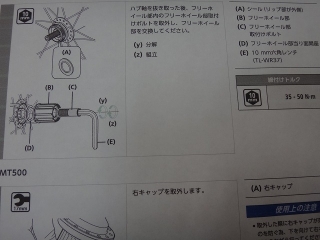
First, from the Shimano manual for quick-release hub specs.

The hollow bolt is turned with a 10mm Allen wrench,

and the specified torque is 35–50 N·m.
When it's a thru-axle spec hub, though,
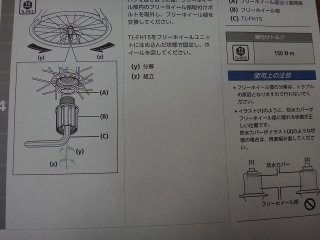
the hollow bolt is turned with a 15mm Allen wrench.
Since a 12mm thru-axle shaft passes through the hub axle,
a larger diameter is naturally required.
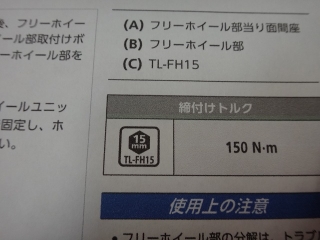
And incredibly, the specified torque really is 150 N·m.
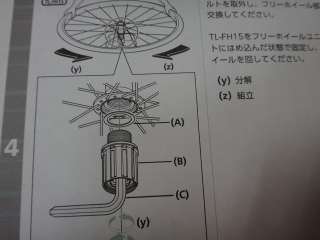
Probably because this isn't a torque level you can loosen and tighten
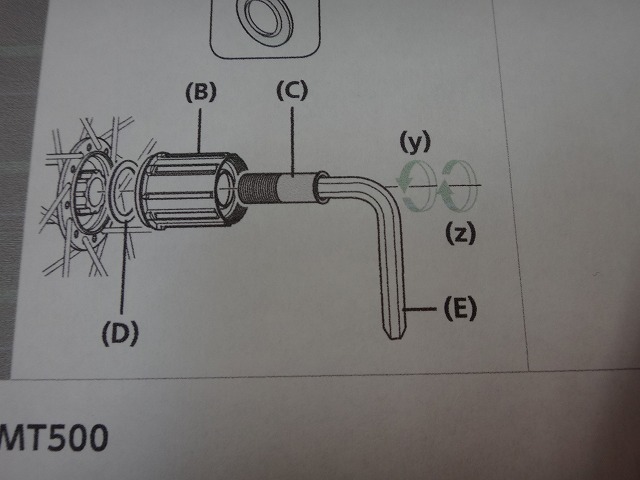
with just an L-shaped Allen wrench by hand, the instructions tell you to
secure the Allen wrench in a vise and rotate the wheel.
My torque wrench is a fairly high-end Tohnichi (Toni) unit,
and I can't vice it down like that.
I thought the vise instruction was just for loosening, but
the diagram shows the loosening direction as Y and tightening direction as Z,
with the Z direction shown for vise work too, so
apparently you're supposed to do it this way for tightening as well.
When loosening, you just loosen it, so it doesn't matter what the original
torque was. But since the tightening is specified,
this freehub body is actually harder to properly tighten than to remove.
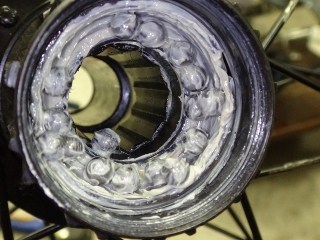
I pulled out the hub axle. The bearing grease appears to be
Finish Line's Teflon-based grease. Also, a dust seal is missing,
but that comes with the new freehub body,
so it's not really a problem anymore.
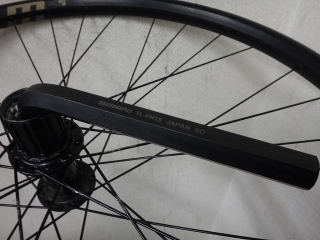
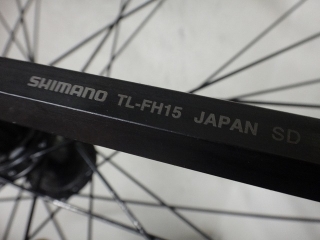
15mm Allen wrenches do exist as off-the-shelf tools,
but it was quicker and not unreasonably priced to just buy the Shimano tool.
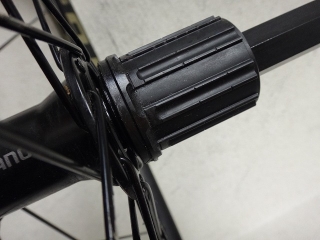
Once I got past the initial breakaway resistance,
I switched to the long end of the wrench and loosened it smoothly.
I actually didn't end up using the vise for loosening.
Strictly speaking, the Shimano-specified method didn't loosen it at all.
This confirms what I said earlier: the play in the freehub body
is definitely not from bolt loosening.
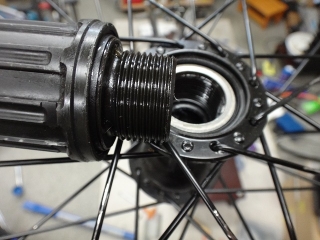
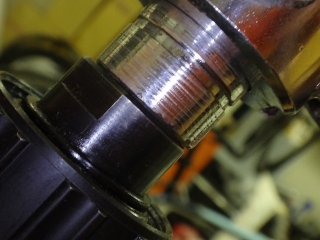
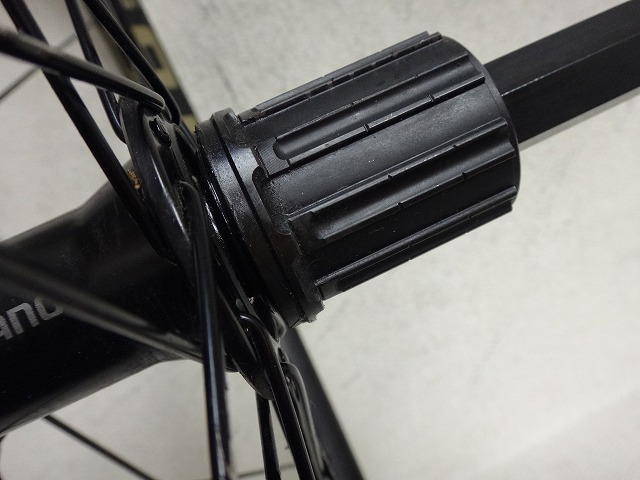
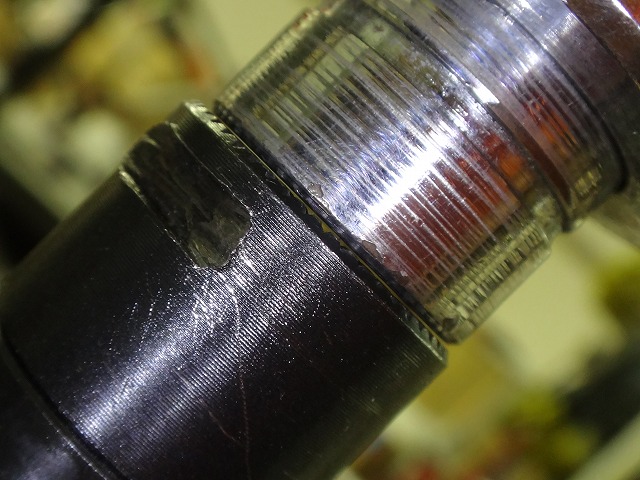
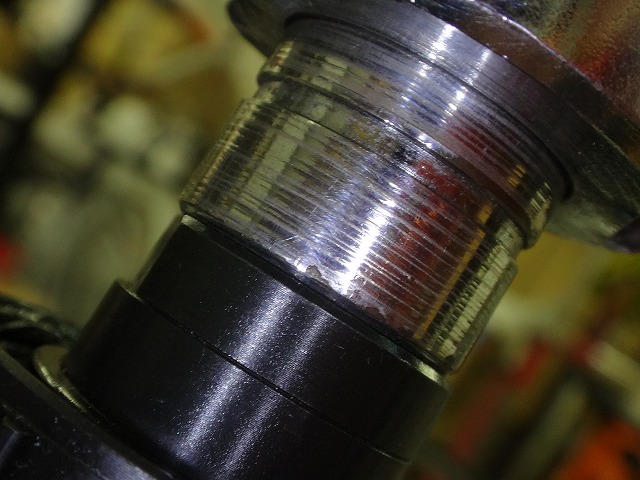
Out it came. The bolt diameter is 24mm.
When I shake the removed freehub body alone, it rattles.
Holding the spline section of the freehub body and the threaded section
of the bolt separately and flexing with force confirms
the play is larger than on a new one of the same model.

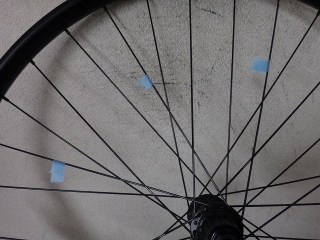
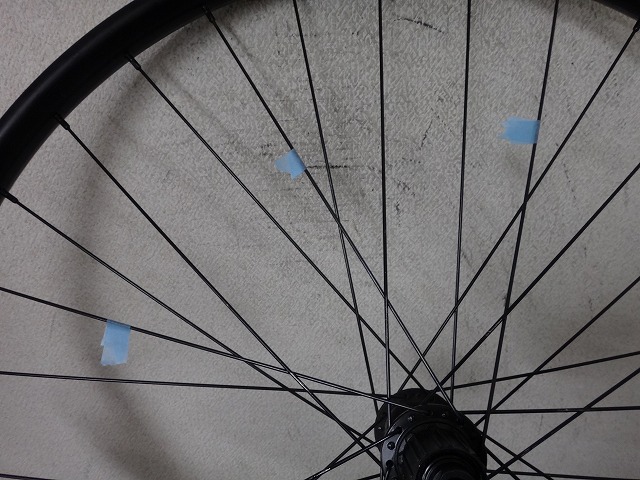
This is from earlier in the timeline, a temporary center check before axle removal.
The rim is shifted toward the non-drive side, and there's also some lateral runout,
so there might be a phase where it's perfectly centered if I looked hard enough.
But overall, there's definitely a tendency for the rim to be offset toward
the non-drive side.


After replacing the freehub body and 3 spokes,
I did lateral runout correction mostly from the drive side
and vertical runout too, which sucked,
and this is the state once centering is acceptable.
Still offset toward the non-drive side by about one sheet of paper.
So close.


Centered it.

Done.
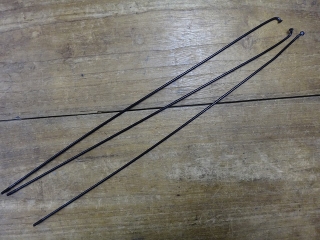
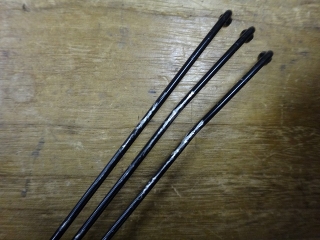
↑Replaced spokes
a WTB rim for repair.
Since the parts needed for the repair didn't come in,
I've been holding onto it for about 10 months.
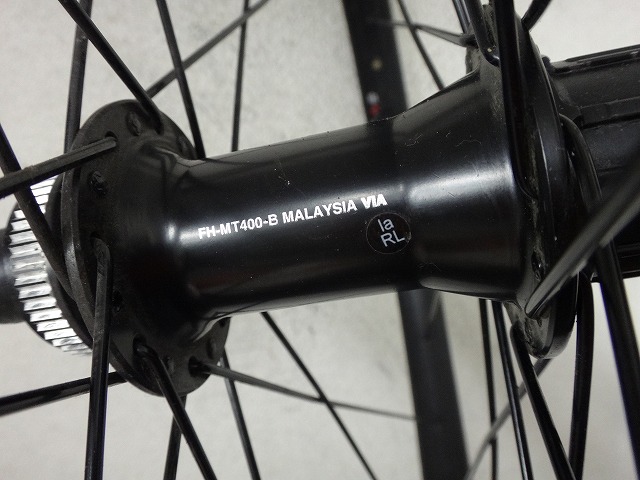
The hub is an FH-MT400-B, and with the "B" at the end,
it's a BOOST-standard hub.
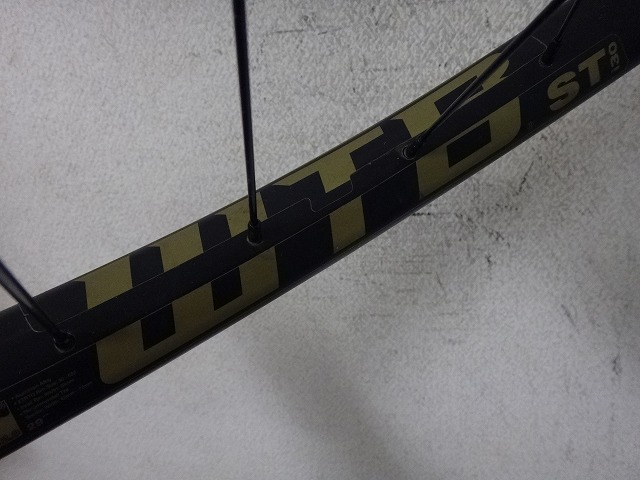
The rim is from WTB,
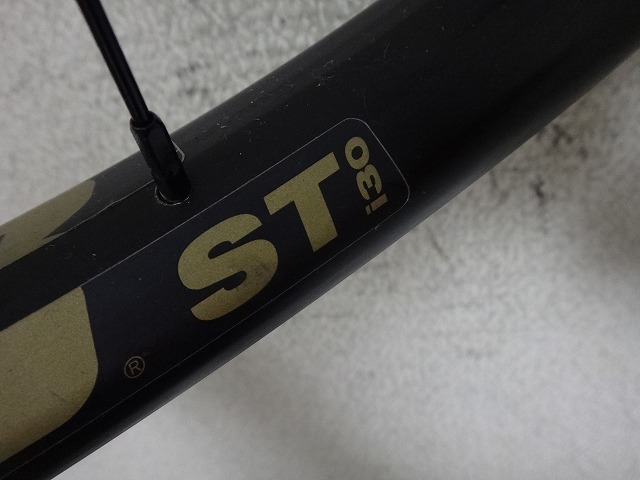
an ST i30 rim, 32-hole with #14 plain 6x6 lacing.
The spoke head stamp is like a five-petaled flower, spokes made
by "HT's" or "Hsing Ta Industrial," a Taiwanese manufacturer,
though they're more of a pedal maker than a spoke maker.
Search "HTI pedal" and you'll find pedals stamped with the HT logo.
Search "HTI spoke" and you'll find spoke heads stamped with
something like an "S" shape, but it's the same manufacturer
as the stamp in the photo above.
These spokes are cheap, but actually harder to source domestically,
so this wheel might be an in-house wheel from a manufacturer
like ENVE or SRM.
The chain fell inside the sprocket, so if they decide it needs
replacing, they want it replaced.
All the inpokes and some of the outpokes have paint damage,
but there aren't many with severe splintering or obvious deformation,
so I ended up replacing just 3 spokes.
I used DT black Champion spokes.

The nipples are long nipples, though there's no particularly logical reason for it,
so I just reused them as-is.

Stans tubeless tape was already applied,
but we don't stock this wide type in our shop.
We could order it in, but I didn't want to peel it off unless it was absolutely necessary,
so I did the work with it left on.
As for the spoke replacement, that's one thing,
but there's play in the freehub body.
The customer thought it might be related to the chain drop damage,
but while it's true the chain did fall, and it's also true there's slight play
in the freehub body, I don't think there's a causal relationship.
Shimano freehub bodies contain ratchet pawls and loose ball bearings internally,
and since the balls aren't in a retainer, there's a gap of slightly less than one ball
relative to the ball race. As grease works out over time,
it starts to rattle and squeak.
For more on this and the rarely-seen insides of HG freehub bodies,
(→check here).
Separate from the internal rattle,
it's also a fact that HG freehub bodies have necessary play
that causes them to run eccentric relative to the hub axle.
In particular, on aged Shimano wheels, when you spin a rear wheel freely off the ground,
you often see the sprocket (with the freehub body attached) wobble
in an eccentric, top-like motion.
That eccentric play was never zero to begin with,
and it's not something you can improve through adjustment or lubrication.
When the play between the freehub body and the hub shell or hub axle
is large, the likely causes are wear of internal parts or grease loss,
or loosening of the hollow bolt that secures the freehub body.
In this case, it's definitely not the latter, and since it's not an expensive part,
we decided to replace the freehub body.
But the part that was originally quoted at about a month lead time
kept getting delayed, and finally arrived 10 months later.
Speaking of which, the FC-6800 outer chainring I ordered on January 10th, 2021
is currently scheduled for August 24th, 2022.
It's been delayed over 15 times already.
The customer for that chainring is moving out of Japan by the end of March,
so it's certain we won't be able to hand it over.
When it arrives, I'm planning to frame it with a note showing the order date
and delivery date, so I'm not canceling it.
By the way, this freehub body has a specified tightening torque
of 150 N·m. Frankly, that's an unbelievable number.
The highest tightening torque spec I can think of off the top of my head
for any bicycle part is Campagnolo's Ultra-Torque crank
left and right shaft bolts at 42 N·m.
So I looked into whether something like that was even possible.

First, from the Shimano manual for quick-release hub specs.
The hollow bolt is turned with a 10mm Allen wrench,
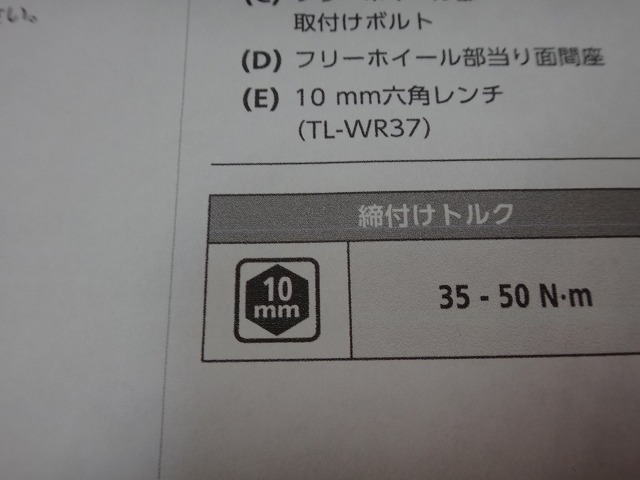
and the specified torque is 35–50 N·m.
When it's a thru-axle spec hub, though,
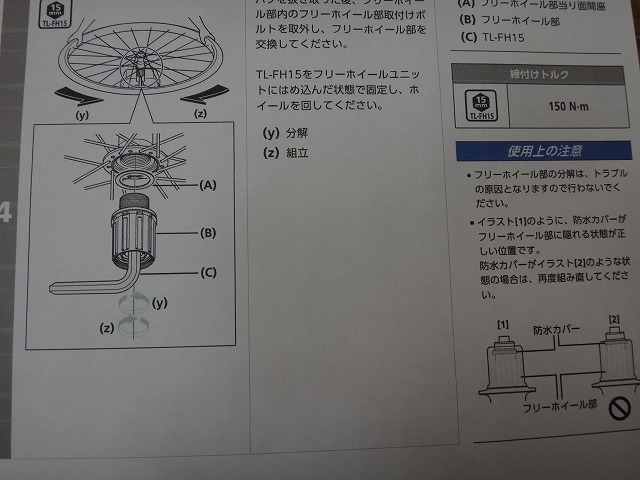
the hollow bolt is turned with a 15mm Allen wrench.
Since a 12mm thru-axle shaft passes through the hub axle,
a larger diameter is naturally required.
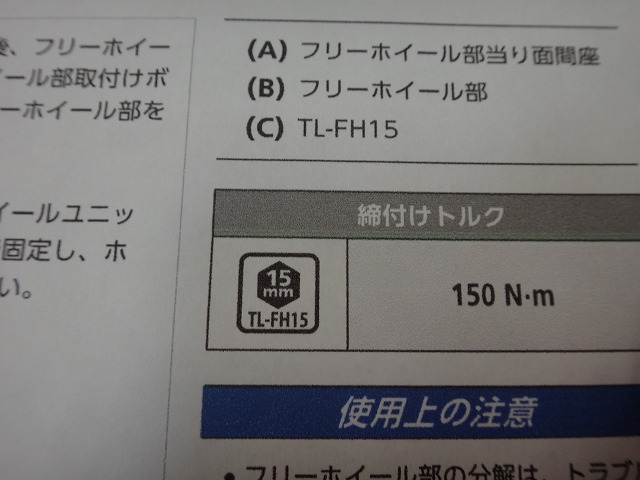
And incredibly, the specified torque really is 150 N·m.

Probably because this isn't a torque level you can loosen and tighten
with just an L-shaped Allen wrench by hand, the instructions tell you to
secure the Allen wrench in a vise and rotate the wheel.
My torque wrench is a fairly high-end Tohnichi (Toni) unit,
and I can't vice it down like that.
I thought the vise instruction was just for loosening, but
the diagram shows the loosening direction as Y and tightening direction as Z,
with the Z direction shown for vise work too, so
apparently you're supposed to do it this way for tightening as well.
When loosening, you just loosen it, so it doesn't matter what the original
torque was. But since the tightening is specified,
this freehub body is actually harder to properly tighten than to remove.
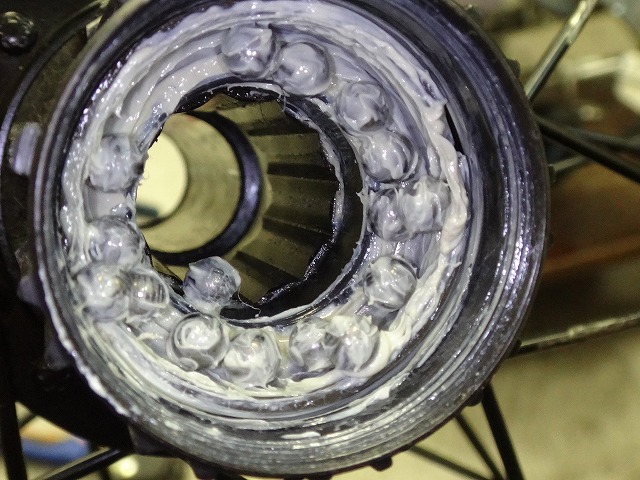
I pulled out the hub axle. The bearing grease appears to be
Finish Line's Teflon-based grease. Also, a dust seal is missing,
but that comes with the new freehub body,
so it's not really a problem anymore.


15mm Allen wrenches do exist as off-the-shelf tools,
but it was quicker and not unreasonably priced to just buy the Shimano tool.
Once I got past the initial breakaway resistance,
I switched to the long end of the wrench and loosened it smoothly.
I actually didn't end up using the vise for loosening.
Strictly speaking, the Shimano-specified method didn't loosen it at all.
This confirms what I said earlier: the play in the freehub body
is definitely not from bolt loosening.

Out it came. The bolt diameter is 24mm.
When I shake the removed freehub body alone, it rattles.
Holding the spline section of the freehub body and the threaded section
of the bolt separately and flexing with force confirms
the play is larger than on a new one of the same model.


This is from earlier in the timeline, a temporary center check before axle removal.
The rim is shifted toward the non-drive side, and there's also some lateral runout,
so there might be a phase where it's perfectly centered if I looked hard enough.
But overall, there's definitely a tendency for the rim to be offset toward
the non-drive side.

After replacing the freehub body and 3 spokes,
I did lateral runout correction mostly from the drive side
and this is the state once centering is acceptable.
Still offset toward the non-drive side by about one sheet of paper.
So close.

Centered it.

Done.
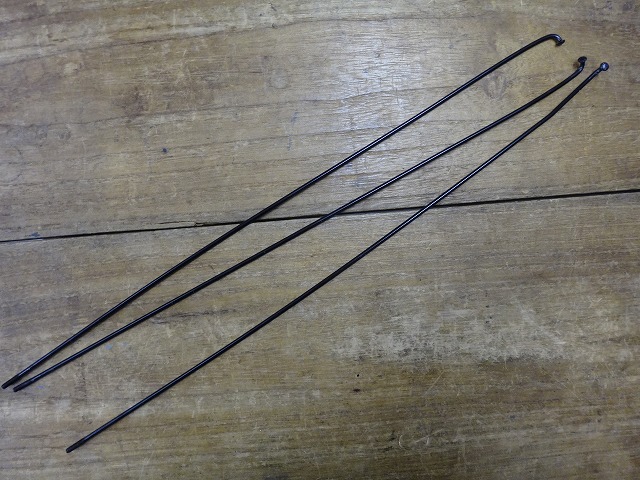

↑Replaced spokes