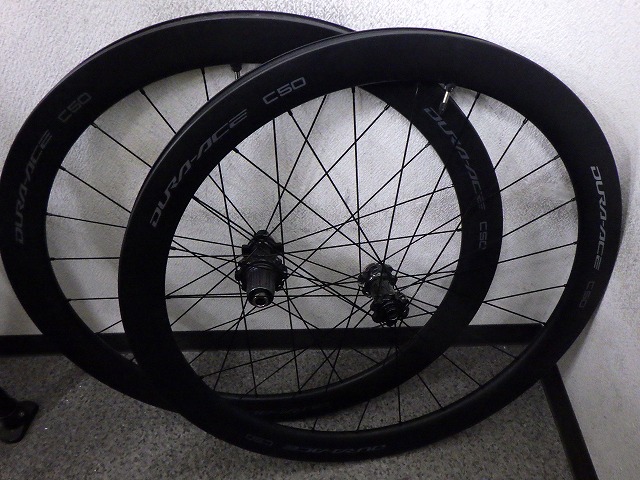
A customer brought in a current-generation Dura-Ace
50mm high tubeless wheel for inspection.
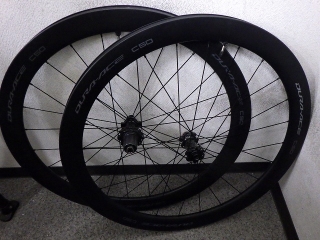
It's under 2000 km of riding and they want a full inspection.
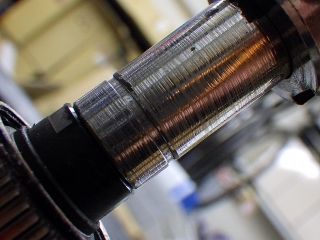
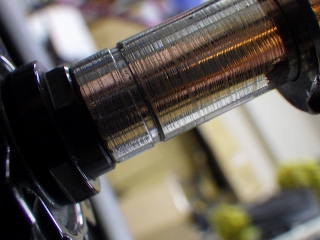
↑Front wheel centering spot on
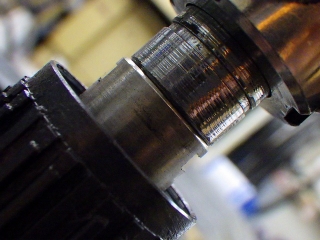
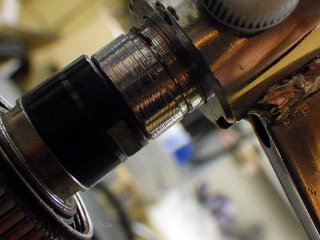
↑Rear wheel centering spot on
Both wheels had only minor runout—whether it came from riding or was there from the start, I can't tell—
but even after true-ing, the centering stayed perfect.
Either the shop where the customer bought it
(well, that's probably why they sent it to us instead—
zero trust in that place)
or the Malaysian assembler (technically Malaysia-based) who first built it
did a proper job.
From here on, I'll treat this as a specimen for research.
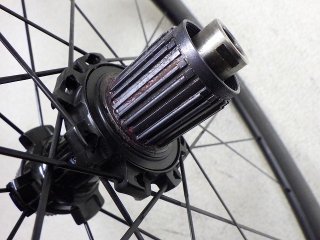
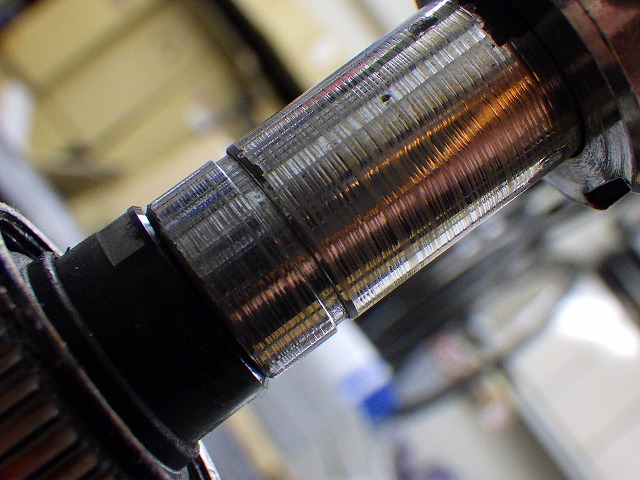
The latest 12-speed sprockets fit on the freehub,but the shimmy doesn't
Everything else doesn't fit—
that's the type of spline freebody (→here).
They did the same thing with the aluminum freebody dedicated to 10-speed,
but do they seriously think that by doing this,
people will want to use these amazing Dura-Ace wheels enough to
drive adoption of 12-speed components?
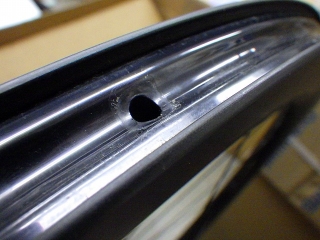
I removed the tubeless valve for a moment.
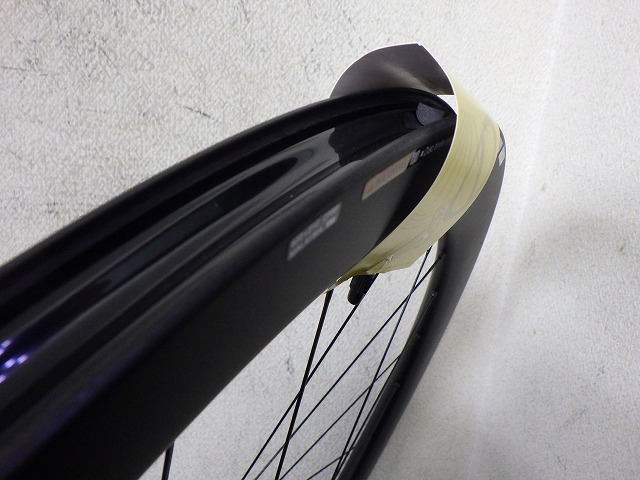
I can't exactly peel off the tubeless tape just for research,

so I used an Ultegra C50 (C36 would work too, honestly)
tubeless rim wheel that we have on hand for a rebuild job.
I removed the tubeless tape from it since
we'd be peeling it off anyway for the work.
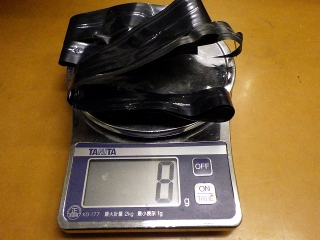
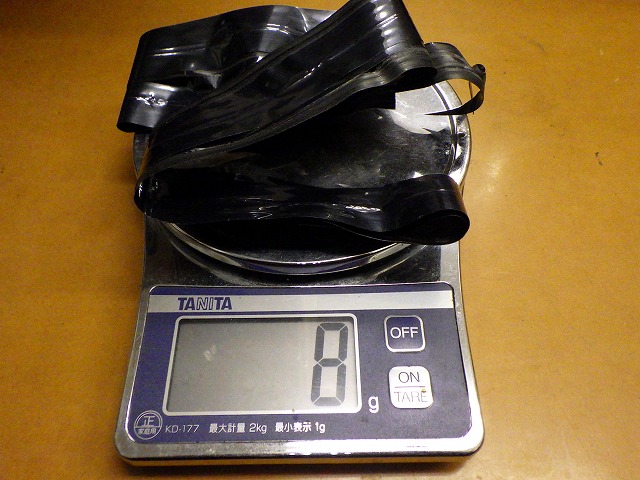
↑Actual measured weight of that tape.
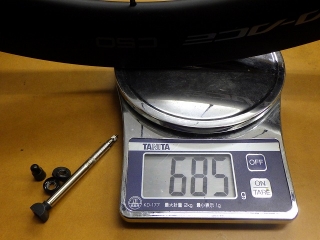
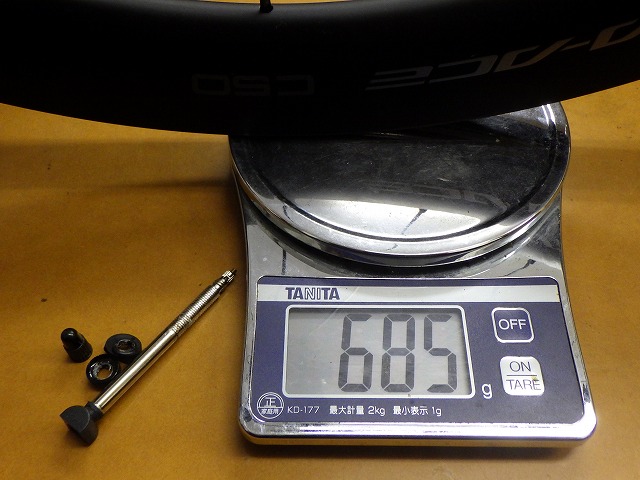
This is the actual measured weight of the R9270-C50-TL front wheel
with rim tape but without the tubeless valve.
The manufacturer's stated weight (technically called "average weight")
is 674g, but there's no information about what components that includes.
If we assume it's without rim tape and tubeless valve,
then they're basically telling the truth.
Since C36 and C50 have the same spoke gauge,
if we know the spoke specific gravity,
we can get a fairly accurate estimated weight even if the length changes.
Previously I weighed the spokes on a C36 tubular front wheel—
the left was 282mm at 62.55% and
the right was 285mm at 61.89%,
so assuming spoke specific gravity of 62%,
for this C50-TL with left/right spokes of 269/267mm,
the spoke weight calculates out to 102.48g.
Combined with the measured front hub weight and
the measured weight of 24 nipples (→here):
The front hub uses cup-and-cone bearings, so
grease variation causes some weight fluctuation compared to cartridge bearings,
but nothing changing by several grams.
The spoke specific gravity is an estimate, but
even that won't be off by more than a few single-digit grams.
Therefore, the rim weight derived from these calculations is:
Wheel with rim tape 685g
−Rim tape 8g (actual measured value / 1g scale)
−Front hub 116.2g (actual measured value / 0.1g scale)
−24 nipples 10.1g (actual measured value / 0.1g scale)
−24 spokes 102.48g (estimated value with 62% spoke specific gravity)
=448.22g.
This is quite an accurate figure.
Slightly heavier than Roval's CL/CLX50 rim,
but during rebuilds we're not forced into 2:1 lacing,
and Shimano's rim tensions slightly better (though this matters more than you'd think),
so as a rim component for wheel building,
Shimano's C50TL performs better.
In the linked article, for easier calculation,
I also listed the Dura-Ace front wheel weight
with just the hub, spokes coming out from it,
and nipples attached—
the "urchin" state.
For C50-TL that's 228.78g, so
subtracting it from today's actual wheel weight of 685g gives 456.22g.
The 8g difference from before is the rim tape.
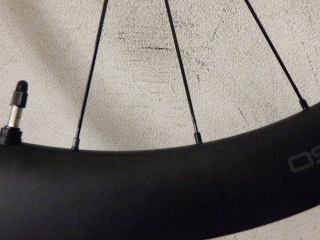
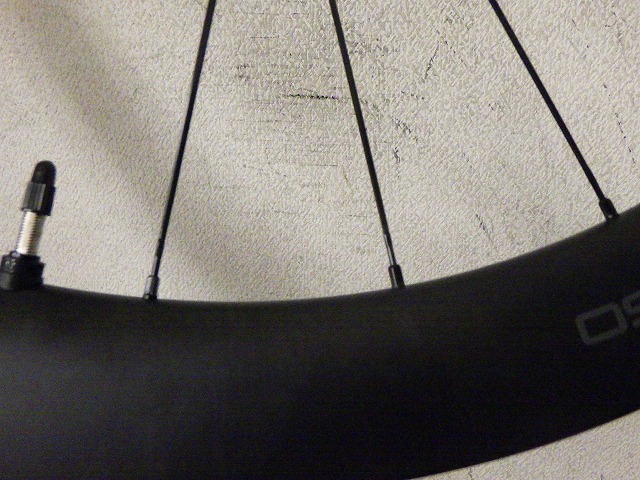
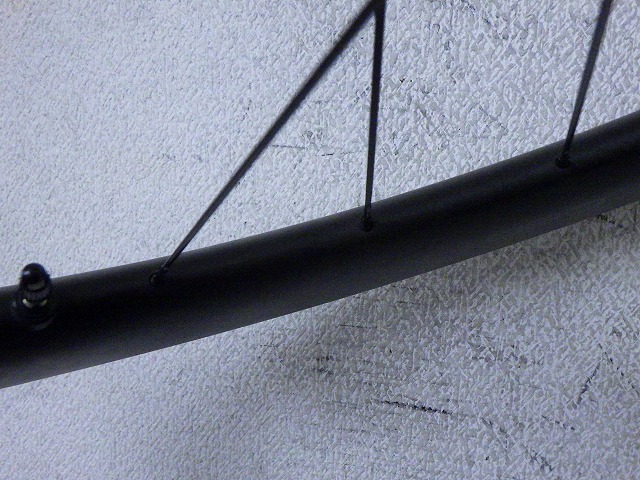
↑This is the rear wheel from the right (freehub) side,
from left to right in the image: valve, right spoke, left spoke, right spoke.
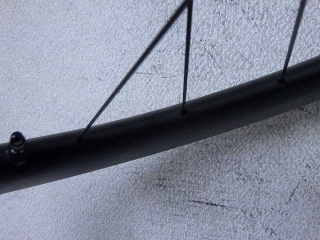
Tilting it slightly, it looks like this.
It's 2:1 laced with one pair being 3 spokes, but when I put a straightedge
on the rim holes, I can't clearly see the right-left-right hole pattern.
This means this rim, despite being a 2:1 24H,
can be used as an equal-sided 24H rim.
Actually, I once had a customer who already bought an R8170
with a really sloppy 2:1 rear wheel and wanted it rebuilt—
I rebuilt it as an equal-sided 24H (→here).
That said, if you're only ever going to use it
as material for rebuilding into an equal-sided rear wheel,
it's definitely better to just buy the front wheel,
which is already equal-sided and cheaper.
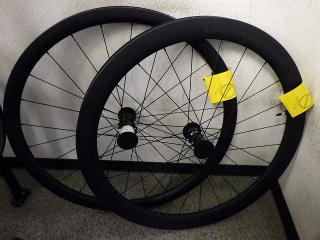
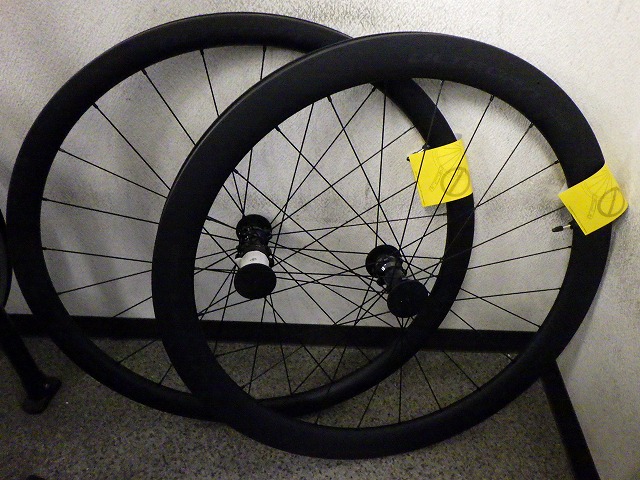
This is a separate job (different from the C50-TL we just stripped the tape from)
and the work will be later,
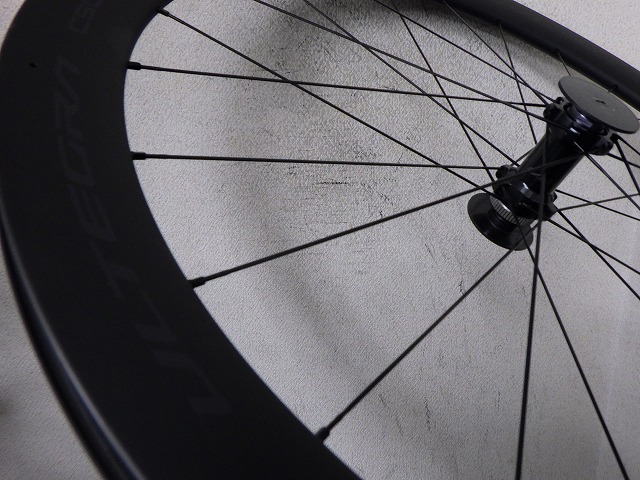
but we have on hand a pair of R8170 tubeless wheels
with C36 and C50,
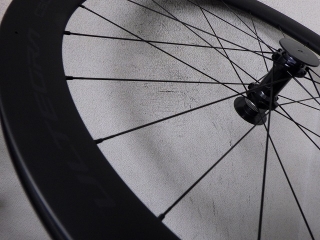
a C50 front wheel and
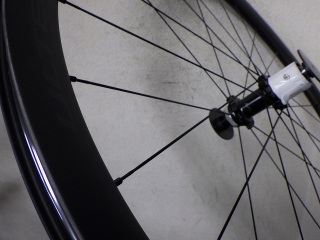
a C36 rear wheel.
Apparently last year, just before the price increase,
the customer hopped between local shops
and this was the only combination they could find in stock,
so they bought it with the plan to have us rebuild it.
If I'd turned them down, what would they have done?
Not that I didn't think about it, but I took the job.
50mm high tubeless wheel for inspection.
It's under 2000 km of riding and they want a full inspection.
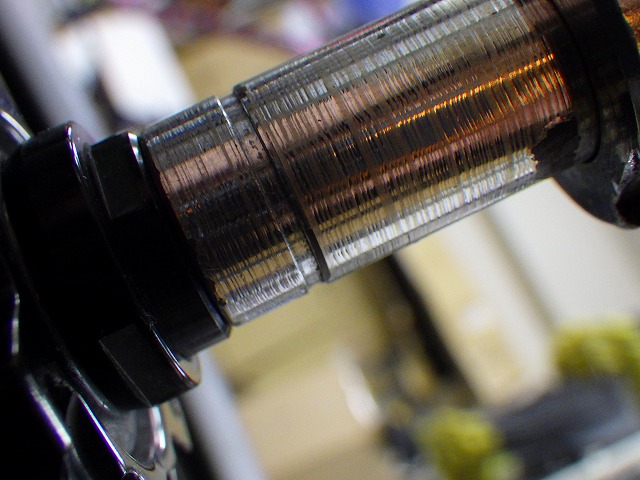
↑Front wheel centering spot on

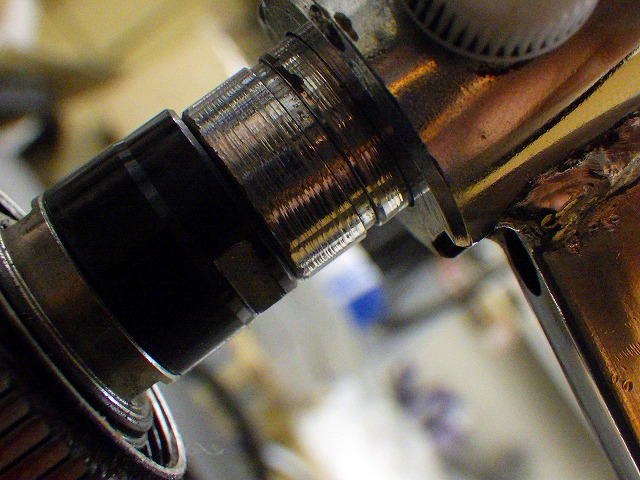
↑Rear wheel centering spot on
Both wheels had only minor runout—whether it came from riding or was there from the start, I can't tell—
but even after true-ing, the centering stayed perfect.
Either the shop where the customer bought it
(well, that's probably why they sent it to us instead—
zero trust in that place)
or the Malaysian assembler (technically Malaysia-based) who first built it
did a proper job.
From here on, I'll treat this as a specimen for research.
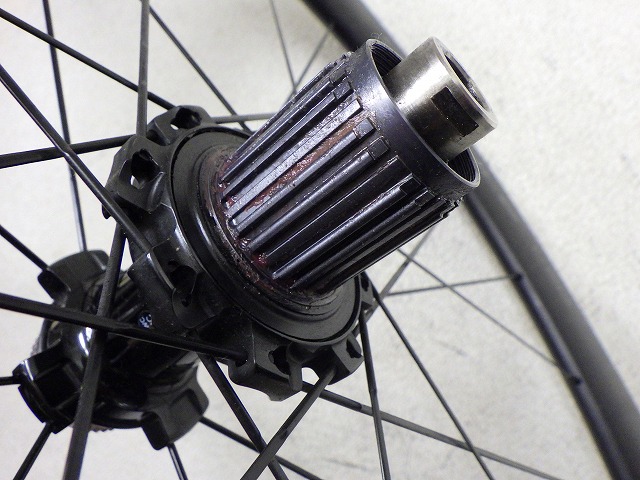
The latest 12-speed sprockets fit on the freehub,
Everything else doesn't fit—
that's the type of spline freebody (→here).
They did the same thing with the aluminum freebody dedicated to 10-speed,
but do they seriously think that by doing this,
people will want to use these amazing Dura-Ace wheels enough to
drive adoption of 12-speed components?
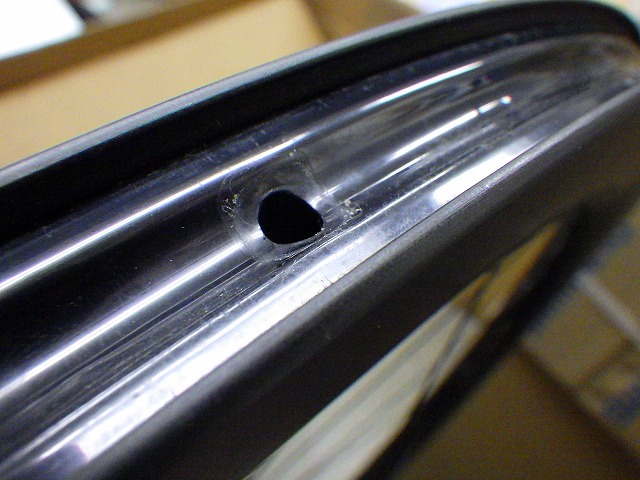
I removed the tubeless valve for a moment.
I can't exactly peel off the tubeless tape just for research,
so I used an Ultegra C50 (C36 would work too, honestly)
tubeless rim wheel that we have on hand for a rebuild job.
I removed the tubeless tape from it since
we'd be peeling it off anyway for the work.
↑Actual measured weight of that tape.
This is the actual measured weight of the R9270-C50-TL front wheel
with rim tape but without the tubeless valve.
The manufacturer's stated weight (technically called "average weight")
is 674g, but there's no information about what components that includes.
If we assume it's without rim tape and tubeless valve,
then they're basically telling the truth.
Since C36 and C50 have the same spoke gauge,
if we know the spoke specific gravity,
we can get a fairly accurate estimated weight even if the length changes.
Previously I weighed the spokes on a C36 tubular front wheel—
the left was 282mm at 62.55% and
the right was 285mm at 61.89%,
so assuming spoke specific gravity of 62%,
for this C50-TL with left/right spokes of 269/267mm,
the spoke weight calculates out to 102.48g.
Combined with the measured front hub weight and
the measured weight of 24 nipples (→here):
The front hub uses cup-and-cone bearings, so
grease variation causes some weight fluctuation compared to cartridge bearings,
but nothing changing by several grams.
The spoke specific gravity is an estimate, but
even that won't be off by more than a few single-digit grams.
Therefore, the rim weight derived from these calculations is:
Wheel with rim tape 685g
−Rim tape 8g (actual measured value / 1g scale)
−Front hub 116.2g (actual measured value / 0.1g scale)
−24 nipples 10.1g (actual measured value / 0.1g scale)
−24 spokes 102.48g (estimated value with 62% spoke specific gravity)
=448.22g.
This is quite an accurate figure.
Slightly heavier than Roval's CL/CLX50 rim,
but during rebuilds we're not forced into 2:1 lacing,
and Shimano's rim tensions slightly better (though this matters more than you'd think),
so as a rim component for wheel building,
Shimano's C50TL performs better.
In the linked article, for easier calculation,
I also listed the Dura-Ace front wheel weight
with just the hub, spokes coming out from it,
and nipples attached—
the "urchin" state.
For C50-TL that's 228.78g, so
subtracting it from today's actual wheel weight of 685g gives 456.22g.
The 8g difference from before is the rim tape.
↑This is the rear wheel from the right (freehub) side,
from left to right in the image: valve, right spoke, left spoke, right spoke.
Tilting it slightly, it looks like this.
It's 2:1 laced with one pair being 3 spokes, but when I put a straightedge
on the rim holes, I can't clearly see the right-left-right hole pattern.
This means this rim, despite being a 2:1 24H,
can be used as an equal-sided 24H rim.
Actually, I once had a customer who already bought an R8170
with a really sloppy 2:1 rear wheel and wanted it rebuilt—
I rebuilt it as an equal-sided 24H (→here).
That said, if you're only ever going to use it
as material for rebuilding into an equal-sided rear wheel,
it's definitely better to just buy the front wheel,
which is already equal-sided and cheaper.
This is a separate job (different from the C50-TL we just stripped the tape from)
and the work will be later,
but we have on hand a pair of R8170 tubeless wheels
with C36 and C50,
a C50 front wheel and

a C36 rear wheel.
Apparently last year, just before the price increase,
the customer hopped between local shops
and this was the only combination they could find in stock,
so they bought it with the plan to have us rebuild it.
If I'd turned them down, what would they have done?
Not that I didn't think about it, but I took the job.