The other day, I noticed a crack near the center tread of my rear tubeless tire.
I discovered it at the shop, but after making one more round trip from shop→home→shop,
I was planning to replace the tire when
I got a puncture on the way back.
However, even though I heard the classic "pssshhhhh" sound of a puncture,
within a few wheel rotations (definitely less than 10), the sound stopped, and
the sealant did its job—the puncture sealed itself.
When I felt the rear tire at a traffic light,
it was slightly soft when I pushed hard with my finger, but it felt perfectly rideable.
From here, if I carelessly added air with an inflator,
I'd risk exceeding "the threshold where the hole sealed by sealant tears open from the inside,"
causing another puncture. Since I was less than a few tens of kilometers from home,
if it had been further away, I would've switched to a tube,
but at around 10km or less, I figured self-riding was better than doing everything twice,
so I just rode home without doing anything.
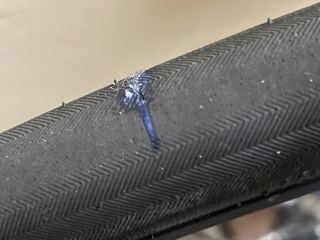
↑This culprit
It hasn't caused a puncture yet, but
there was another crack of similar size.
I could probably patch those two spots from the inside of the tire and keep using it,
but I decided to replace the tire instead.
Before that, though.
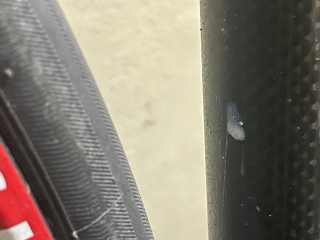
↑Behind the seat tube
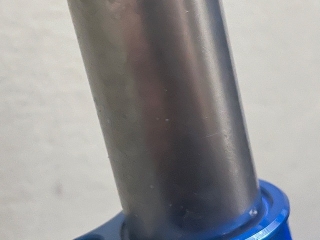
↑Behind the seatpost
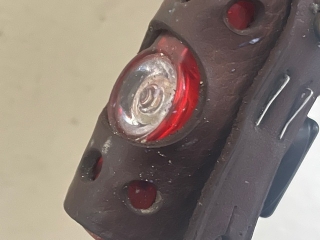
↑Light hanging from the center back of the saddle
Sealant splattered during the puncture has stuck to it.
Once this completely dries, it becomes really hard to remove,
so watch out.
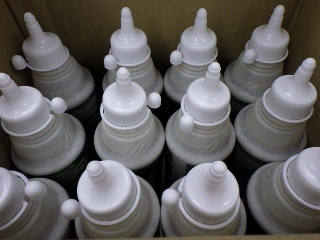
You might think "here we go with Imeji sealant talk again,"
and I won't deny it.
When you search "imeji" on Google,
"imeji sealant noma labo" comes up,
so this time I'll skip detailed explanations of the sealant itself.
Links to past posts are (→here)(→here)(→here)(→here)
We were out of stock at the shop for a while, but it's been restocked.
I should have some at home too, but

I'm buying another bottle for myself. This time, we stocked only
Imeji Plus, which contains vanilla-bean-like microfibers.
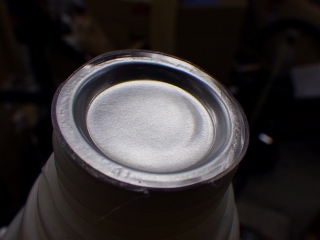
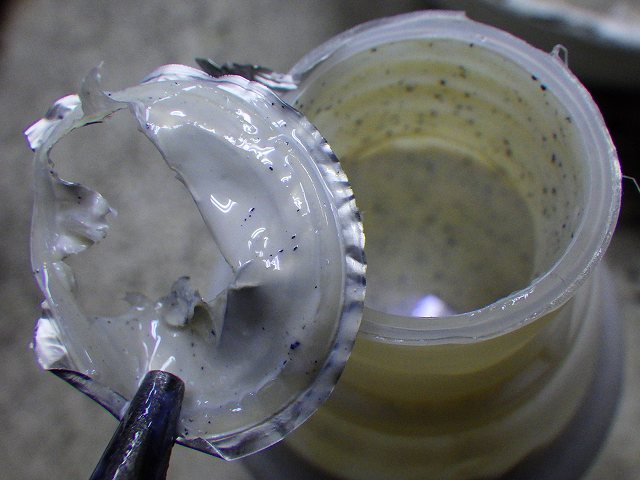
About the aluminum foil seal on the Imeji sealant bottle,
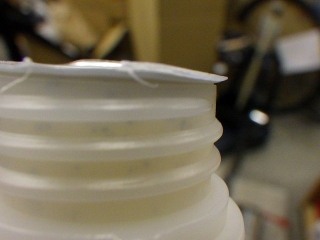
it's extremely difficult to peel off cleanly.
When you try to flip the seal, the rim of the bottle opening deforms instead.
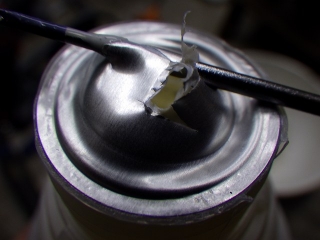
In the image above,
I'm poking a thin flathead screwdriver through,
first making a hole like this,
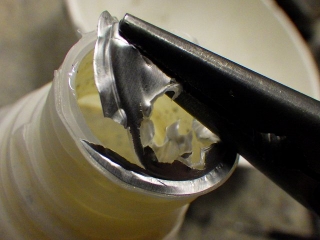
then pinching it with pliers and lifting from the inside to peel it off,
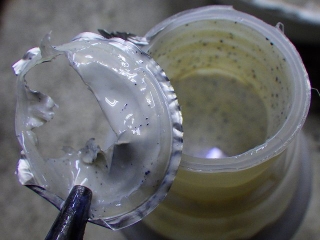
it peels off cleanly.
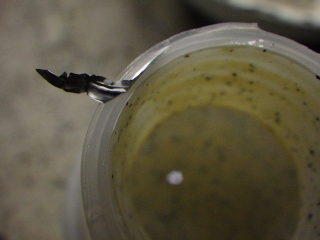
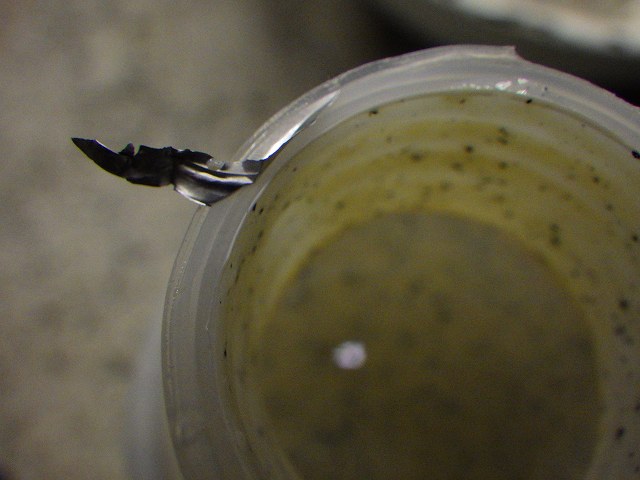
There's still some left!
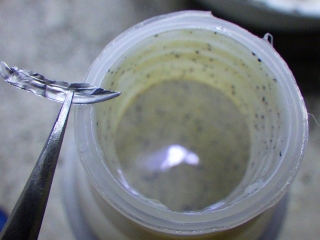
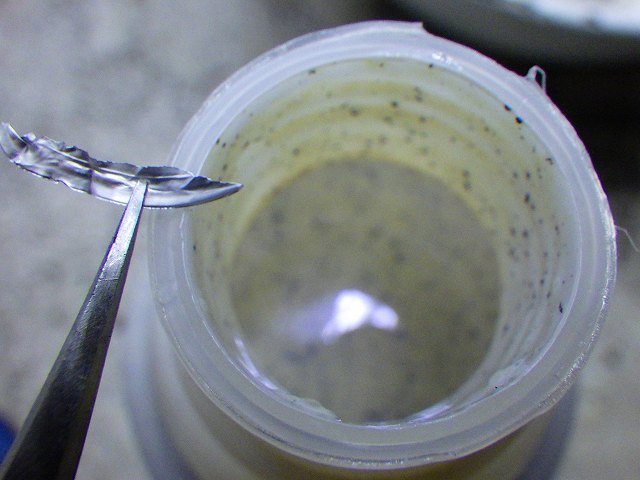
It peels off cleanly (second time).
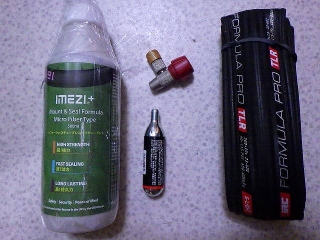
The tubeless tire lifting set (aka CO2 cartridge kit) and
the new tire.
The tire is IRC Formula Pro TLR S-Light in 23C, but
regardless of tire width, current models have switched to hookless-rim-compatible
beads, and this is the last hookless-incompatible model I own.
The wrap around the sealant bottle is there because
I took photos of peeling the aluminum seal at the shop.
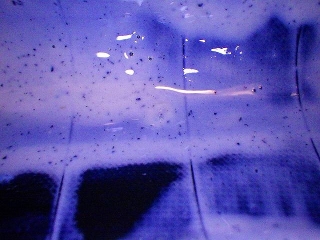
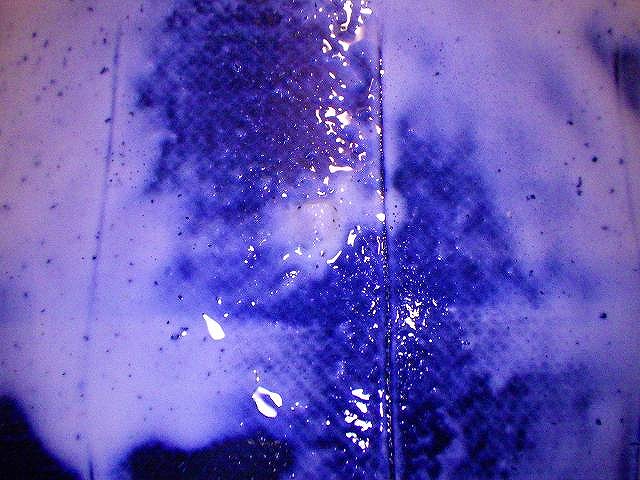
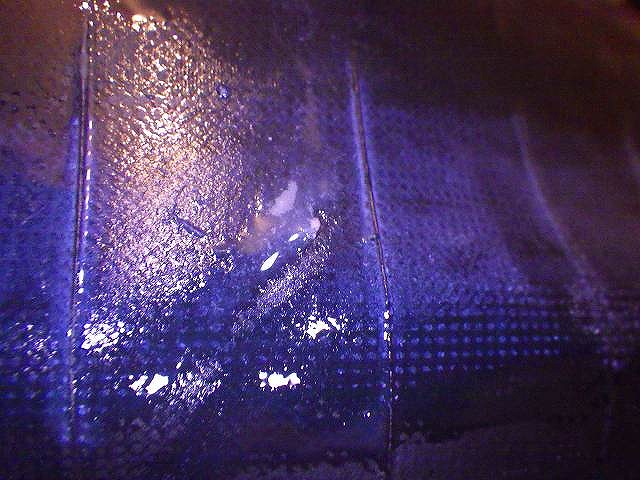
↑The punctured tire.
The puncture site is around the center of the image, but
it's hard to see, so
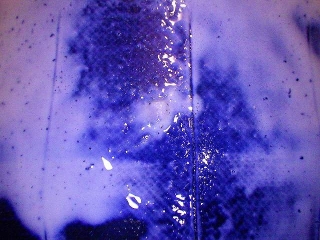
I blew on it hard.
The slightly raised part in the center of the image is
where sealant accumulated to seal the puncture.
Even though the sealant was added several months ago, it hasn't clumped
and remains liquid enough to move when you blow on it.
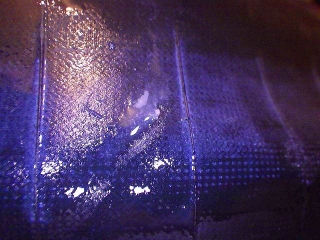
Lightly touching with the pad of my finger didn't remove the puncture plug, but
when I scraped at it with my fingernail, it came right off.
It doesn't form hard clumps, but as was the case here,
if it's not a sidecut-level large crack, the sealant often seals the puncture.
From experience, for tire widths up to around 25C, in terms of preventing air loss apart from punctures,
the barely adequate amount is about 30ml,
but at that amount there's a risk it won't seal punctures like this one did, so
recently I've been using just under 50ml.
After reading somewhere that "1ml of sealant is roughly 1g by weight, which is OK" (→here),
I started thinking "well, if it's lighter than the lightest butyl tube, that's fine."
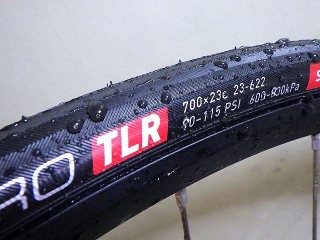
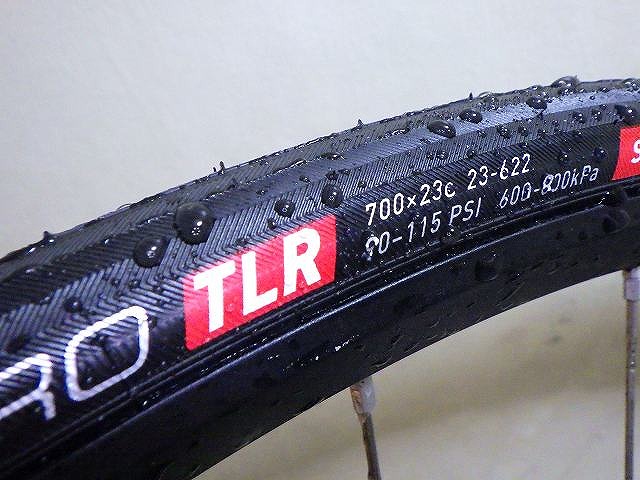
I replaced it with the new tire.
For the hookless-compatible models, "HL" is added in the same font after FORMULA PRO, but
this is a non-compatible model.
When the bead popped up, I rinsed off the sealant that splattered with shower water, but
since the tire is new and still has mold release agent on it,
it repels water like crazy.
I discovered it at the shop, but after making one more round trip from shop→home→shop,
I was planning to replace the tire when
I got a puncture on the way back.
However, even though I heard the classic "pssshhhhh" sound of a puncture,
within a few wheel rotations (definitely less than 10), the sound stopped, and
the sealant did its job—the puncture sealed itself.
When I felt the rear tire at a traffic light,
it was slightly soft when I pushed hard with my finger, but it felt perfectly rideable.
From here, if I carelessly added air with an inflator,
I'd risk exceeding "the threshold where the hole sealed by sealant tears open from the inside,"
causing another puncture. Since I was less than a few tens of kilometers from home,
if it had been further away, I would've switched to a tube,
but at around 10km or less, I figured self-riding was better than doing everything twice,
so I just rode home without doing anything.

↑This culprit
It hasn't caused a puncture yet, but
there was another crack of similar size.
I could probably patch those two spots from the inside of the tire and keep using it,
but I decided to replace the tire instead.
Before that, though.
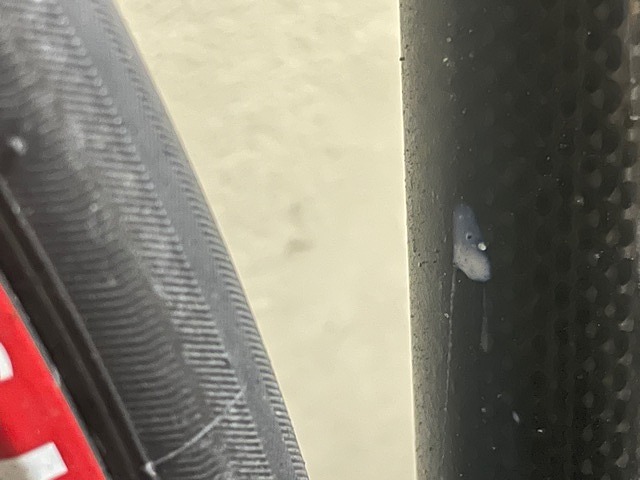
↑Behind the seat tube
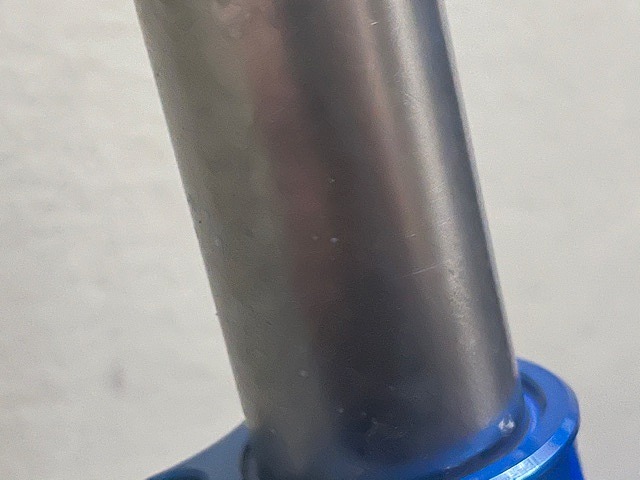
↑Behind the seatpost
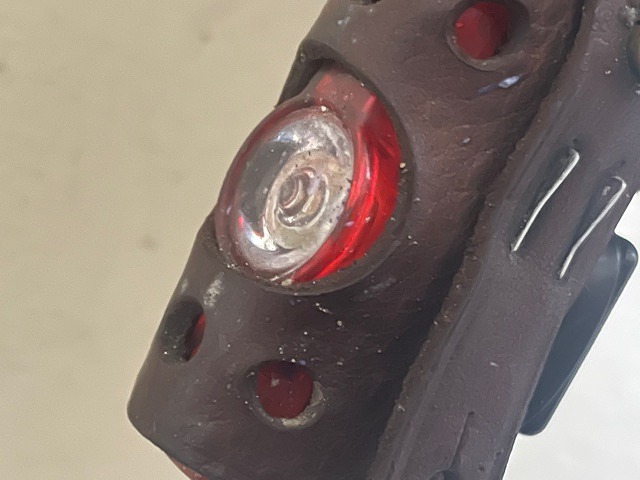
↑Light hanging from the center back of the saddle
Sealant splattered during the puncture has stuck to it.
Once this completely dries, it becomes really hard to remove,
so watch out.
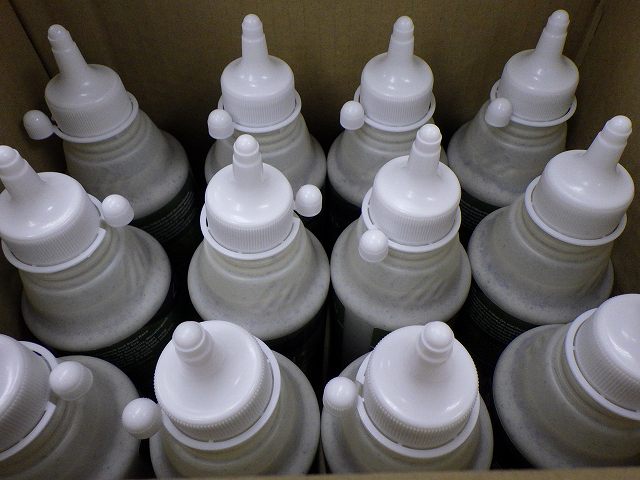
You might think "here we go with Imeji sealant talk again,"
and I won't deny it.
When you search "imeji" on Google,
"imeji sealant noma labo" comes up,
so this time I'll skip detailed explanations of the sealant itself.
Links to past posts are (→here)(→here)(→here)(→here)
We were out of stock at the shop for a while, but it's been restocked.
I should have some at home too, but

I'm buying another bottle for myself. This time, we stocked only
Imeji Plus, which contains vanilla-bean-like microfibers.
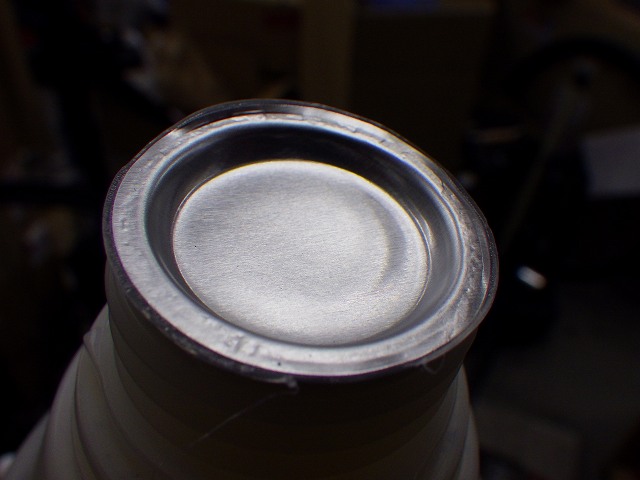
About the aluminum foil seal on the Imeji sealant bottle,

it's extremely difficult to peel off cleanly.
When you try to flip the seal, the rim of the bottle opening deforms instead.
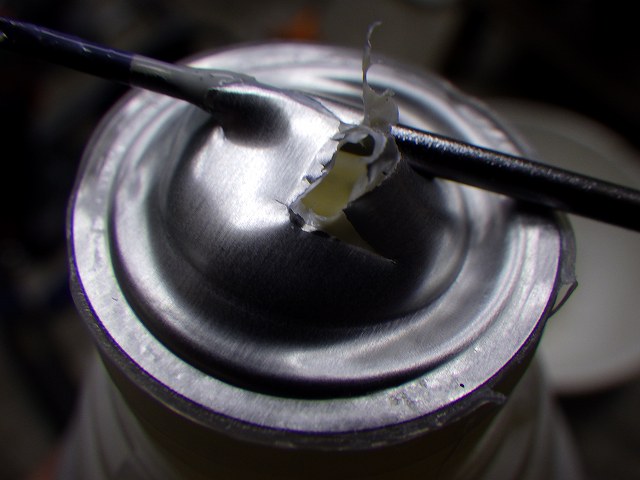
In the image above,
I'm poking a thin flathead screwdriver through,
first making a hole like this,
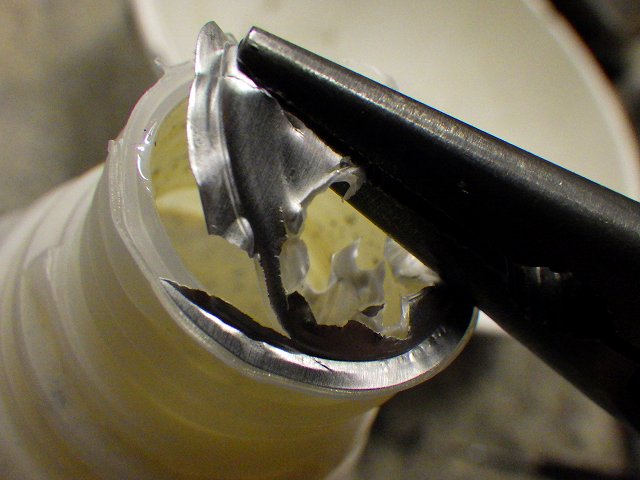
then pinching it with pliers and lifting from the inside to peel it off,
it peels off cleanly.
There's still some left!
It peels off cleanly (second time).

The tubeless tire lifting set (aka CO2 cartridge kit) and
the new tire.
The tire is IRC Formula Pro TLR S-Light in 23C, but
regardless of tire width, current models have switched to hookless-rim-compatible
beads, and this is the last hookless-incompatible model I own.
The wrap around the sealant bottle is there because
I took photos of peeling the aluminum seal at the shop.

↑The punctured tire.
The puncture site is around the center of the image, but
it's hard to see, so
I blew on it hard.
The slightly raised part in the center of the image is
where sealant accumulated to seal the puncture.
Even though the sealant was added several months ago, it hasn't clumped
and remains liquid enough to move when you blow on it.
Lightly touching with the pad of my finger didn't remove the puncture plug, but
when I scraped at it with my fingernail, it came right off.
It doesn't form hard clumps, but as was the case here,
if it's not a sidecut-level large crack, the sealant often seals the puncture.
From experience, for tire widths up to around 25C, in terms of preventing air loss apart from punctures,
the barely adequate amount is about 30ml,
but at that amount there's a risk it won't seal punctures like this one did, so
recently I've been using just under 50ml.
After reading somewhere that "1ml of sealant is roughly 1g by weight, which is OK" (→here),
I started thinking "well, if it's lighter than the lightest butyl tube, that's fine."
I replaced it with the new tire.
For the hookless-compatible models, "HL" is added in the same font after FORMULA PRO, but
this is a non-compatible model.
When the bead popped up, I rinsed off the sealant that splattered with shower water, but
since the tire is new and still has mold release agent on it,
it repels water like crazy.